
用于从血液中精确富集细胞和高效回收高活力无标记细菌的介电泳微流控设计。
Dielectrophoretic Microfluidic Designs for Precision Cell Enrichments and Highly Viable Label-Free Bacteria Recovery from Blood.
作者信息
Thomas Dean E, Kinskie Kyle S, Brown Kyle M, Flanagan Lisa A, Davalos Rafael V, Hyler Alexandra R
机构信息
CytoRecovery, Inc., Blacksburg, VA 24060, USA.
Departments of Neurology, Biomedical Engineering, and Anatomy & Neurobiology, University of California Irvine, Irvine, CA 92697, USA.
出版信息
Micromachines (Basel). 2025 Feb 19;16(2):236. doi: 10.3390/mi16020236.
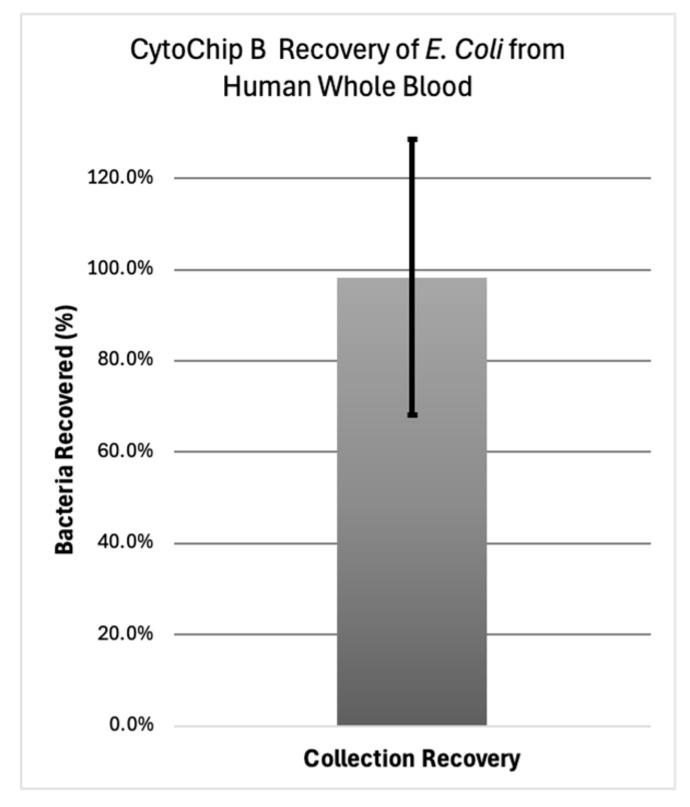
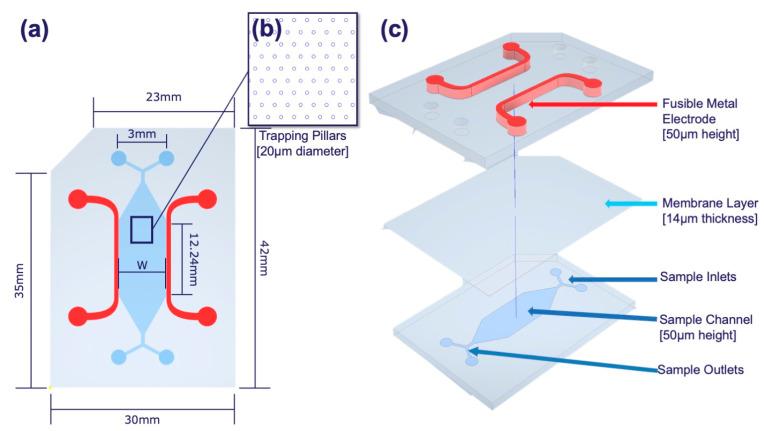
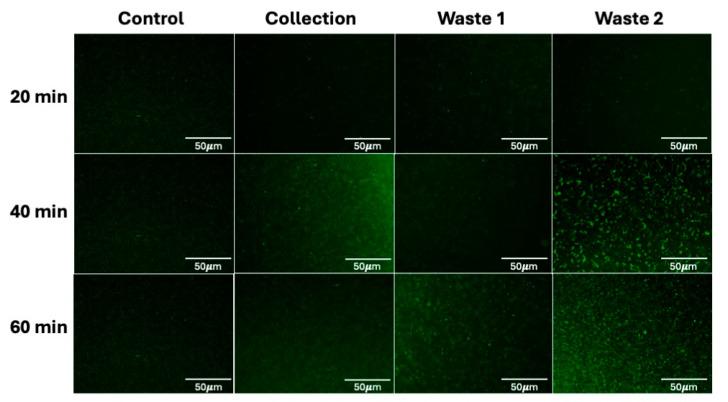
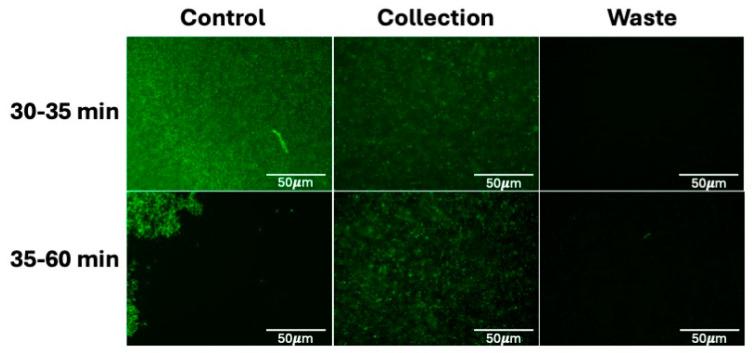
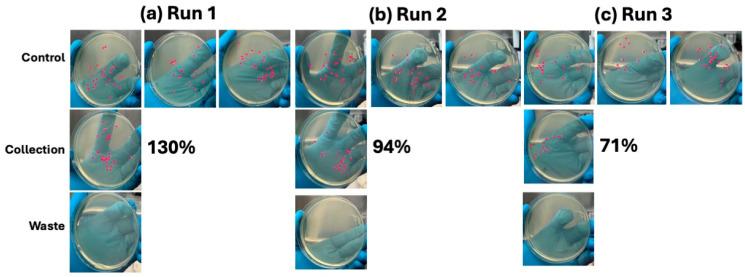
Conducting detailed cellular analysis of complex biological samples poses challenges in cell sorting and recovery for downstream analysis. Label-free microfluidics provide a promising solution for these complex applications. In this work, we investigate particle manipulation on two label-free microdevice designs using cDEP to enrich from whole human blood to mimic infection workflows. is still a growing source of bacteremia, sepsis, and other infections in modern countries, affecting millions of patients globally. The two microfluidic designs were evaluated for throughput, scaling, precision targeting, and high-viability recovery. While CytoChip D had the potential for higher throughput, given its continuous method of DEP-based sorting to accommodate larger clinical samples like a 10 mL blood draw, it could not effectively recover the bacteria. CytoChip B achieved a high-purity recovery of over 98% of bacteria from whole human blood, even in concentrations on the order of <100 CFU/mL, demonstrating the feasibility of processing and recovering ultra-low concentrations of bacteria for downstream analysis, culture, and drug testing. Future work will aim to scale CytoChip B for larger volume throughput while still achieving high bacteria recovery.
对复杂生物样本进行详细的细胞分析在细胞分选和回收以进行下游分析方面存在挑战。无标记微流控技术为这些复杂应用提供了一个有前景的解决方案。在这项工作中,我们研究了使用cDEP在两种无标记微器件设计上进行颗粒操纵,以从全血中富集,模拟感染工作流程。在现代国家,[原文此处缺失具体内容]仍然是菌血症、败血症和其他感染的一个不断增加的来源,全球数百万患者受到影响。对这两种微流控设计在通量、可扩展性、精确靶向和高活力回收方面进行了评估。虽然CytoChip D具有更高通量的潜力,因为其基于DEP的连续分选方法能够处理更大的临床样本,如10毫升血样,但它无法有效回收细菌。CytoChip B从全血中实现了超过98%的细菌高纯度回收,即使在浓度低至<100 CFU/mL的情况下,这证明了处理和回收超低浓度细菌以进行下游分析、培养和药物测试的可行性。未来的工作将旨在扩大CytoChip B的通量,同时仍能实现高细菌回收率。




 Zotero 插件