
物种特异性环状RNA circDS-1通过调控双态转变增强马尔尼菲篮状菌的适应性进化。
Species-specific circular RNA circDS-1 enhances adaptive evolution in Talaromyces marneffei through regulation of dimorphic transition.
作者信息
Hu Xueyan, Du Minghao, Tao Changyu, Wang Juan, Zhang Yun, Jin Yueqi, Yang Ence
机构信息
Department of Medical Bioinformatics, School of Basic Medical Sciences, Peking University Health Science Center, Beijing, China.
Department of Microbiology & Infectious Disease Center, School of Basic Medical Sciences, Peking University Health Science Center, Beijing, China.
出版信息
PLoS Genet. 2025 Mar 6;21(3):e1011482. doi: 10.1371/journal.pgen.1011482. eCollection 2025 Mar.
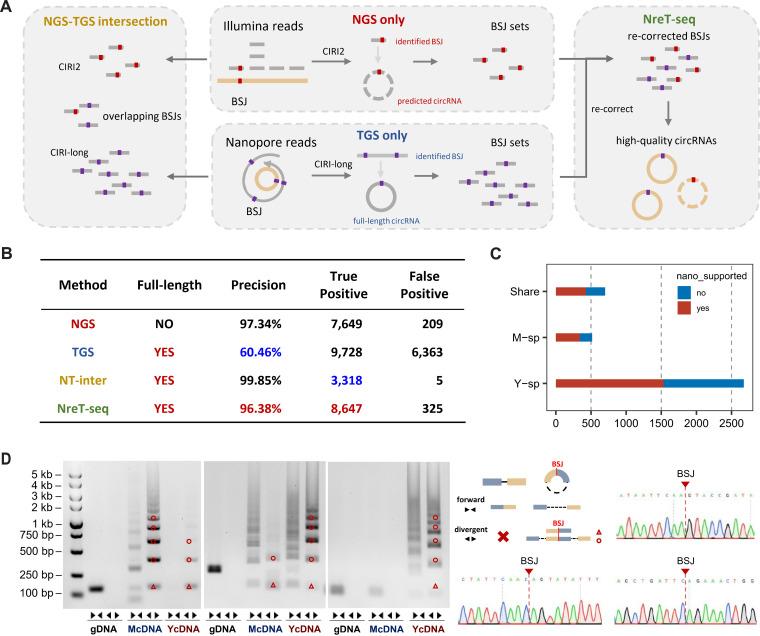
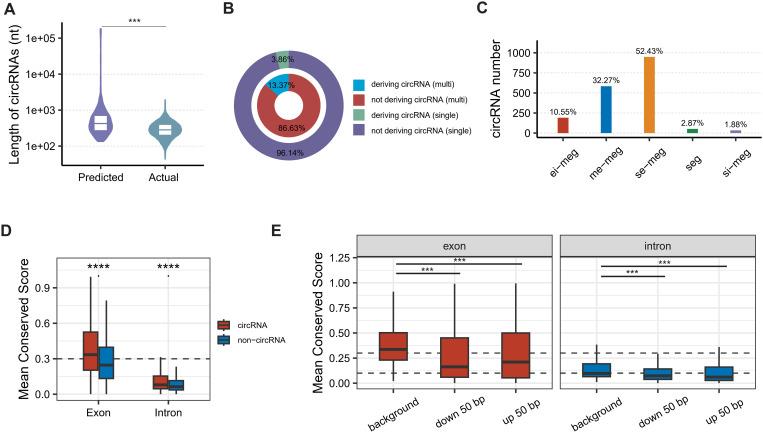
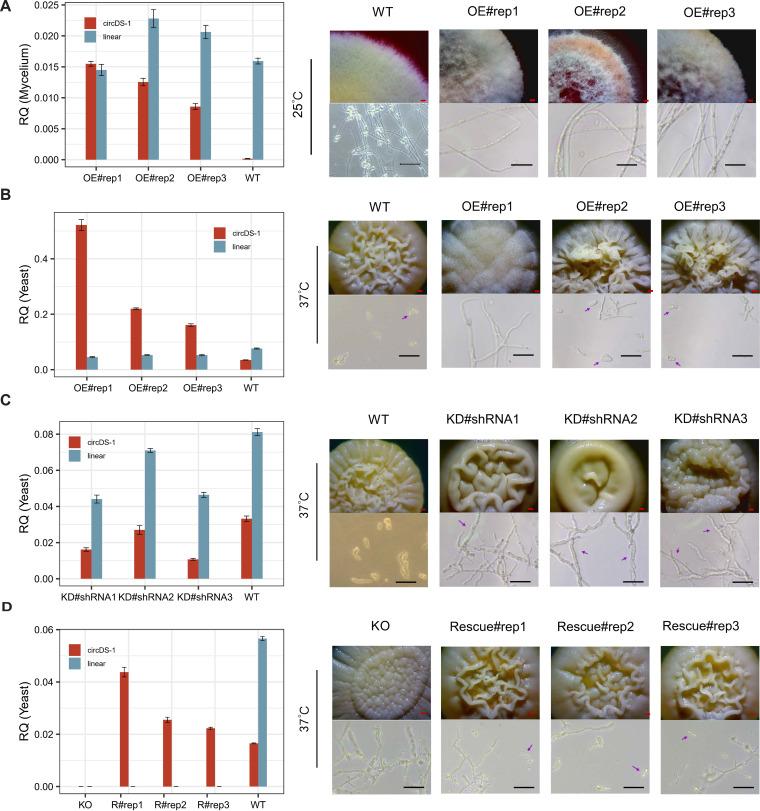
Thermal adaptability is a crucial characteristic for mammalian pathogenic fungi that originally inhabit natural ecosystems. Thermally dimorphic fungi have evolved a unique ability to respond to host body temperature by shifting from mycelia to yeast. The high similarity of protein-coding genes between these fungi and their relatives suggests the indispensable but often overlooked roles of non-coding elements in fungal thermal adaptation. Here, we systematically delineated the landscape of full-length circRNAs in both mycelial and yeast conditions of Talaromyces marneffei, a typical thermally dimorphic fungus causing fatal Talaromycosis, by optimizing an integrative pipeline for circRNA detection utilizing next- and third-generation sequencing. We found T. marneffei circRNA demonstrated features such as shorter length, lower abundance, and circularization-biased splicing. We then identified and validated that circDS-1, independent of its parental gene, promotes the hyphae-to-yeast transition, maintains yeast morphology, and is involved in virulence regulation. Further analysis and experiments among Talaromyces confirmed that the generation of circDS-1 is driven by a T. marneffei-specific region in the flanking intron of circDS-1. Together, our findings not only provide fresh insights into the role of circRNA in fungal thermal adaptation but also reveal a novel molecular mechanism for the adaptive evolution of functional circRNAs derived from intronic mutations.
热适应性是最初栖息于自然生态系统中的哺乳动物致病真菌的一个关键特征。温度双态性真菌进化出了一种独特能力,即通过从菌丝体转变为酵母来响应宿主体温。这些真菌与其亲缘物种之间蛋白质编码基因的高度相似性表明,非编码元件在真菌热适应中起着不可或缺但常被忽视的作用。在这里,我们通过优化一种利用二代和三代测序进行环状RNA检测的综合流程,系统地描绘了马尔尼菲篮状菌(一种导致致命马尔尼菲篮状菌病的典型温度双态性真菌)在菌丝体和酵母状态下的全长环状RNA图谱。我们发现马尔尼菲篮状菌环状RNA具有长度较短、丰度较低和环化偏向性剪接等特征。然后,我们鉴定并验证了环状RNA DS-1(circDS-1)与其亲本基因无关,可促进菌丝体向酵母的转变,维持酵母形态,并参与毒力调节。在篮状菌属中的进一步分析和实验证实,circDS-1的产生是由circDS-1侧翼内含子中的一个马尔尼菲篮状菌特异性区域驱动的。总之,我们的研究结果不仅为环状RNA在真菌热适应中的作用提供了新的见解,还揭示了一种由内含子突变产生的功能性环状RNA适应性进化的新分子机制。



 Zotero 插件