
肿瘤学中利用人工智能的临床研究中的透明度与代表性:一项范围综述
Transparency and Representation in Clinical Research Utilizing Artificial Intelligence in Oncology: A Scoping Review.
作者信息
D'Amiano Anjali J, Cheunkarndee Tia, Azoba Chinenye, Chen Krista Y, Mak Raymond H, Perni Subha
机构信息
Johns Hopkins University School of Medicine, Baltimore, Maryland, USA.
Brigham and Women's Hospital/Dana-Farber Cancer Institute, Harvard Medical School, Boston, Massachusetts, USA.
出版信息
Cancer Med. 2025 Mar;14(5):e70728. doi: 10.1002/cam4.70728.
INTRODUCTION
Artificial intelligence (AI) has significant potential to improve health outcomes in oncology. However, as AI utility increases, it is imperative to ensure that these models do not systematize racial and ethnic bias and further perpetuate disparities in health. This scoping review evaluates the transparency of demographic data reporting and diversity of participants included in published clinical studies utilizing AI in oncology.
METHODS
We utilized PubMed to search for peer-reviewed research articles published between 2016 and 2021 with the query type "("deep learning" or "machine learning" or "neural network" or "artificial intelligence") and ("neoplas$" or "cancer$" or "tumor$" or "tumour$")." We included clinical trials and original research studies and excluded reviews and meta-analyses. Oncology-related studies that described data sets used in training or validation of the AI models were eligible. Data regarding public reporting of patient demographics were collected, including age, sex at birth, and race. We used descriptive statistics to analyze these data across studies.
RESULTS
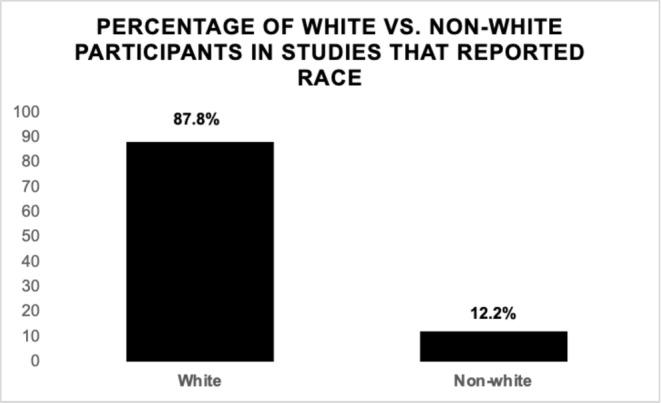
Out of 220 total studies, 118 were eligible and 47 (40%) had at least one described training or validation data set publicly available. 69 studies (58%) reported age data for patients included in training or validation sets, 60 studies (51%) reported sex, and six studies (5%) reported race. Of the studies that reported race, a range of 70.7%-93.4% of individuals were White. Only three studies reported racial demographic data with greater than two categories (i.e. "White" vs. "non-White" or "White" vs. "Black").
CONCLUSIONS
We found that a minority of studies (5%) analyzed reported racial and ethnic demographic data. Furthermore, studies that did report racial demographic data had few non-White patients. Increased transparency regarding reporting of demographics and greater representation in data sets is essential to ensure fair and unbiased clinical integration of AI in oncology.
引言
人工智能(AI)在改善肿瘤学健康结局方面具有巨大潜力。然而,随着人工智能应用的增加,必须确保这些模型不会将种族和民族偏见系统化,并进一步加剧健康方面的差异。本范围综述评估了已发表的肿瘤学临床研究中使用人工智能时人口统计学数据报告的透明度和纳入参与者的多样性。
方法
我们利用PubMed搜索2016年至2021年间发表的同行评审研究文章,查询类型为“(‘深度学习’或‘机器学习’或‘神经网络’或‘人工智能’)和(‘肿瘤$’或‘癌症$’或‘肿瘤$’或‘肿瘤$’)”。我们纳入了临床试验和原创研究,排除了综述和荟萃分析。描述人工智能模型训练或验证中使用的数据集的肿瘤学相关研究符合条件。收集了关于患者人口统计学公开报告的数据,包括年龄、出生时性别和种族。我们使用描述性统计分析这些研究中的数据。
结果
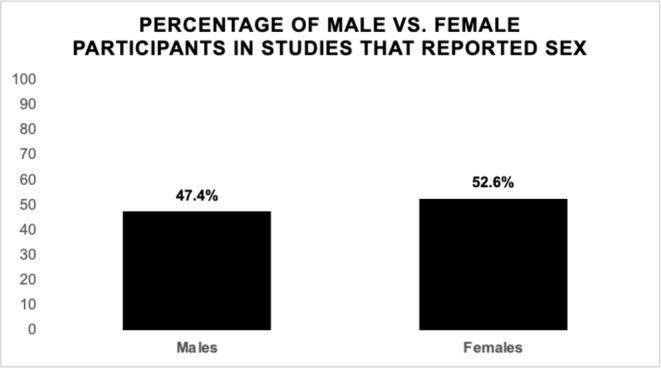
在总共220项研究中,118项符合条件,47项(40%)至少有一个公开可用的描述训练或验证数据集。69项研究(58%)报告了训练或验证集中患者的年龄数据,60项研究(51%)报告了性别,6项研究(5%)报告了种族。在报告种族的研究中,70.7%-93.4%的个体为白人。只有三项研究报告了超过两类的种族人口统计学数据(即“白人”与“非白人”或“白人”与“黑人”)。
结论
我们发现少数研究(5%)分析了报告的种族和民族人口统计学数据。此外,报告种族人口统计学数据的研究中非白人患者很少。提高人口统计学报告的透明度和数据集中的代表性对于确保人工智能在肿瘤学中的公平和无偏见临床整合至关重要。


 Zotero 插件