
嵌合抗原受体T细胞(CAR-T)疗法治疗实体瘤安全性的深入分析。
In-depth analysis of the safety of CAR-T cell therapy for solid tumors.
作者信息
Dong Jiayi, Wu Jiexiong, Jin Ye, Zheng Zhu, Su Ting, Shao Lijuan, Bei Jiaxin, Chen Size
机构信息
Department of Immuno-Oncology, The First Affiliated Hospital of Guangdong Pharmaceutical University, Guangzhou, China.
Key Laboratory of Monitoring Adverse Reactions Associated with Chimeric Antigen Receptor T-Cell Therapy, Guangdong Higher Education Institutions, Guangdong Pharmaceutical University, Guangzhou, China.
出版信息
Front Immunol. 2025 Feb 24;16:1548979. doi: 10.3389/fimmu.2025.1548979. eCollection 2025.
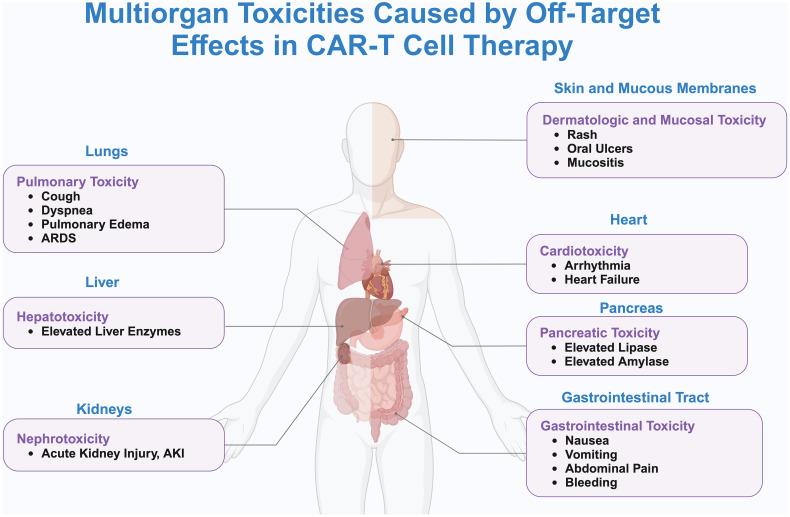
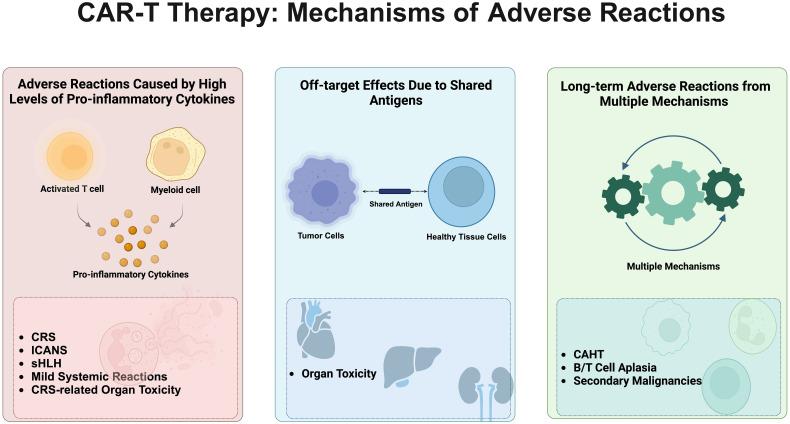
In recent years, the rapid progress in oncology, immunology, and molecular biology has dramatically advanced cancer immunotherapy, particularly CAR-T cell therapy. This innovative approach involves engineering a patient's T cells to express receptors that specifically target tumor antigens, enhancing their ability to identify and eliminate cancer cells. However, the effectiveness of CAR-T therapy in solid tumors is often hampered by the challenging tumor microenvironment (TME). The complex TME includes dense stroma that obstructs T cell infiltration, abnormal blood vessel structures leading to hypoxia, and an acidic pH, all of which hinder CAR-T cell function. Additionally, the presence of immunosuppressive factors in the TME reduces the efficacy of CAR-T cells, making successful targeting of tumors more difficult. The safety of CAR-T therapy has gained interest, especially CAR-T therapy has shown considerable effectiveness in various cancers, with notable results in multiple myeloma and hepatocellular carcinoma, among others. Nonetheless, CAR-T cell therapy is associated with several adverse reactions primarily driven by heightened levels of proinflammatory cytokines. These reactions include cytokine release syndrome (CRS), neurotoxicity (CANS), and organ toxicity, often leading to serious complications. CRS, characterized by systemic inflammation due to cytokine release, can escalate to severe organ dysfunction. It typically occurs within the first week post-infusion, correlating with CAR-T cell expansion and often presents with fever and hypotension. Meanwhile, CANS encompasses neurological issues ranging from mild symptoms to severe seizures, possibly exacerbated by CRS. Organ toxicity can also arise from CAR-T therapy, with potential damage affecting the gastrointestinal tract, kidneys, liver, and lungs, often tied to shared antigens found in both tumor and healthy tissues. Moreover, long-term effects like cytokine-associated hematotoxicity (CAHT) and secondary malignancies represent significant concerns that could affect the patient's quality of life post-treatment. The long-term adverse effects and challenges in treating solid tumors underscore the need for ongoing research. Strategies to improve CAR-T cell efficacy, minimize adverse reactions, and enhance patient safety are critical. Future explorations could include designing CAR-T cells to better navigate the TME, identifying specific target antigen profiles to minimize off-target damage, and developing adjunct therapies to mitigate cytokine-related toxicity. Continued monitoring for long-term effects will also be paramount in improving patient outcomes and maintaining their quality of life. Overall, while CAR-T therapy holds great promise, it must be administered with careful consideration of potential side effects and rigorous management strategies to ensure patient safety and treatment efficacy.
近年来,肿瘤学、免疫学和分子生物学的快速发展极大地推动了癌症免疫疗法,尤其是嵌合抗原受体T细胞(CAR-T)疗法。这种创新方法包括对患者的T细胞进行改造,使其表达能够特异性靶向肿瘤抗原的受体,从而增强其识别和消除癌细胞的能力。然而,CAR-T疗法在实体瘤中的有效性常常受到具有挑战性的肿瘤微环境(TME)的阻碍。复杂的TME包括阻碍T细胞浸润的致密基质、导致缺氧的异常血管结构以及酸性pH值,所有这些都会阻碍CAR-T细胞的功能。此外,TME中免疫抑制因子的存在降低了CAR-T细胞的疗效,使得成功靶向肿瘤变得更加困难。CAR-T疗法的安全性受到了关注,特别是CAR-T疗法在各种癌症中都显示出了相当的有效性,在多发性骨髓瘤和肝细胞癌等方面取得了显著成果。尽管如此,CAR-T细胞疗法与几种主要由促炎细胞因子水平升高引起的不良反应相关。这些反应包括细胞因子释放综合征(CRS)、神经毒性(CANS)和器官毒性,常常导致严重的并发症。CRS的特征是由于细胞因子释放引起的全身炎症,可能会升级为严重的器官功能障碍。它通常在输注后的第一周内发生,与CAR-T细胞的扩增相关,并且常常表现为发热和低血压。与此同时,CANS包括从轻微症状到严重癫痫发作的神经系统问题,可能会因CRS而加剧。CAR-T疗法也可能导致器官毒性,潜在的损害会影响胃肠道、肾脏、肝脏和肺部,这通常与肿瘤和健康组织中发现的共同抗原有关。此外,细胞因子相关的血液毒性(CAHT)和继发性恶性肿瘤等长期影响是可能影响患者治疗后生活质量的重大问题。实体瘤治疗中的长期不良反应和挑战凸显了持续研究的必要性。提高CAR-T细胞疗效、最小化不良反应以及增强患者安全性的策略至关重要。未来的探索可能包括设计能够更好地在TME中导航的CAR-T细胞、识别特定的靶抗原谱以最小化脱靶损伤,以及开发辅助疗法以减轻细胞因子相关的毒性。持续监测长期影响对于改善患者预后和维持他们的生活质量也将至关重要。总体而言,虽然CAR-T疗法前景广阔,但必须在仔细考虑潜在副作用和严格管理策略的情况下进行给药,以确保患者安全和治疗效果。
 Zotero 插件