
微塑料浓度、成分和尺寸对生物膜相关抗菌耐药性的影响。
Effects of microplastic concentration, composition, and size on biofilm-associated antimicrobial resistance.
作者信息
Gross Neila, Muhvich Johnathan, Ching Carly, Gomez Bridget, Horvath Evan, Nahum Yanina, Zaman Muhammad H
机构信息
Department of Materials Science and Engineering, Boston University, Boston, Massachusetts, USA.
Department of Biomedical Engineering, Boston University, Boston, Massachusetts, USA.
出版信息
Appl Environ Microbiol. 2025 Apr 23;91(4):e0228224. doi: 10.1128/aem.02282-24. Epub 2025 Mar 11.
UNLABELLED
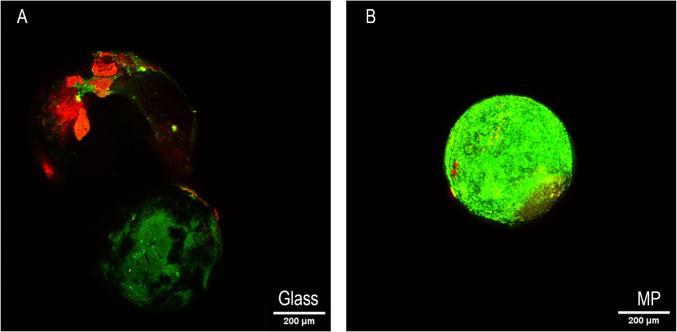
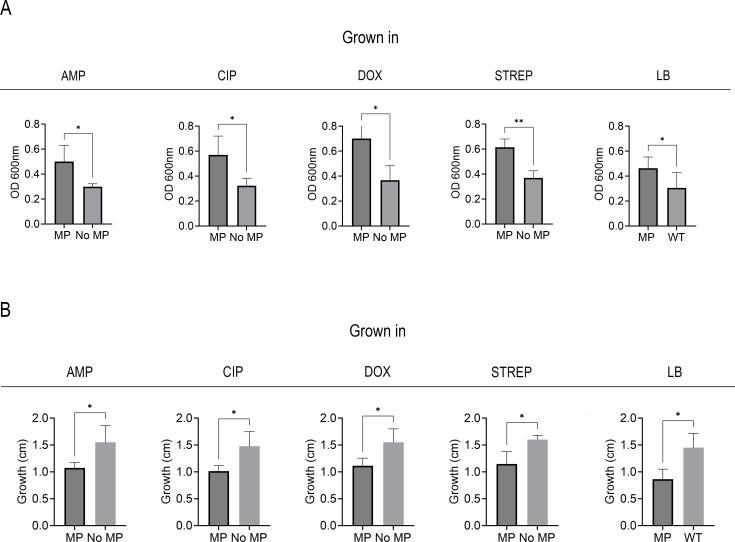
Microplastics (MPs) have emerged as a significant environmental pollutant with profound implications for public health, particularly as substrates to facilitate bacterial antimicrobial resistance (AMR). Recently, studies have shown that MPs may accommodate biofilm communities, chemical contaminants, and genetic material containing AMR genes. This study investigated the effects of MP concentration, composition, and size on the development of multidrug resistance in . Specifically, we exposed to varying concentrations of different MP types, including polyethylene, polystyrene, and polypropylene, across a range of sizes (3-10, 10-50, and 500 µm). Results indicated that the biofilm cells attached to MPs had elevated multidrug resistance (in . Notably, MPs exhibited a higher propensity for facilitating biofilm and resistance than control substrates such as glass, likely due to their hydrophobicity, greater adsorption capacities, and surface chemistries. Notably, we found that the bacteria passaged with MPs formed stronger biofilms once the MPs were removed, which was associated with changes in motility. Thus, MPs select cells that are better at forming biofilms, which can lead to biofilm-associated AMR and recalcitrant infections in the environment and healthcare setting. Our study highlights the importance of developing effective strategies to address the challenges posed by MPs.
IMPORTANCE
Antimicrobial resistance (AMR) is one of the world's most pressing global health crises. With the pipeline of antibiotics running dry, it is imperative that mitigation strategies understand the mechanisms that drive the genesis of AMR. One emerging dimension of AMR is the environment. This study highlights the relationship between a widespread environmental pollutant, microplastics (MPs), and the rise of drug-resistant bacteria. While it is known that MPs facilitate resistance through several modes (biofilm formation, plastic adsorption rates, etc.), this study fills the knowledge gap on how different types of MPs are contributing to AMR.
未标注
微塑料已成为一种重要的环境污染物,对公众健康具有深远影响,尤其是作为促进细菌抗微生物耐药性(AMR)的基质。最近,研究表明微塑料可能容纳生物膜群落、化学污染物以及含有AMR基因的遗传物质。本研究调查了微塑料浓度、成分和尺寸对[具体细菌名称未给出]多重耐药性发展的影响。具体而言,我们让[具体细菌名称未给出]接触不同类型微塑料的不同浓度,包括聚乙烯、聚苯乙烯和聚丙烯,尺寸范围为3 - 10微米、10 - 50微米和500微米。结果表明,附着在微塑料上的生物膜细胞具有更高的多重耐药性(在[具体细菌名称未给出]中)。值得注意的是,与玻璃等对照基质相比,微塑料在促进生物膜形成和耐药性方面表现出更高的倾向,这可能是由于它们的疏水性、更大的吸附能力和表面化学性质。值得注意的是,我们发现与微塑料传代培养的细菌在去除微塑料后形成了更强的生物膜,这与运动性的变化有关。因此,微塑料选择了更善于形成生物膜的细胞,这可能导致环境和医疗环境中与生物膜相关的AMR和顽固性感染。我们的研究强调了制定有效策略应对微塑料带来的挑战的重要性。
重要性
抗微生物耐药性(AMR)是全球最紧迫的全球健康危机之一。随着抗生素研发渠道枯竭,缓解策略必须了解驱动AMR产生的机制。AMR的一个新出现的方面是环境。本研究突出了一种广泛存在的环境污染物——微塑料(MPs)与耐药细菌兴起之间的关系。虽然已知微塑料通过多种方式促进耐药性(生物膜形成、塑料吸附率等),但本研究填补了关于不同类型微塑料如何导致AMR的知识空白。




 Zotero 插件