
肥胖相关并发症概述:将体重及其他肥胖指标与不良健康结局联系起来的流行病学证据。
An overview of obesity-related complications: The epidemiological evidence linking body weight and other markers of obesity to adverse health outcomes.
作者信息
Blüher Matthias
机构信息
Helmholtz Institute for Metabolic, Obesity and Vascular Research (HI-MAG) of the Helmholtz Zentrum München, University of Leipzig and University Hospital Leipzig, Leipzig, Germany.
Medical Department III-Endocrinology, Nephrology, Rheumatology, University of Leipzig Medical Center, Leipzig, Germany.
出版信息
Diabetes Obes Metab. 2025 Apr;27 Suppl 2(Suppl 2):3-19. doi: 10.1111/dom.16263. Epub 2025 Mar 11.
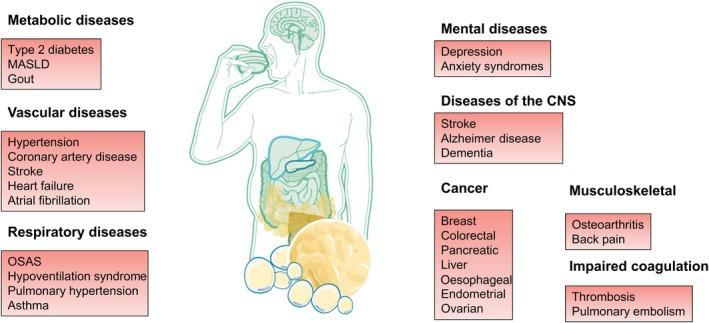
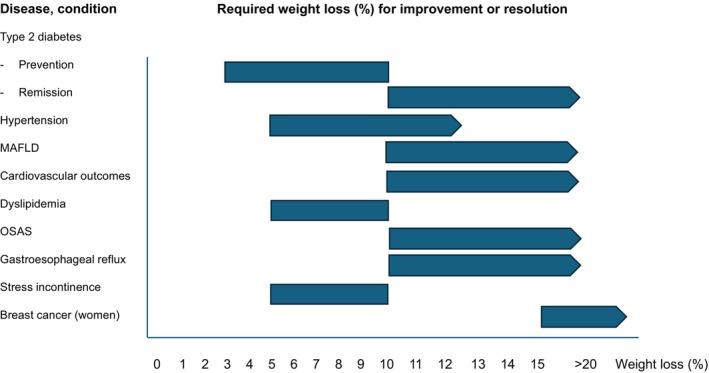
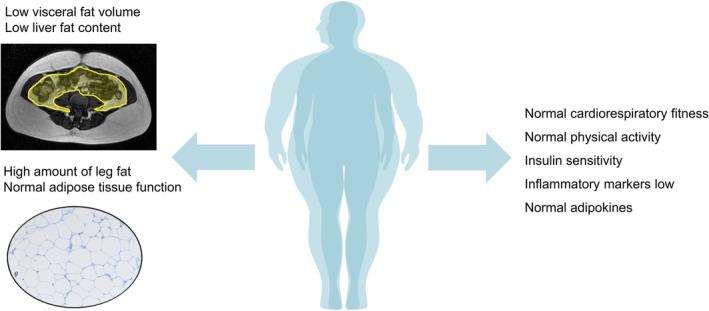
Obesity is a highly prevalent chronic multisystem disease associated with shortened life expectancy due to a number of adverse health outcomes. Epidemiological data link body weight and parameters of central fat distribution to an increasing risk for type 2 diabetes, hypertension, fatty liver diseases, cardiovascular diseases including myocardial infarction, heart failure, atrial fibrillation, stroke, obstructive sleep apnoea, osteoarthritis, mental disorders and some types of cancer. However, the individual risk to develop cardiometabolic and other obesity-related diseases cannot entirely be explained by increased fat mass. Rather than excess fat accumulation, dysfunction of adipose tissue may represent the mechanistic link between obesity and adverse health outcomes. There are people living with obesity who seem to be protected against the premature development of cardiometabolic diseases. On the other hand, people with normal weight may develop typical obesity diseases upon dysfunction of adipose tissue and predominantly visceral fat distribution. The mechanisms linking impaired function of adipose tissue in people with obesity include adipocyte hypertrophy, altered cellular composition, limited expandability of safe subcutaneous fat stores, ectopic fat deposition in visceral depots, the liver and other organs, hypoxia, a variety of stresses, inflammatory processes, and the release of pro-inflammatory, diabetogenic and atherogenic signals. Genetic and environmental factors might contribute either alone or via interaction with intrinsic biological factors to variation in adipose tissue function. There are still many open questions regarding the mechanisms of how increased body weight causes obesity-related disorders and whether these pathologies could be reversed. Evidence-based weight loss interventions using behaviour change, pharmacological or surgical approaches have clarified the beneficial effects of realistic and sustained weight loss on obesity-related complications as hard outcomes. This review focusses on recent advances in understanding epidemiological trends and mechanisms of obesity-related diseases. PLAIN LANGUAGE SUMMARY: Obesity is a chronic complex and progressive disease characterized by excessive fat deposition that may impair health and quality of life. Worldwide, the number of adults living with obesity has more than doubled since 1990. Obesity may lead to reduced life expectancy, because it increases the risk for type 2 diabetes, cardiovascular diseases (e.g., myocardial infarction, high blood pressure, stroke), fatty liver diseases, musculoskeletal diseases, chronic respiratory diseases, depression and certain types of cancer. However, not every person with obesity develops these diseases. For better prevention and treatment, it is important to understand the mechanisms linking high fat mass to obesity related diseases. It has become clear that fat mass alone cannot explain the higher risk of obesity complications. People with obesity can have either high or low risk of developing complications. Compared to people with a low risk for obesity complications those with a high risk to develop obesity related diseases are characterized by higher central fat deposition in the abdominal region, on average bigger fat cells, higher number of immune cells in adipose tissue and altered signals released from adipose tissue that may directly affect the brain, liver, vasculature and other organs. Both inherited and environment factors may cause these abnormalities of adipose tissue function. However, weight loss through behaviour changes (e.g., lower calorie intake, higher physical activity), medications or obesity surgery can improve health, quality of life and reduce the risk for obesity related diseases.
肥胖是一种高度流行的慢性多系统疾病,由于多种不良健康后果,会导致预期寿命缩短。流行病学数据表明,体重和中心脂肪分布参数与2型糖尿病、高血压、脂肪性肝病、包括心肌梗死、心力衰竭、心房颤动、中风、阻塞性睡眠呼吸暂停、骨关节炎、精神障碍和某些类型癌症在内的心血管疾病风险增加有关。然而,个体发生心脏代谢和其他肥胖相关疾病的风险不能完全由脂肪量增加来解释。脂肪组织功能障碍而非脂肪过度积累,可能是肥胖与不良健康后果之间的机制联系。有肥胖症的人似乎对心脏代谢疾病的过早发生具有抵抗力。另一方面,体重正常的人在脂肪组织功能障碍且主要是内脏脂肪分布时,可能会患上典型的肥胖症疾病。肥胖人群中脂肪组织功能受损的相关机制包括脂肪细胞肥大、细胞组成改变、安全皮下脂肪储存的扩张能力有限、内脏、肝脏和其他器官的异位脂肪沉积、缺氧、各种应激、炎症过程以及促炎、致糖尿病和致动脉粥样硬化信号的释放。遗传和环境因素可能单独或通过与内在生物因素的相互作用,导致脂肪组织功能的差异。关于体重增加如何导致肥胖相关疾病以及这些病理状况是否可以逆转的机制,仍然存在许多未解决的问题。使用行为改变、药物或手术方法进行的循证减肥干预,已经阐明了现实且持续的体重减轻对肥胖相关并发症作为硬性结局的有益影响。本综述重点关注肥胖相关疾病的流行病学趋势和机制的最新进展。
通俗易懂的总结
肥胖是一种慢性、复杂且渐进性的疾病,其特征是脂肪过度沉积,可能损害健康和生活质量。自1990年以来,全球肥胖成年人数量增加了一倍多。肥胖可能导致预期寿命缩短,因为它会增加2型糖尿病、心血管疾病(如心肌梗死、高血压、中风)、脂肪性肝病、肌肉骨骼疾病、慢性呼吸道疾病、抑郁症和某些类型癌症的风险。然而,并非每个肥胖者都会患上这些疾病。为了更好地预防和治疗,了解高脂肪量与肥胖相关疾病之间的联系机制非常重要。很明显,仅脂肪量并不能解释肥胖并发症风险较高的原因。肥胖者发生并发症的风险可能高也可能低。与肥胖并发症风险较低的人相比,肥胖相关疾病风险较高的人其特征是腹部中央脂肪沉积更高、平均脂肪细胞更大、脂肪组织中免疫细胞数量更多,以及脂肪组织释放的信号改变,这些信号可能直接影响大脑、肝脏、血管和其他器官。遗传和环境因素都可能导致脂肪组织功能的这些异常。然而,通过行为改变(如减少热量摄入、增加体育活动)、药物或肥胖手术来减轻体重,可以改善健康、提高生活质量并降低肥胖相关疾病的风险。


 Zotero 插件