
内皮黏附分子在肿瘤进展和癌症免疫中的双重作用。
Dual implication of endothelial adhesion molecules in tumor progression and cancer immunity.
作者信息
Chriqui Louis-Emmanuel, Cavin Sabrina, Perentes Jean Yannis
机构信息
Division of Thoracic Surgery, Department of Surgery, CHUV, Lausanne University Hospital, Lausanne, Switzerland.
Agora Cancer Research Center Lausanne, Lausanne, Switzerland.
出版信息
Cell Adh Migr. 2025 Dec;19(1):2472308. doi: 10.1080/19336918.2025.2472308. Epub 2025 Mar 12.
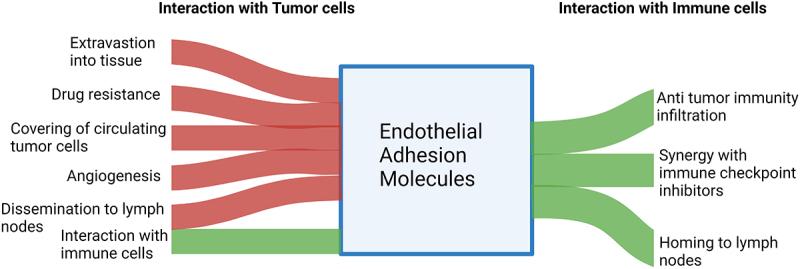
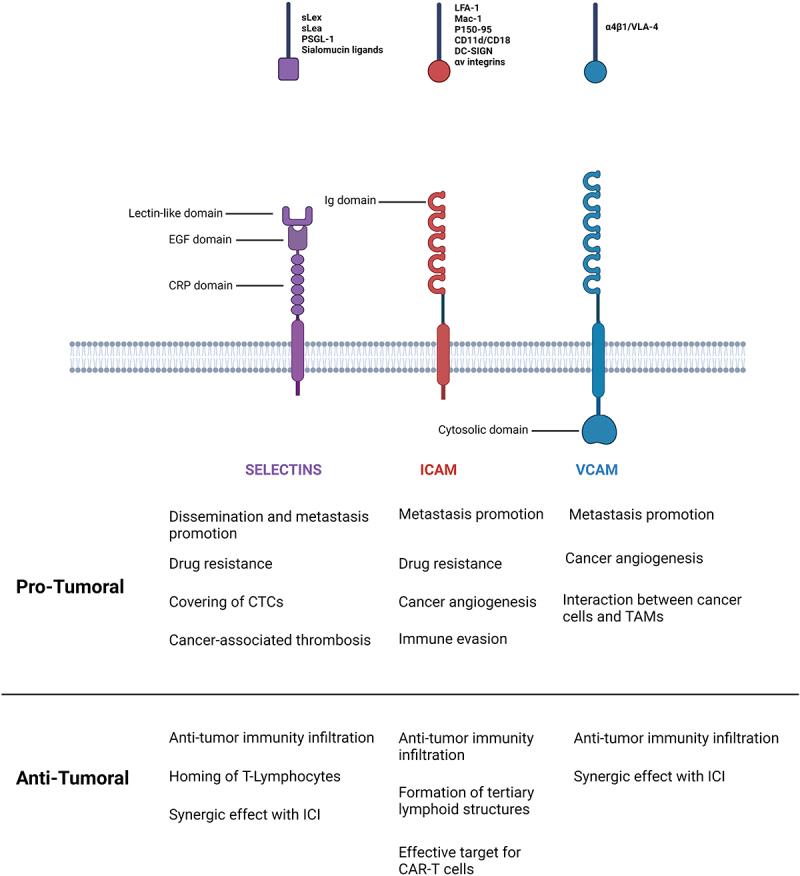
Adhesion molecules are proteins expressed at the surface of various cell types. Their main contribution to immunity is to allow the infiltration of immune cells in an inflamed site. In cancer, adhesion molecules have been shown to promote tumor dissemination favoring the development of metastasis. While adhesion molecule inhibition approaches were unsuccessful for cancer control, their importance for the generation of an immune response alone or in combination with immunotherapies has gained interest over the past years. Currently, the balance of adhesion molecules for tumor promotion/inhibition is unclear. Here we review the role of selectins, intercellular adhesion molecules (ICAM) and vascular cell adhesion molecules (VCAM) from the perspective of the dual contribution of adhesion molecules in tumor progression and immunity.
黏附分子是在多种细胞类型表面表达的蛋白质。它们对免疫的主要作用是使免疫细胞能够浸润到炎症部位。在癌症中,黏附分子已被证明可促进肿瘤扩散,有利于转移的发生。虽然抑制黏附分子的方法在癌症控制方面未取得成功,但在过去几年中,它们在单独或与免疫疗法联合产生免疫反应方面的重要性已引起关注。目前,黏附分子在肿瘤促进/抑制方面的平衡尚不清楚。在此,我们从黏附分子在肿瘤进展和免疫中的双重作用角度,综述选择素、细胞间黏附分子(ICAM)和血管细胞黏附分子(VCAM)的作用。
 Zotero 插件