
通过壳聚糖与羧基封端的聚N-异丙基丙烯酰胺相互作用形成的天然-合成杂化纳米结构:结构与姜黄素包封
Natural-Synthetic Hybrid Nanostructures Formed Through the Interaction of Chitosan with Carboxylate-Ended PNIPAM: Structure and Curcumin Encapsulation.
作者信息
Lotos Elena-Daniela, Karayianni Maria, Vasiliu Ana-Lavinia, Mihai Marcela, Pispas Stergios
机构信息
Petru Poni Institute of Macromolecular Chemistry, 41A Grigore Ghica Voda Alley, 700487 Iasi, Romania.
Theoretical and Physical Chemistry Institute, National Hellenic Research Foundation, 48 Vassileos Constantinou Ave., 116 35 Athens, Greece.
出版信息
Nanomaterials (Basel). 2025 Feb 24;15(5):350. doi: 10.3390/nano15050350.
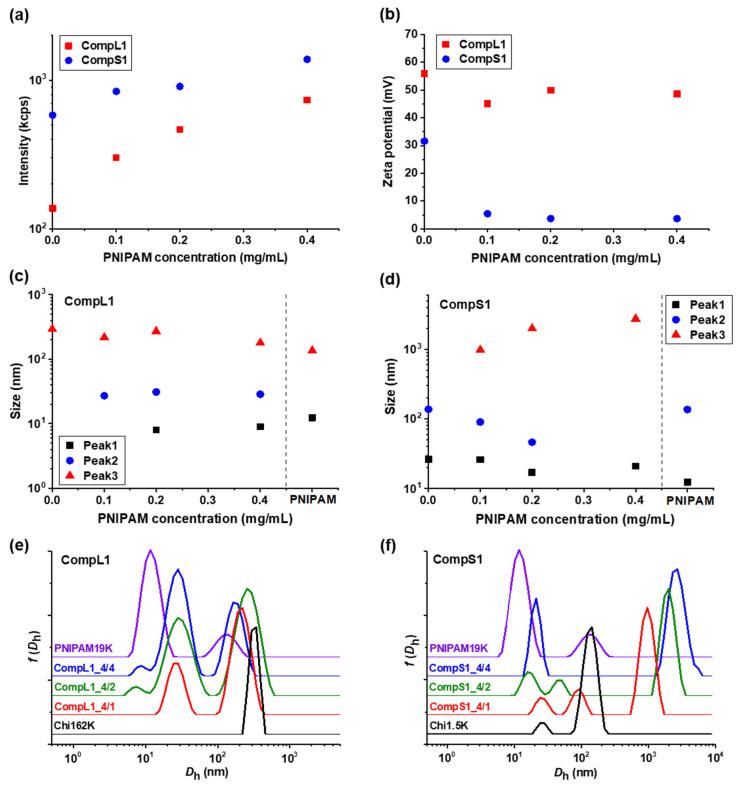
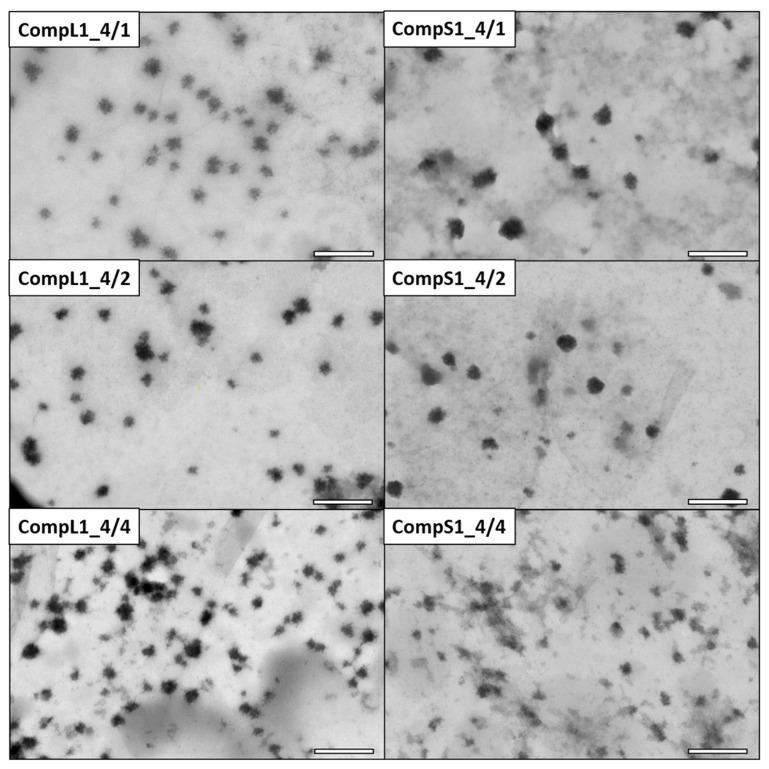
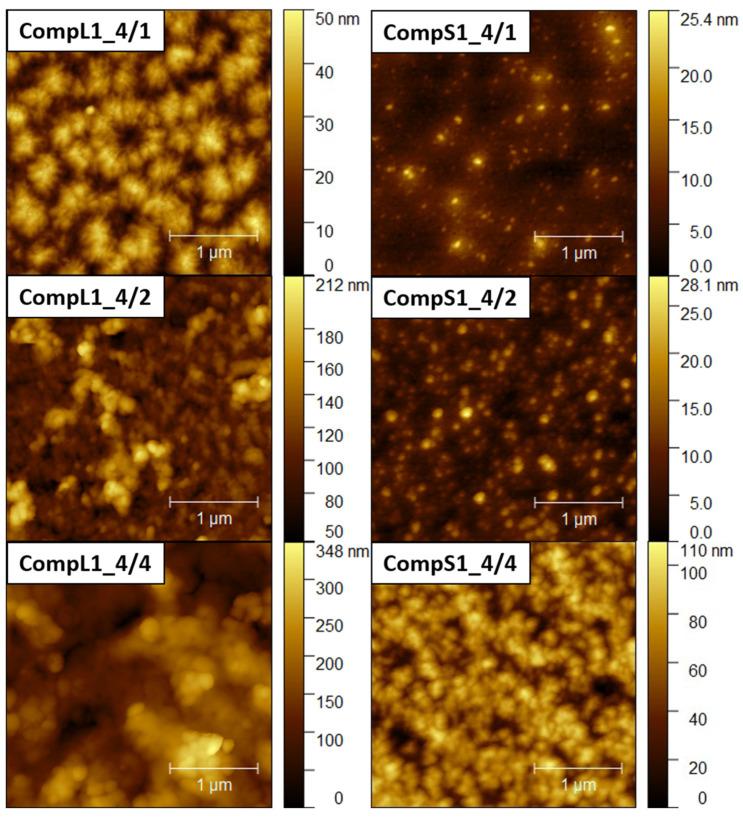
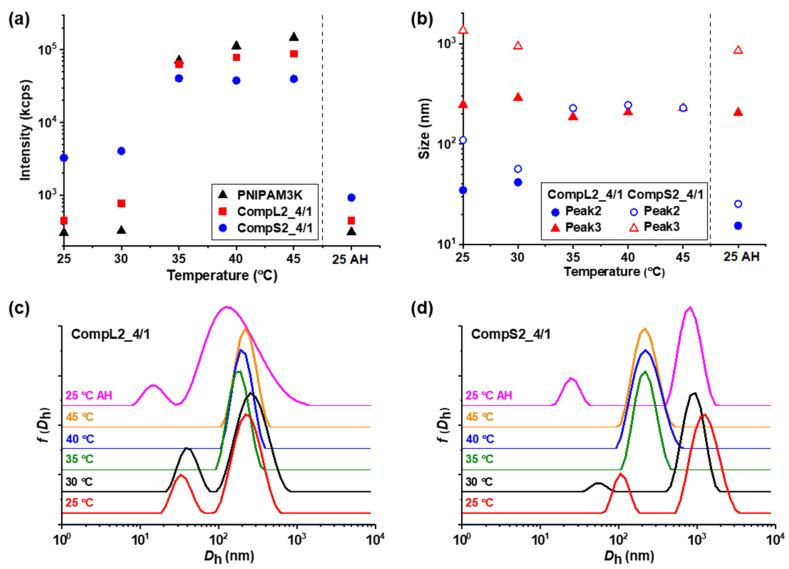
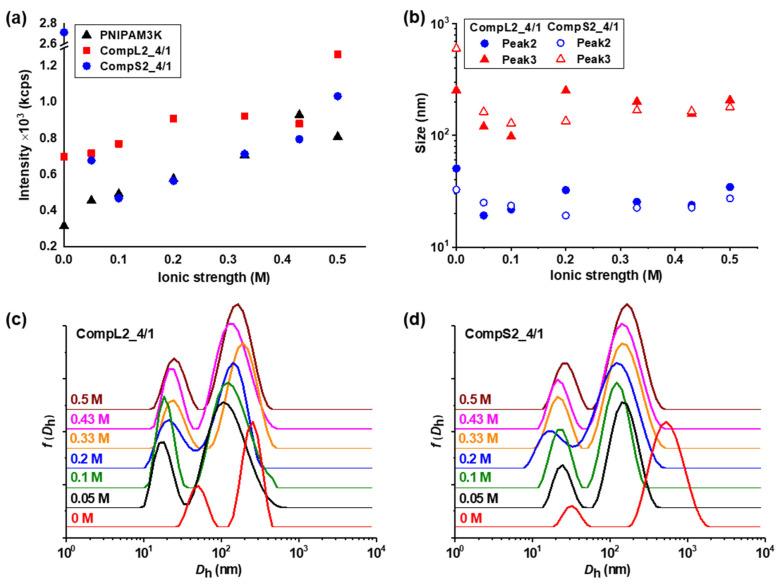
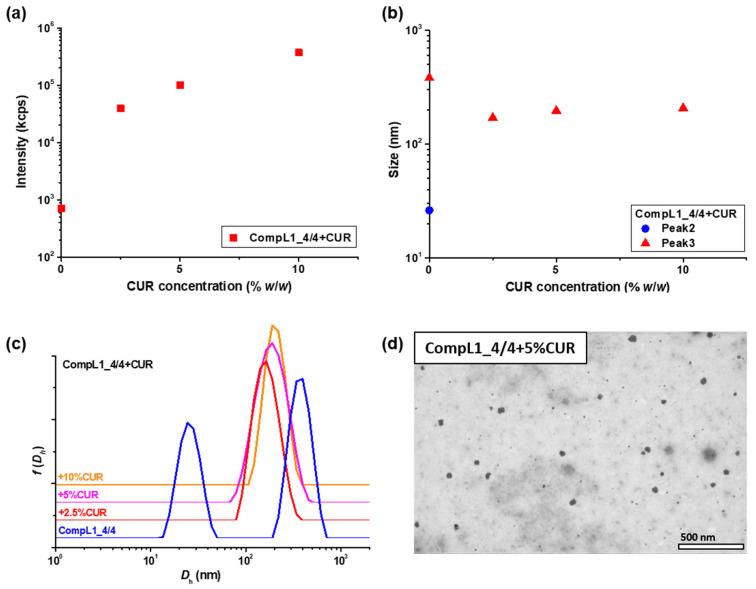
Chitosan is widely used in drug delivery applications, due to its biocompatibility, bio-degradability, and low toxicity. Nevertheless, its properties can be enhanced through the physical or chemical modification of its amino and hydroxyl groups. This work explores the electrostatic complexation of two chitosan samples of differing lengths with two poly(-isopropylacrylamide) (PNIPAM) homopolymers of different molecular weight carrying a chargeable carboxyl end group. This interaction enables the electrostatic binding of PNIPAM side chains onto the chitosan backbone through the amino groups, and could be considered as an alternative grafting method. Dynamic and electrophoretic light scattering techniques were employed in order to study the solution/dispersion properties of the formed complexes as a function of the PNIPAM concentration, or, equivalently, the molar/charge ratio of the two components. The obtained results revealed that their mass, size, and charge mostly depend on the length of the two individual constituents, as well as their mixing ratio. Furthermore, their response to changes in their environment, namely temperature and ionic strength, was also examined, demonstrating the effect of either the thermoresponsiveness of PNIPAM or the electrostatic charge screening, respectively. Fluorescence spectroscopy, utilizing pyrene as a probe, provided information regarding the hydrophobicity of the formed complexes, while images from scanning transmission electron and atomic force microscopies further elucidated their morphology, which was found to be closely related to that of the corresponding chitosan molecule. Finally, their potential as drug delivery vehicles was also investigated, utilizing curcumin as a model drug at various loading concentrations.
壳聚糖因其生物相容性、生物可降解性和低毒性而被广泛应用于药物递送领域。然而,其性能可通过对其氨基和羟基进行物理或化学修饰来增强。这项工作探索了两种不同长度的壳聚糖样品与两种带有可带电羧基端基的不同分子量的聚(N-异丙基丙烯酰胺)(PNIPAM)均聚物之间的静电络合作用。这种相互作用使得PNIPAM侧链能够通过氨基静电结合到壳聚糖主链上,可被视为一种替代的接枝方法。采用动态和电泳光散射技术来研究形成的复合物的溶液/分散性质随PNIPAM浓度的变化,或者等效地,随两种组分的摩尔/电荷比的变化。所得结果表明,它们的质量、尺寸和电荷主要取决于两种单独成分的长度以及它们的混合比例。此外,还研究了它们对环境变化(即温度和离子强度)的响应,分别证明了PNIPAM的热响应性或静电电荷屏蔽的影响。利用芘作为探针的荧光光谱提供了有关形成的复合物疏水性的信息,而扫描透射电子显微镜和原子力显微镜的图像进一步阐明了它们的形态,发现其与相应壳聚糖分子的形态密切相关。最后,还以姜黄素为模型药物,在不同负载浓度下研究了它们作为药物递送载体的潜力。







 Zotero 插件