
新型冠状病毒2型(SARS-CoV-2)的口腔感染与长期新冠的风险
Oral SARS-CoV-2 Infection and Risk for Long Covid.
作者信息
Schwartz Joel, Capistrano Kristelle, Hussein Heba, Hafedi Avin, Shukla Deepak, Naqvi Afsar
机构信息
Department of Oral Medicine and Diagnostic Sciences, University of Illinois Chicago, Chicago, Illinois, USA.
Department of Periodontics, University of Illinois Chicago, Chicago, Illinois, USA.
出版信息
Rev Med Virol. 2025 Mar;35(2):e70029. doi: 10.1002/rmv.70029.
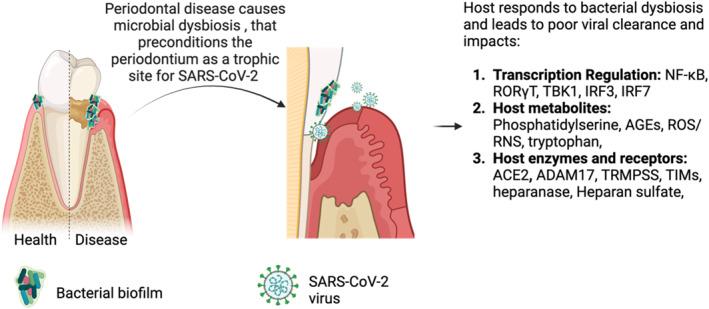
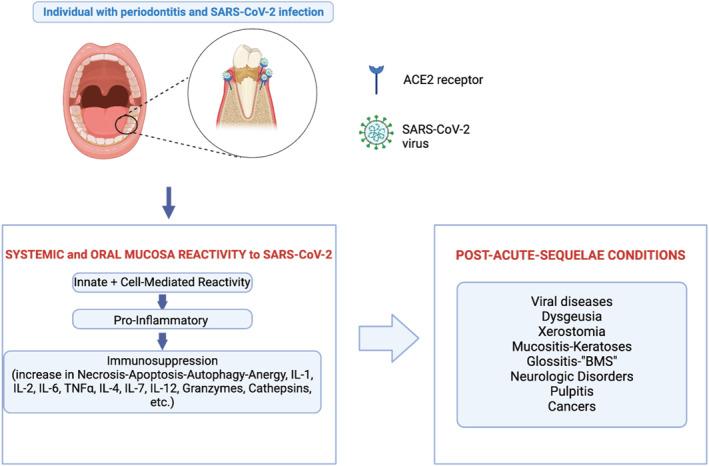
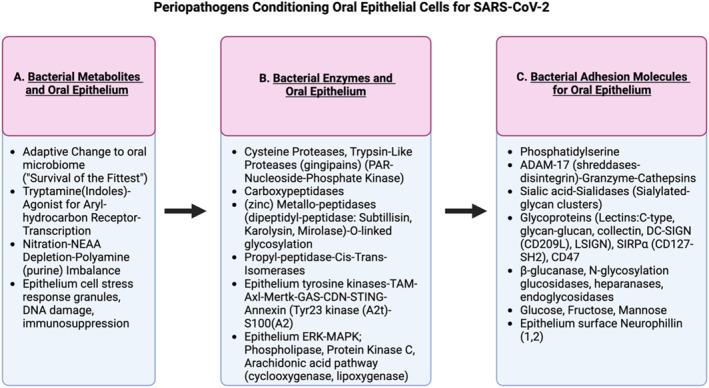
SARS-CoV-2 is an oral pathogen that infects and replicates in mucosal and salivary epithelial cells, contributing to oral post-acute sequelae COVID-19 (PASC) and other oral and non-oral pathologies. While pre-existing inflammatory oral diseases provides a conducive environment for the virus, acute infection and persistence of SARS-CoV-2 can also results in oral microbiome dysbiosis that further worsens poor oral mucosal health. Indeed, oral PASC includes periodontal diseases, dysgeusia, xerostomia, pharyngitis, oral keratoses, and pulpitis suggesting significant bacterial contributions to SARS-CoV-2 and oral tissue tropism. Dysbiotic microbiome-induced inflammation can promote viral entry via angiotensin-converting enzyme receptor-2 (ACE2), serine transmembrane TMPRSS2 and possibly other non-canonical pathways. Additionally, metabolites derived from a dysbiotic microbiome can alter the physiological and biochemical pathways related to the metabolism of lipids, carbohydrates, and amino acids. This may promote a pro-inflammatory microenvironment, leading to immune exhaustion, loss of tolerance, and susceptibility to a variety of oral pathogens, causing acute and later chronic inflammation. Microbial release of mimics of host metallopeptidases related to furin, ADAM17 (A disintegrin and metalloproteinase 17), and glycoprotein metabolites can further aid viral attachment to T cell immunoglobulin-like (TIMs), enhancing viral entry while simultaneously depressing oral mucosal immune resistance and clearance. Membrane reorganization characterised by neuroproteins, such as neuropilins, also functionally assists with SARS-CoV-2 entry and extends the pathogenesis of PASC from the oral cavity to the brain, gut, or other non-oral tissues. Thus, poor oral health, characterised by disrupted oral microbiomes can promote viral tropism, weaken antiviral resistance, and heightens susceptibility to SARS-CoV-2 infection. This immune dysfunction also increases the risk of additional viral infections, exacerbating oral conditions like periodontal and endodontic diseases. These persistent oral health issues can contribute to systemic inflammation, creating bidirectional effects between oral and non-oral tissues, potentially leading to Post-Acute Sequelae of COVID-19 (PASC).
严重急性呼吸综合征冠状病毒2(SARS-CoV-2)是一种口腔病原体,可在黏膜和唾液上皮细胞中感染并复制,导致新冠病毒感染后急性后遗症(PASC)以及其他口腔和非口腔病变。虽然先前存在的炎症性口腔疾病为该病毒提供了有利环境,但SARS-CoV-2的急性感染和持续存在也会导致口腔微生物群失调,进而使不良的口腔黏膜健康状况进一步恶化。事实上,口腔PASC包括牙周疾病、味觉障碍、口干、咽炎、口腔角化病和牙髓炎,这表明细菌对SARS-CoV-2和口腔组织嗜性有重要影响。微生物群失调引起的炎症可通过血管紧张素转换酶受体2(ACE2)、丝氨酸跨膜蛋白酶TMPRSS2以及可能的其他非经典途径促进病毒进入。此外,来自失调微生物群的代谢产物可改变与脂质、碳水化合物和氨基酸代谢相关的生理和生化途径。这可能会促进促炎微环境,导致免疫耗竭、耐受性丧失以及对多种口腔病原体的易感性,引发急性和随后的慢性炎症。与弗林蛋白酶、ADAM17(一种解整合素和金属蛋白酶17)相关的宿主金属蛋白酶模拟物以及糖蛋白代谢产物的微生物释放可进一步帮助病毒附着于T细胞免疫球蛋白样分子(TIMs),增强病毒进入,同时抑制口腔黏膜免疫抵抗和清除。以神经毡蛋白等神经蛋白为特征的膜重组在功能上也有助于SARS-CoV-2进入,并将PASC的发病机制从口腔扩展到大脑、肠道或其他非口腔组织。因此,以口腔微生物群紊乱为特征的不良口腔健康状况可促进病毒嗜性,削弱抗病毒抵抗力,并增加对SARS-CoV-2感染的易感性。这种免疫功能障碍还会增加额外病毒感染的风险,加剧牙周病和牙髓病等口腔疾病。这些持续存在的口腔健康问题可导致全身炎症,在口腔和非口腔组织之间产生双向影响,可能导致新冠病毒感染后急性后遗症(PASC)。
 Zotero 插件