
进化基因组学揭示了在禾顶囊壳属中与毒力和生活方式相关的结构和遗传内容的变异。
Evolutionary genomics reveals variation in structure and genetic content implicated in virulence and lifestyle in the genus Gaeumannomyces.
作者信息
Hill Rowena, Grey Michelle, Fedi Mariano Olivera, Smith Daniel, Canning Gail, Ward Sabrina J, Irish Naomi, Smith Jade, McMillan Vanessa E, Hammond Jess, Osborne Sarah-Jane, Reynolds Gillian, Smith Ellie, Chancellor Tania, Swarbreck David, Hall Neil, Palma-Guerrero Javier, Hammond-Kosack Kim E, McMullan Mark
机构信息
Earlham Institute, Norwich Research Park, Norwich, NR4 7UZ, UK.
Rothamsted Research, Harpenden, AL5 2JQ, UK.
出版信息
BMC Genomics. 2025 Mar 12;26(1):239. doi: 10.1186/s12864-025-11432-0.
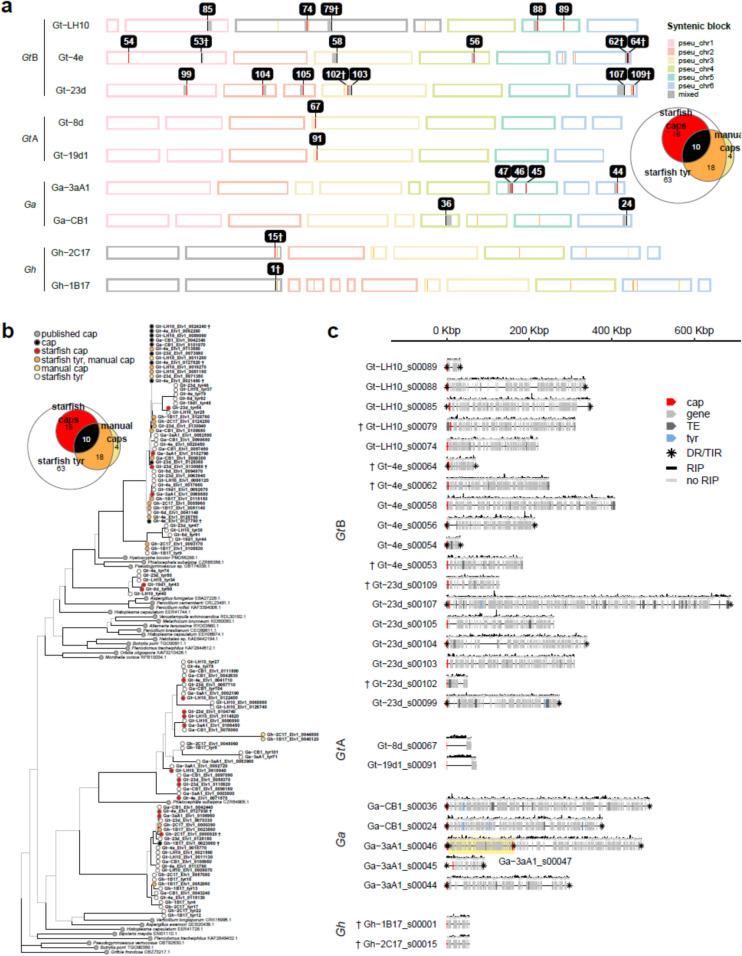
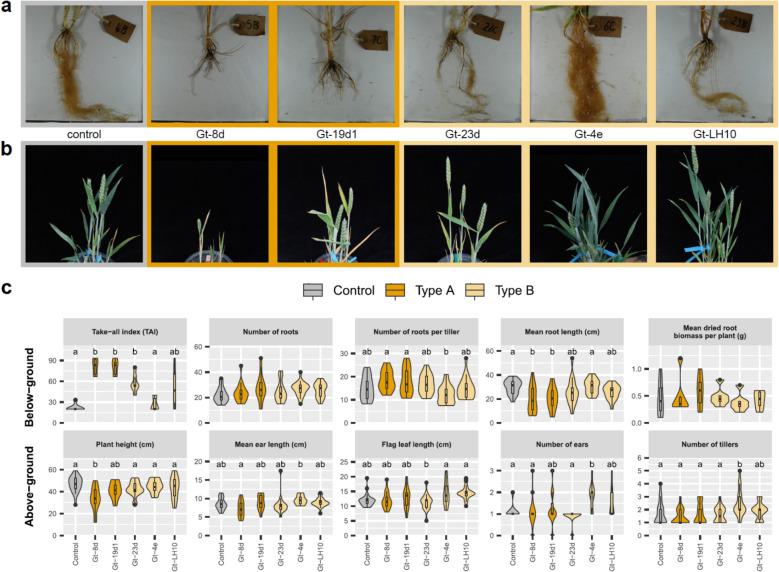
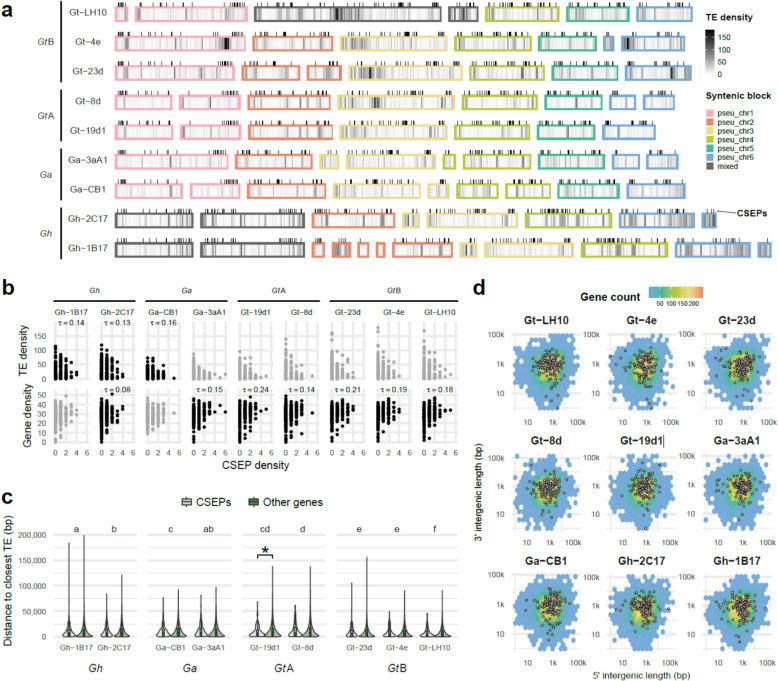
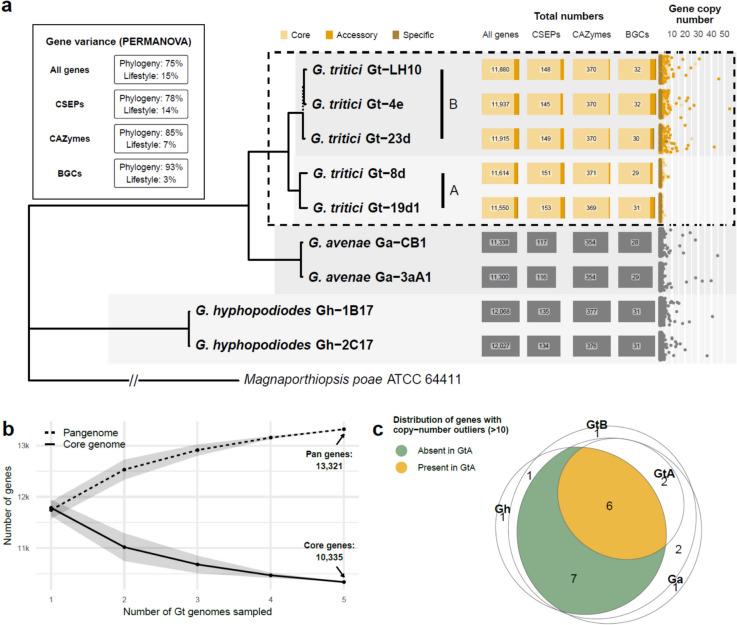
Gaeumannomyces tritici is responsible for take-all disease, one of the most important wheat root threats worldwide. High-quality annotated genome resources are sorely lacking for this pathogen, as well as for the closely related antagonist and potential wheat take-all biocontrol agent, G. hyphopodioides. As such, we know very little about the genetic basis of the interactions in this host-pathogen-antagonist system. Using PacBio HiFi sequencing technology we have generated nine near-complete assemblies, including two different virulence lineages for G. tritici and the first assemblies for G. hyphopodioides and G. avenae (oat take-all). Genomic signatures support the presence of two distinct virulence lineages in G. tritici (types A and B), with A strains potentially employing a mechanism to prevent gene copy-number expansions. The CAZyme repertoire was highly conserved across Gaeumannomyces, while candidate secreted effector proteins and biosynthetic gene clusters showed more variability and may distinguish pathogenic and non-pathogenic lineages. A transition from self-sterility (heterothallism) to self-fertility (homothallism) may also be a key innovation implicated in lifestyle. We did not find evidence for transposable element and effector gene compartmentalisation in the genus, however the presence of Starship giant transposable elements may contribute to genomic plasticity in the genus. Our results depict Gaeumannomyces as an ideal system to explore interactions within the rhizosphere, the nuances of intraspecific virulence, interspecific antagonism, and fungal lifestyle evolution. The foundational genomic resources provided here will enable the development of diagnostics and surveillance of understudied but agriculturally important fungal pathogens.
小麦全蚀病菌(Gaeumannomyces tritici)可引发全蚀病,这是全球范围内对小麦根系最重要的威胁之一。对于这种病原菌,以及与之密切相关的拮抗菌和潜在的小麦全蚀病生物防治剂——丝状布氏白粉菌(G. hyphopodioides)而言,高质量的注释基因组资源严重匮乏。因此,我们对这个宿主-病原体-拮抗菌系统中相互作用的遗传基础知之甚少。利用PacBio HiFi测序技术,我们生成了9个近乎完整的基因组组装序列,包括小麦全蚀病菌的两个不同毒力谱系,以及丝状布氏白粉菌和燕麦全蚀病菌(G. avenae)的首个基因组组装序列。基因组特征支持小麦全蚀病菌中存在两个不同的毒力谱系(A 型和 B 型),其中 A 型菌株可能采用了一种机制来防止基因拷贝数扩增。碳水化合物活性酶库在全蚀病菌属中高度保守,而候选分泌效应蛋白和生物合成基因簇则表现出更大的变异性,可能区分致病和非致病谱系。从自交不育(异宗配合)到自交可育(同宗配合)的转变也可能是与生活方式相关的关键创新。我们没有找到该属中转座元件和效应基因分区的证据,然而星际巨型转座元件的存在可能有助于该属的基因组可塑性。我们的结果表明,全蚀病菌属是探索根际相互作用、种内毒力细微差别、种间拮抗以及真菌生活方式进化的理想系统。这里提供的基础基因组资源将有助于开发针对研究较少但在农业上具有重要意义的真菌病原体的诊断和监测方法。

 Zotero 插件