
小分子抑制泛素 C 末端水解酶 L1 可改变细胞代谢蛋白,并根据高级别浆液性卵巢癌的化疗敏感性状态发挥抗肿瘤或促肿瘤作用。
Small molecule inhibition of ubiquitin C-terminal hydrolase L1 alters cell metabolism proteins and exerts anti- or pro-tumorigenic effects contingent upon chemosensitivity status in high grade serous ovarian cancer.
作者信息
Jansen Corinne, McAdams Julia, Kim Chloe, De La Cruz Payton, Salaverria Angelica, DaSilva Nicholas A, Grive Kathryn, James Nicole E
机构信息
Program in Women's Oncology, Women and Infants Hospital, Providence, RI, United States.
Department of Obstetrics and Gynecology, Warren-Alpert Medical School of Brown University, Providence, RI, United States.
出版信息
Front Pharmacol. 2025 Feb 26;16:1547164. doi: 10.3389/fphar.2025.1547164. eCollection 2025.
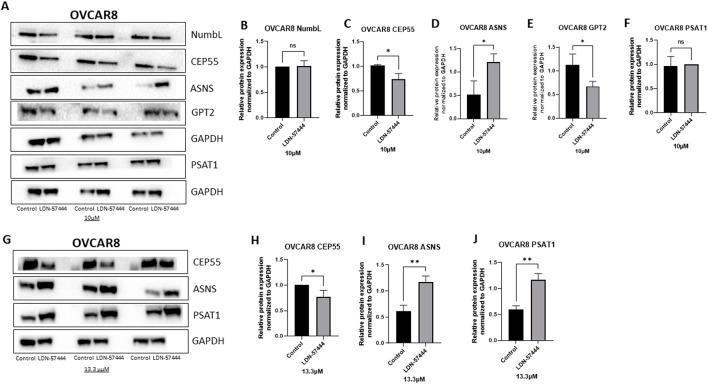
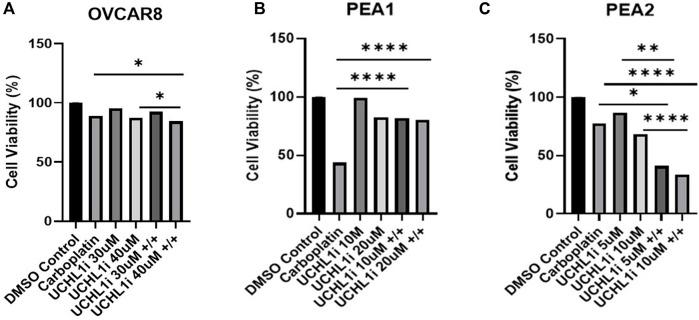
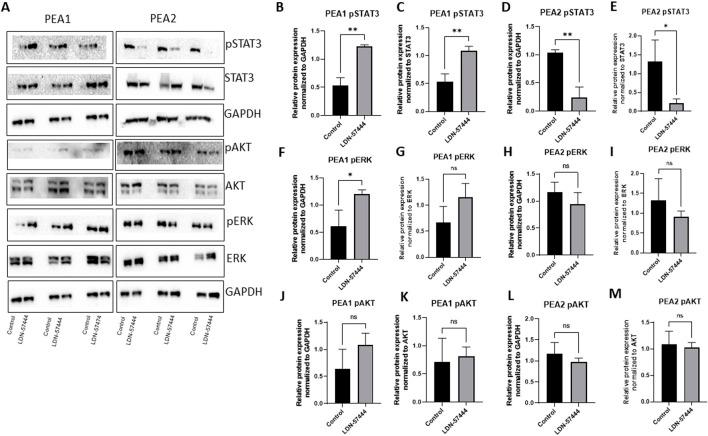
High grade serous ovarian cancer (HGSOC) is the most lethal of all gynecologic malignancies in which the majority of patients eventually develop chemoresistant recurrent disease. Ubiquitin C-terminal hydrolase L1 (UCHL1) is a deubiquitinating enzyme canonically known for its involvement in neurodegeneration, but recently has been shown to play a key role in tumorigenesis. Furthermore, UCHL1 has garnered attention across a multitude of cancer subtypes as it has the ability to be targeted through small molecule inhibition. Therefore, the goal of this present study was to elucidate mechanistic consequences of small molecule UCHL1 inhibition in HGSOC. Comparative label-free proteomic analysis of HGSOC cell line, OVCAR8 revealed prominent changes in cell metabolism proteins upon treatment with UCHL1 small molecule inhibitor, LDN-57444. Further validation via Western blot analysis revealed that changes in cell metabolism proteins differed in matched chemosensitive versus chemoresistant HGSOC cells. Finally, cell viability analysis demonstrated that a combinatorial carboplatin and LDN-57444 blockade produced a promotion or conversely, inhibition of cell death, in chemoresistant, and chemosensitve HGSOC cells, respectively. This phenomenon was further corroborated by respective differences in activation levels of common tumor cell growth pathways STAT3, MAPK/ERK, and AKT in chemoresistant versus chemosensitive HGSOC cells. Overall, this investigation established that pharmacologic targeting of UCHL1 produces differential effects according to HGSOC chemosensitivity status.
高级别浆液性卵巢癌(HGSOC)是所有妇科恶性肿瘤中致死率最高的,大多数患者最终会发展为化疗耐药的复发性疾病。泛素C末端水解酶L1(UCHL1)是一种去泛素化酶,通常因参与神经退行性变而闻名,但最近已被证明在肿瘤发生中起关键作用。此外,UCHL1已在多种癌症亚型中受到关注,因为它能够通过小分子抑制作用进行靶向治疗。因此,本研究的目的是阐明小分子抑制UCHL1在HGSOC中的机制后果。对HGSOC细胞系OVCAR8进行的无标记蛋白质组学比较分析显示,在用UCHL1小分子抑制剂LDN-57444处理后,细胞代谢蛋白发生了显著变化。通过蛋白质印迹分析进一步验证发现,细胞代谢蛋白的变化在配对的化疗敏感与化疗耐药的HGSOC细胞中有所不同。最后,细胞活力分析表明,联合使用卡铂和LDN-57444分别在化疗耐药和化疗敏感的HGSOC细胞中促进或相反地抑制了细胞死亡。化疗耐药与化疗敏感的HGSOC细胞中常见肿瘤细胞生长途径STAT3、MAPK/ERK和AKT的激活水平存在差异,进一步证实了这一现象。总体而言,本研究确定,针对UCHL1的药物靶向治疗根据HGSOC的化疗敏感性状态产生不同的效果。



 Zotero 插件