
可见光驱动的三氯乙酸和α-卤代羰基化合物的催化脱卤反应:铜的多重作用
Visible-Light-Driven Catalytic Dehalogenation of Trichloroacetic Acid and α-Halocarbonyl Compounds: Multiple Roles of Copper.
作者信息
Thillman Abigail J, Kill Erin C, Erickson Alexander N, Wang Dian
机构信息
Department of Chemistry, Marquette University, Milwaukee, Wisconsin 53201, United States.
出版信息
ACS Catal. 2025 Feb 19;15(5):3873-3881. doi: 10.1021/acscatal.4c07845. eCollection 2025 Mar 7.
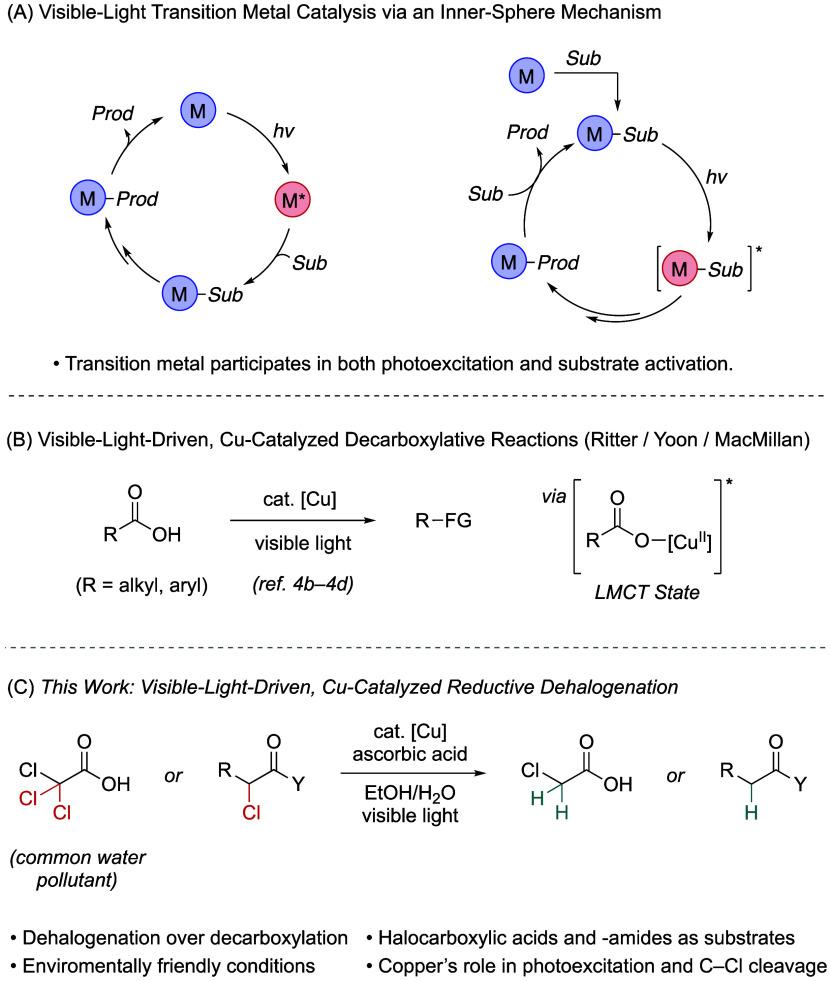
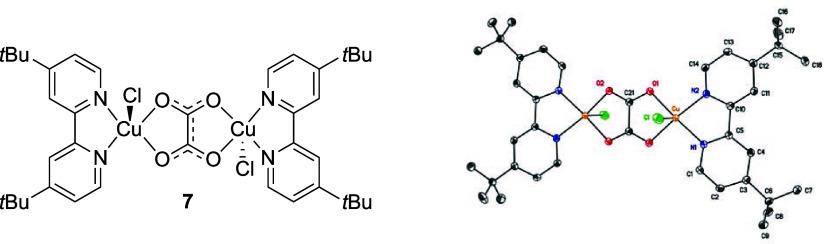
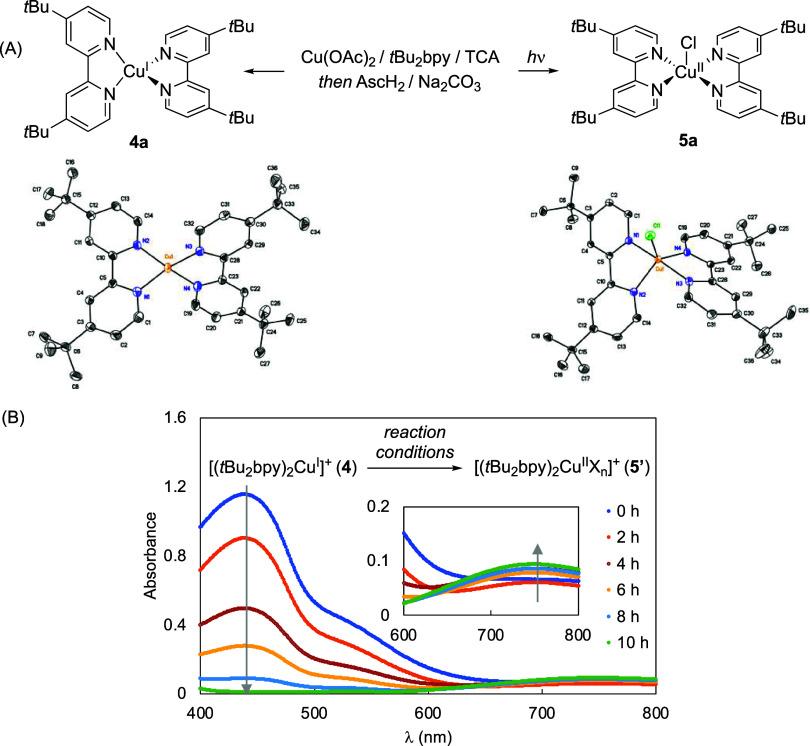
Herein, we report the reaction development and mechanistic studies of visible-light-driven Cu-catalyzed dechlorination of trichloroacetic acid for the highly selective formation of monochloroacetic acid. Visible-light-driven transition metal catalysis via an inner-sphere pathway features the dual roles of transition metal species in photoexcitation and substrate activation steps, and a detailed mechanistic understanding of their roles is crucial for the further development of light-driven catalysis. This catalytic method, which features environmentally desired ascorbic acid as the hydrogen atom source and water/ethanol as the solvent, can be further applied to the dehalogenation of a variety of halocarboxylic acids and amides. Spectroscopic, X-ray crystallographic, and kinetic studies have revealed the detailed mechanism of the roles of copper in photoexcitation, thermal activation of the first C-Cl bond, and excited-state activation of the second C-Cl bond via excited-state chlorine atom transfer.
在此,我们报道了可见光驱动的铜催化三氯乙酸脱氯反应的方法开发及机理研究,该反应可高度选择性地生成一氯乙酸。通过内球途径的可见光驱动过渡金属催化具有过渡金属物种在光激发和底物活化步骤中的双重作用,深入理解它们的作用对于光驱动催化的进一步发展至关重要。这种催化方法以环境友好的抗坏血酸作为氢原子源,水/乙醇作为溶剂,可进一步应用于多种卤代羧酸和酰胺的脱卤反应。光谱、X射线晶体学和动力学研究揭示了铜在光激发、第一个C-Cl键的热活化以及通过激发态氯原子转移对第二个C-Cl键进行激发态活化过程中的详细作用机制。



 Zotero 插件