
中国缺血性心脏病的负担、风险因素及预测(1990 - 2021年):2021年全球疾病负担研究结果
Burden, risk factors, and projections of ischemic heart disease in China (1990-2021): findings from the 2021 GBD study.
作者信息
Xu Sikai, Liu Zhiyang, Tang Mu, Xu Chunli
机构信息
Department of Medical Genetics, Jiangxi Medical College, The Second Affiliated Hospital, Nanchang University, Nanchang, Jiangxi, China.
Department of Breast Surgery, Jiangxi Cancer Hospital, Nanchang, Jiangxi, China.
出版信息
Front Cardiovasc Med. 2025 Feb 26;12:1549147. doi: 10.3389/fcvm.2025.1549147. eCollection 2025.
BACKGROUND
Ischemic heart disease (IHD) remains a major public health challenge in China. This study aimed to comprehensively analyze the burden of IHD, its risk factors, and future trends from 1990 to 2021 using the Global Burden of Disease database.
METHODS
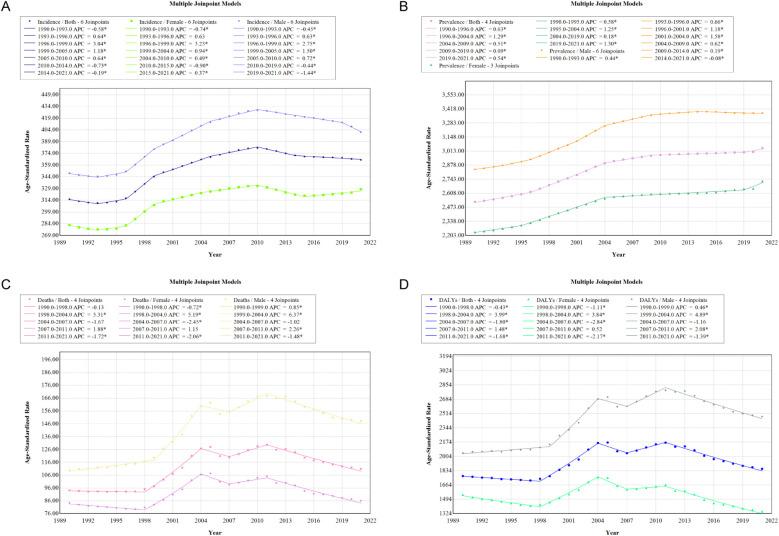
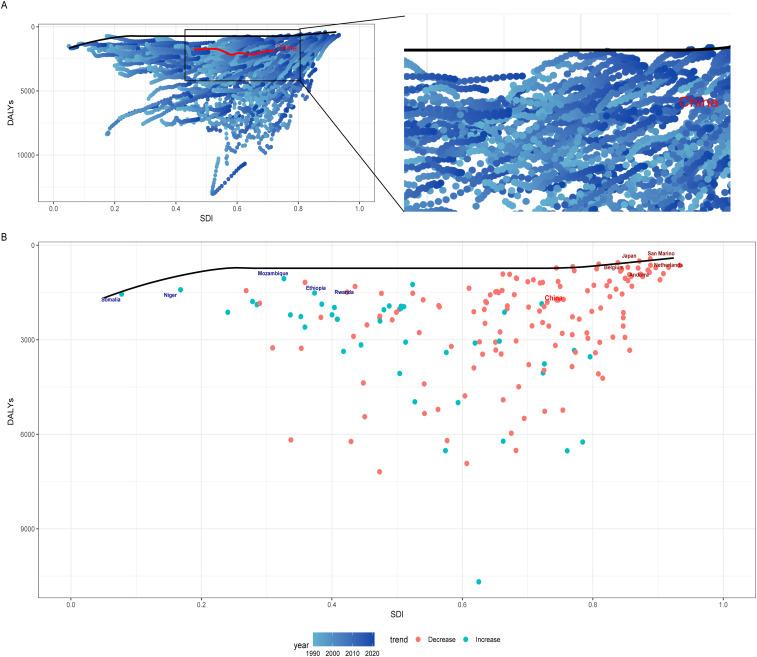
We assessed IHD trends in incidence, prevalence, mortality, and disability-adjusted life years (DALYs) stratified by age (greater than 15 years) and gender. Age-standardized rates, average annual percentage changes, and joinpoint regression analyses were used to evaluate temporal trends. Decomposition and frontier analyses were conducted to identify key contributors to the IHD burden, while future projections were generated for the next 15 years.
RESULTS
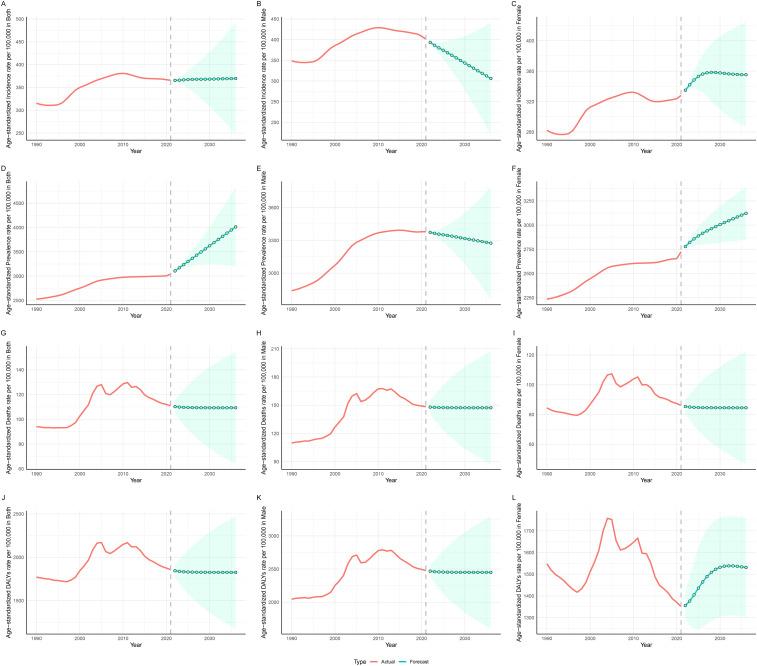
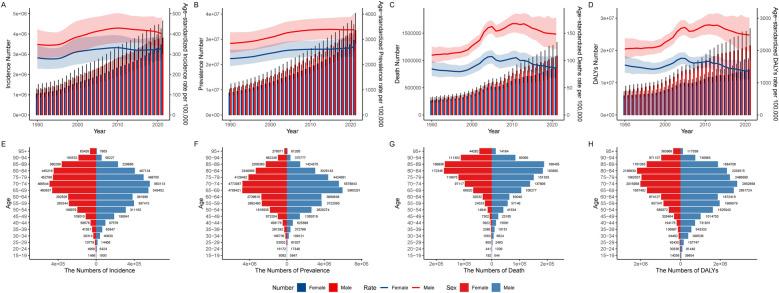
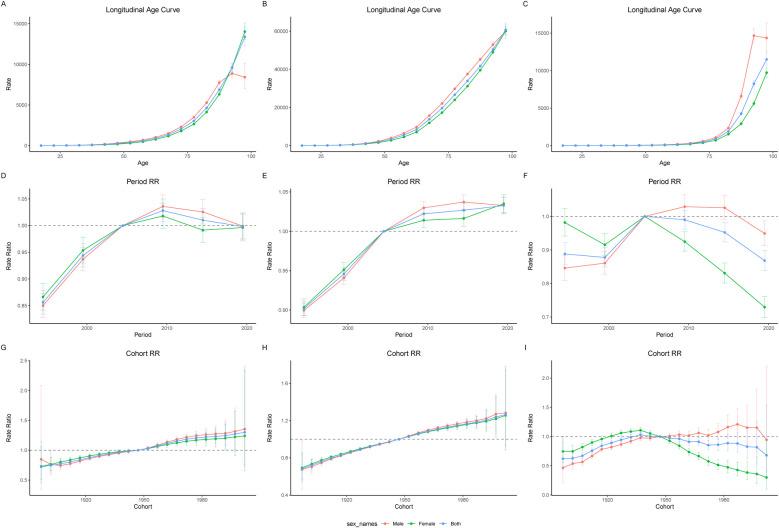
In 2021, the number of IHD incident cases, prevalent cases, deaths, and DALYs in China were 3.17, 3.25, 3.57, and 2.62 times higher than those in 1990, respectively. Age-standardized mortality rates and age-standardized DALYs rates demonstrated an initial increase, followed by a gradual decline. Males showed higher IHD burden during middle age, while elderly females surpassed males in the later years. Aging, high systolic blood pressure, ambient particulate matter pollution, elevated low-density lipoprotein cholesterol, and smoking were the primary drivers of IHD burden. Future projections suggest a declining incidence and prevalence among males but increasing trends in females, with DALYs expected to rise significantly in the female population.
CONCLUSIONS
The burden of IHD in China has evolved significantly over the past three decades, driven by demographic and environmental factors. While prevalence and incidence have risen, mortality and DALYs have shown a recent decline, reflecting shifts in disease patterns. Age and gender disparities are evident, with middle-aged males and elderly females disproportionately affected. Key contributors, such as high blood pressure and pollution, highlight the need for targeted interventions. Gender-specific public health strategies, alongside improved environmental and health policies, are essential to mitigating the future burden of IHD in China.
背景
缺血性心脏病(IHD)仍是中国面临的一项重大公共卫生挑战。本研究旨在利用全球疾病负担数据库全面分析1990年至2021年期间缺血性心脏病的负担、其风险因素及未来趋势。
方法
我们评估了按年龄(大于15岁)和性别分层的缺血性心脏病在发病率、患病率、死亡率及伤残调整生命年(DALYs)方面的趋势。采用年龄标准化率、年均变化百分比及连接点回归分析来评估时间趋势。进行分解分析和前沿分析以确定缺血性心脏病负担的主要促成因素,同时对未来15年进行了预测。
结果
2021年,中国缺血性心脏病的发病例数、患病例数、死亡数及伤残调整生命年分别比1990年高出3.17倍、3.25倍、3.57倍及2.62倍。年龄标准化死亡率和年龄标准化伤残调整生命年率呈现出先上升后逐渐下降的趋势。中年男性的缺血性心脏病负担较高,而老年女性在晚年超过了男性。老龄化、高收缩压、环境细颗粒物污染、低密度脂蛋白胆固醇升高及吸烟是缺血性心脏病负担的主要驱动因素。未来预测表明,男性的发病率和患病率呈下降趋势,而女性呈上升趋势,预计女性人群的伤残调整生命年将显著增加。
结论
在过去三十年中,受人口和环境因素驱动,中国缺血性心脏病的负担发生了显著变化。虽然患病率和发病率有所上升,但死亡率和伤残调整生命年最近有所下降,反映出疾病模式的转变。年龄和性别差异明显,中年男性和老年女性受到的影响尤为严重。高血压和污染等主要促成因素凸显了针对性干预措施的必要性。针对特定性别的公共卫生策略,以及改进环境和健康政策,对于减轻中国未来缺血性心脏病的负担至关重要。

 Zotero 插件