
联合靶向MARCO与抗CTLA-4可通过巨噬细胞重编程增强黑色素瘤消退和免疫细胞浸润。
Targeting MARCO in combination with anti-CTLA-4 leads to enhanced melanoma regression and immune cell infiltration via macrophage reprogramming.
作者信息
Takahashi Hidenori, Perez-Villarroel Patricio, Falahat Rana, Mulé James J
机构信息
Immunology, Moffitt Cancer Center, Tampa, Florida, USA.
Immunology, Moffitt Cancer Center, Tampa, Florida, USA
出版信息
J Immunother Cancer. 2025 Mar 13;13(3):e011030. doi: 10.1136/jitc-2024-011030.
BACKGROUND
Strategies to improve the therapeutic efficacy of cancer immunotherapy with immune checkpoint inhibitors include targeting additional immunosuppressive compartments in the tumor microenvironment (TME). Inhibitory macrophages (Mφ) can be one of the most abundant immune cells in the TME associated with poor prognosis. However, to date, selective Mφ depletion strategies as a cancer immunotherapy have not been successful in clinical trials. Macrophage Receptor with Collagenous Structure (MARCO) is one of a family of class-A scavenger receptors expressed by Mφ in the TME and is one of the most upregulated transcripts in dendritic cells (DC) following their ex vivo uptake of dead tumor cells. The clinical significance of MARCO expression in the TME is not fully understood.
METHODS
The therapeutic potential of targeting MARCO by an anti-murine MARCO (ED31, clone ED31) monoclonal antibody, which inhibits ligand-binding to MARCO, was explored in combination with anti-cytotoxic T-lymphocyte associated protein 4 (anti-CTLA-4) or anti-programmed cell death protein-1 (anti-PD-1) in C57BL/6J mice bearing B16F10 or Pan02 tumors. The mechanism by which ED31 impacts the TME was investigated by flow cytometry in the different treatment arms. The contribution of Mφ was assessed by both in vivo depletion and in vitro functional assays. Chemokine production was measured by a bead-based multiplex assay.
RESULTS
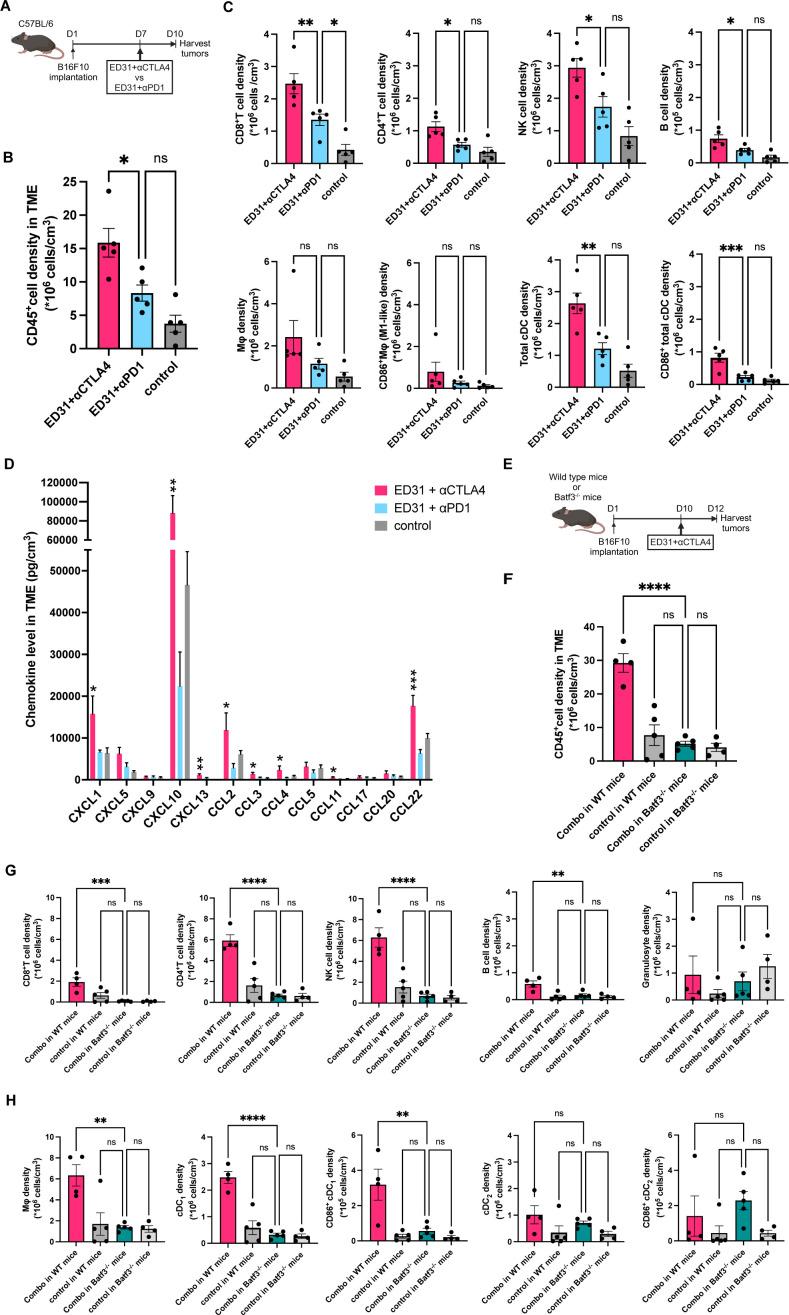
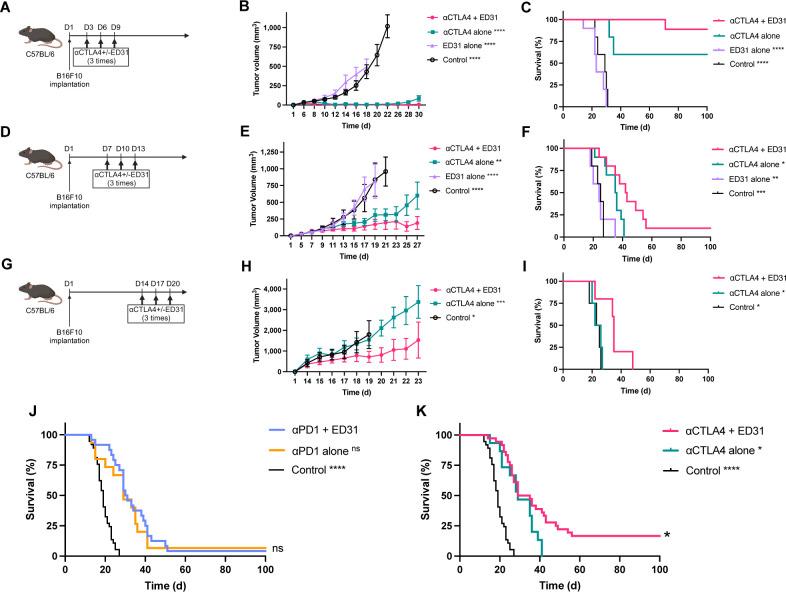
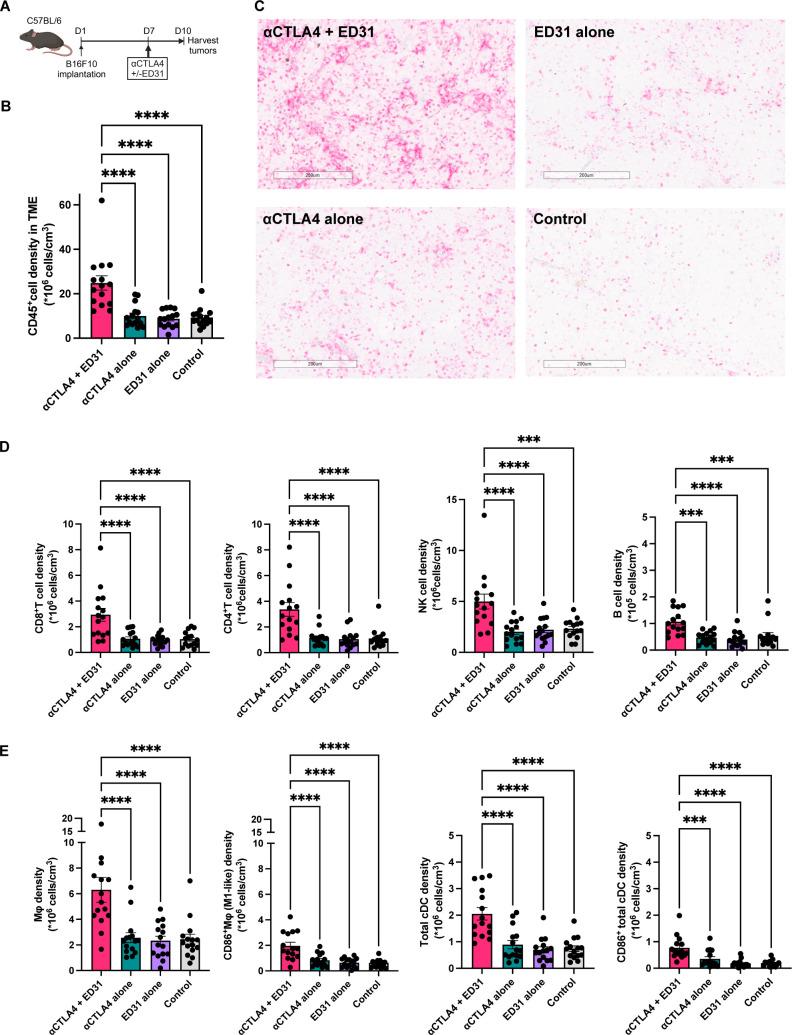
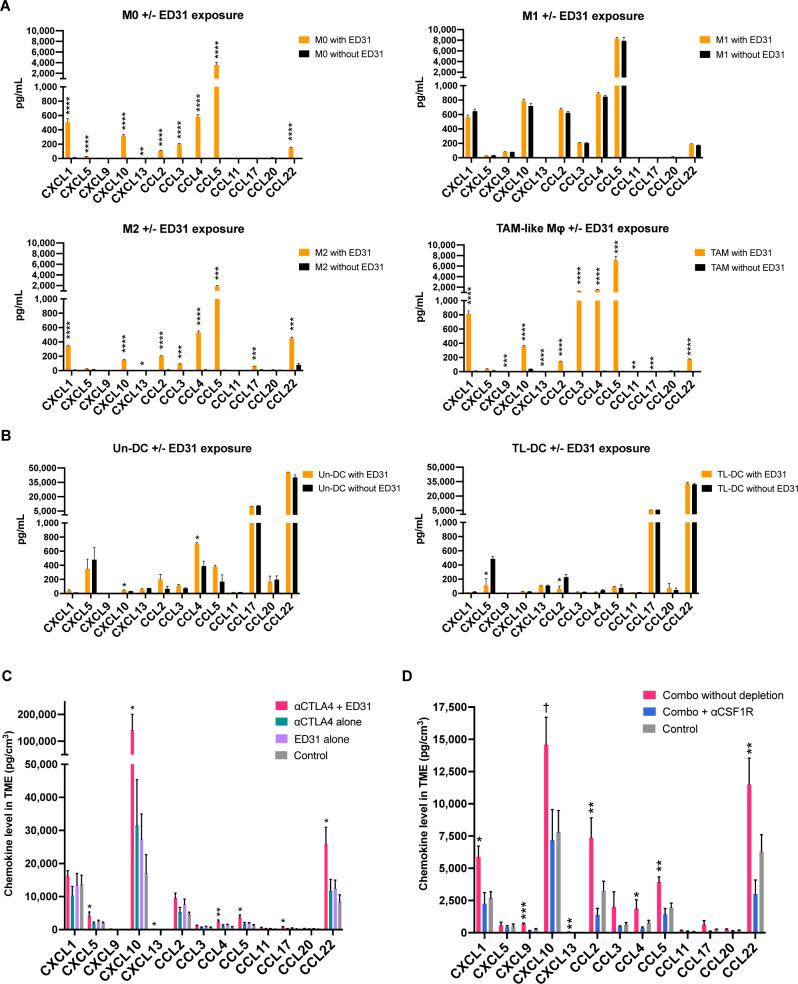
ED31 enhanced antitumor efficacy of anti-CTLA-4, but not of anti-PD-1. Analysis of the TME revealed that adding ED31 to anti-CTLA-4 substantially increased immune cell infiltration, including mature conventional DC recruitment, that was due to a switch to M1-pattern chemokines by Mφ. Mφ depletion completely abrogated both the increase in immune cell infiltration and chemokine production, and abolished the antitumor efficacy of the combination therapy.
CONCLUSIONS
Targeting MARCO as an additional checkpoint in the TME can offer a strategy to improve the antitumor efficacy of anti-CTLA-4 through a mechanism involving Mφ reprogramming rather than their depletion.
背景
提高免疫检查点抑制剂癌症免疫治疗疗效的策略包括靶向肿瘤微环境(TME)中其他免疫抑制区室。抑制性巨噬细胞(Mφ)可能是TME中最丰富的免疫细胞之一,与预后不良相关。然而,迄今为止,作为癌症免疫治疗的选择性Mφ耗竭策略在临床试验中尚未成功。具有胶原结构的巨噬细胞受体(MARCO)是Mφ在TME中表达的A类清道夫受体家族之一,也是树突状细胞(DC)在体外摄取死亡肿瘤细胞后上调最明显的转录本之一。MARCO在TME中表达的临床意义尚未完全明确。
方法
在携带B16F10或Pan02肿瘤的C57BL/6J小鼠中,研究了一种抗小鼠MARCO(ED31,克隆号ED31)单克隆抗体靶向MARCO的治疗潜力,该抗体可抑制配体与MARCO的结合,并与抗细胞毒性T淋巴细胞相关蛋白4(抗CTLA-4)或抗程序性细胞死亡蛋白1(抗PD-1)联合使用。通过流式细胞术在不同治疗组中研究ED31影响TME的机制。通过体内耗竭和体外功能试验评估Mφ的作用。通过基于微珠的多重分析测定趋化因子的产生。
结果
ED31增强了抗CTLA-4的抗肿瘤疗效,但未增强抗PD-1的疗效。对TME的分析表明,将ED31添加到抗CTLA-4中可显著增加免疫细胞浸润,包括成熟常规DC的募集,这是由于Mφ转变为M1型趋化因子所致。Mφ耗竭完全消除了免疫细胞浸润和趋化因子产生的增加,并消除了联合治疗的抗肿瘤疗效。
结论
靶向MARCO作为TME中的另一个检查点,可以提供一种策略,通过涉及Mφ重编程而非其耗竭的机制来提高抗CTLA-4的抗肿瘤疗效。

 Zotero 插件