
抑制EZH2可补充杜氏肌营养不良症中的类固醇作用。
Inhibiting EZH2 complements steroid effects in Duchenne muscular dystrophy.
作者信息
Jeon Eun Young, Kwak Yejin, Kang Hyeji, Kim Hanbyeol, Jin Se Young, Park Soojin, Kim Ryeo Gyeong, Ko Dayoung, Won Jae-Kyung, Cho Anna, Jung Inkyung, Lee Chul-Hwan, Park Jeongbin, Kim Hyun-Young, Chae Jong-Hee, Choi Murim
机构信息
Department of Biomedical Sciences, Seoul National University College of Medicine, Seoul, Republic of Korea.
Department of Information Convergence Engineering, Pusan National University, Yangsan, Republic of Korea.
出版信息
Sci Adv. 2025 Mar 14;11(11):eadr4443. doi: 10.1126/sciadv.adr4443.
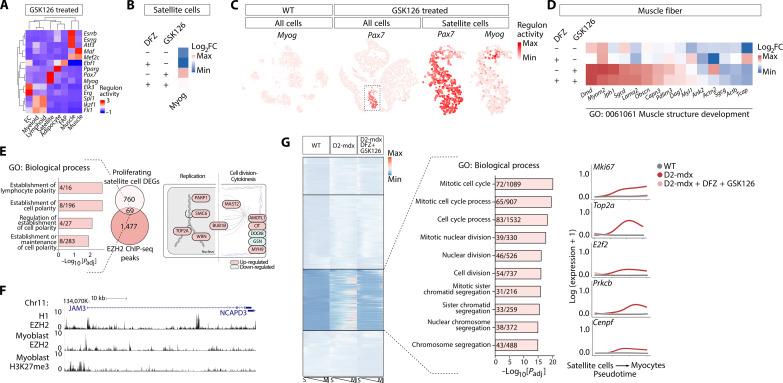
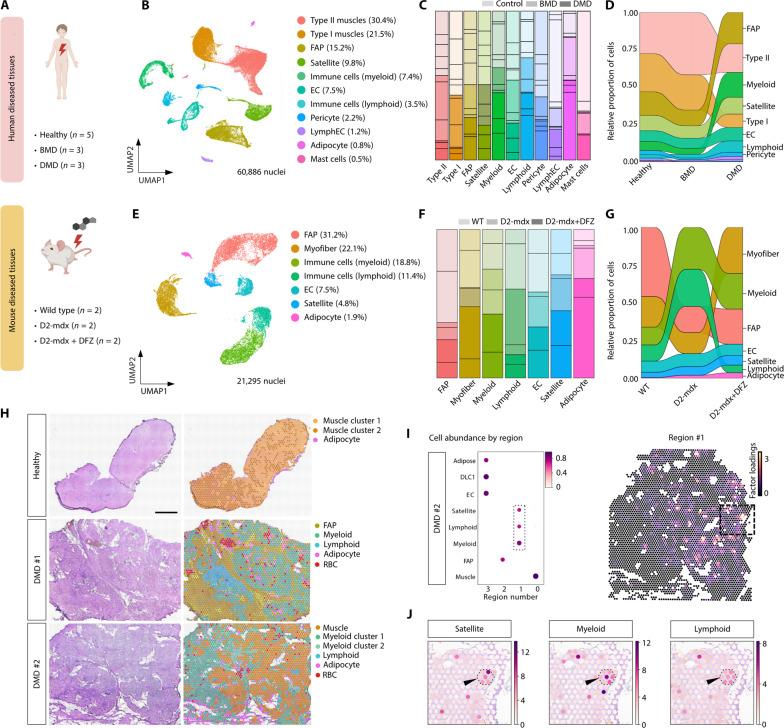
Duchenne muscular dystrophy (DMD) is a devastating X-linked disorder caused by dystrophin gene mutations. Despite recent advances in understanding the disease etiology and applying emerging treatment methodologies, glucocorticoid derivatives remain the only general therapeutic option that can slow disease development. However, the precise molecular mechanism of glucocorticoid action remains unclear, and there is still need for additional remedies to complement the treatment. Here, using single-nucleus RNA sequencing and spatial transcriptome analyses of human and mouse muscles, we investigated pathogenic features in patients with DMD and palliative effects of glucocorticoids. Our approach further illuminated the importance of proliferating satellite cells and revealed increased activity of a signal transduction pathway involving EZH2 in the patient cells. Subsequent administration of EZH2 inhibitors to mutant mice resulted in improved muscle phenotype through maintaining the immune-suppressing effect but overriding the muscle weakness and fibrogenic effects exerted by glucocorticoids. Our analysis reveals pathogenic mechanisms that can be readily targeted by extant therapeutic options for DMD.
杜氏肌营养不良症(DMD)是一种由抗肌萎缩蛋白基因突变引起的严重X连锁疾病。尽管在理解疾病病因和应用新兴治疗方法方面取得了最新进展,但糖皮质激素衍生物仍然是唯一能够减缓疾病发展的常规治疗选择。然而,糖皮质激素作用的确切分子机制仍不清楚,仍然需要其他补救措施来补充治疗。在这里,我们使用人和小鼠肌肉的单核RNA测序和空间转录组分析,研究了DMD患者的致病特征和糖皮质激素的姑息作用。我们的方法进一步阐明了增殖卫星细胞的重要性,并揭示了患者细胞中涉及EZH2的信号转导途径的活性增加。随后给突变小鼠施用EZH2抑制剂,通过维持免疫抑制作用但克服糖皮质激素所产生的肌肉无力和纤维化作用,改善了肌肉表型。我们的分析揭示了现有DMD治疗选择可以轻易靶向的致病机制。


 Zotero 插件