
优化从(Burch.)提取物合成的银纳米颗粒的抗菌、抗氧化和细胞毒性特性:一项综合研究。
Optimizing the Antimicrobial, Antioxidant, and Cytotoxic Properties of Silver Nanoparticles Synthesized from (Burch.) Extracts: A Comprehensive Study.
作者信息
Motene Matshoene V, Maepa Charity, Sigidi Muendi T
机构信息
Department of Biochemistry and Microbiology, Faculty of Sciences, Agriculture and Engineering, University of Venda, Private Bag X5050, Thohoyandou 0950, South Africa.
Laboratory for Microscopy and Microanalysis, Faculty of Natural and Agricultural Sciences, Private Bag X20, Hatfield 0028, South Africa.
出版信息
Plants (Basel). 2025 Mar 6;14(5):822. doi: 10.3390/plants14050822.
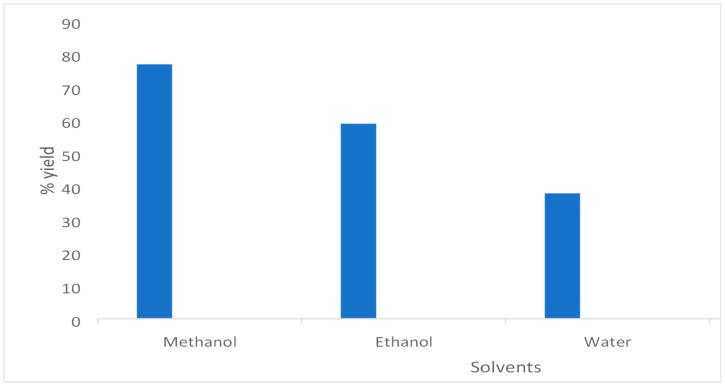
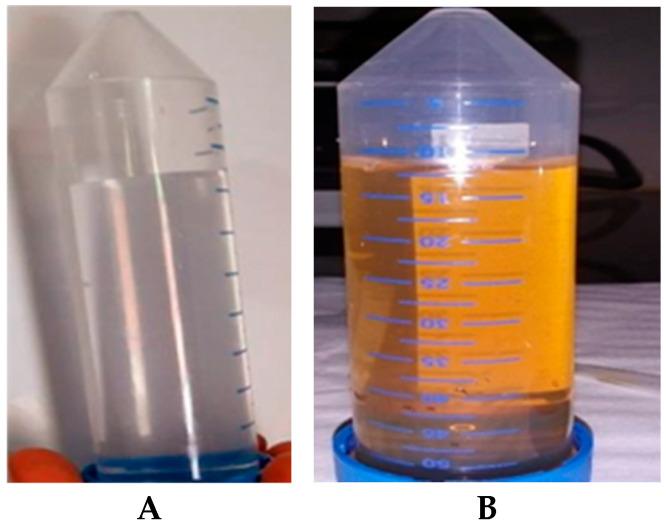
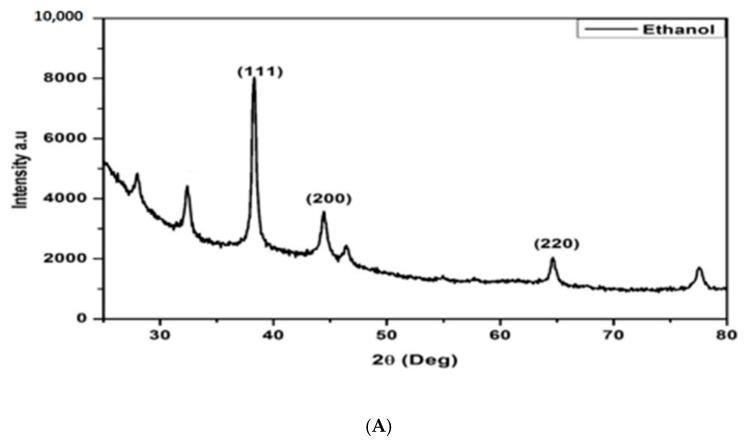
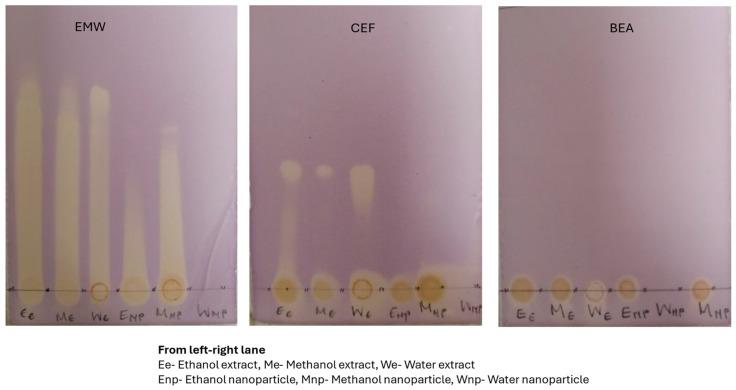
The green synthesis of silver nanoparticles (AgNPs) using (Burch) bulb extracts and evaluation of their antimicrobial, cytotoxic, and antioxidant properties were investigated. The crude plant extracts were prepared using distilled water, ethanol, and methanol for a comparison. Silver nanoparticles were synthesized and characterized via UV-Visible spectroscopy (UV-VIS), transmission electron microscopy (TEM), and X-ray diffraction (XRD). The formation of silver nanoparticles was confirmed using the UV-VIS spectra at 550 nm. The TEM confirmed the nanoparticle morphology as a mixed dispersed sphere, oval, and triangular shapes with a size range of 7.8 nm to 31.3 nm. The secondary metabolites were detected using TLC, DPPH, and LC-MS. Antimicrobial activity was assessed based on agar-well diffusion; cytotoxicity was examined through MTS assays. Various phytochemical constituents were detected through TLC and LC-MS. The crude extracts and methanol-extract-capped AgNP were able to scavenge free radicals, as shown by the developments of inhibitory bands on the TLC plate. The agar well diffusion test revealed that the AgNP capped methanol extract had potent antimicrobial activity against Gram-positive and Gram-negative multidrug resistant bacteria in comparison with penicillin and neomycin, with inhibition zones ranging between 10 mm and 14 mm for the methanol-extract-capped AgNP. The in vitro MTS assay revealed that methanol crude extracts and methanol-extract-capped AgNP had a less cytotoxic effect on the HEK293 cells in comparison with untreated cells (control). We therefore conclude that methanol was the best reducing solvent with the best overall nanoparticle morphology and performance in antimicrobial and cytotoxicity, in comparison to ethanol and distilled water.
研究了利用(伯奇)球茎提取物绿色合成银纳米颗粒(AgNPs)及其抗菌、细胞毒性和抗氧化性能。使用蒸馏水、乙醇和甲醇制备粗植物提取物以作比较。通过紫外可见光谱(UV-VIS)、透射电子显微镜(TEM)和X射线衍射(XRD)对银纳米颗粒进行合成和表征。利用550nm处的紫外可见光谱确认了银纳米颗粒的形成。TEM证实纳米颗粒形态为混合分散的球形、椭圆形和三角形,尺寸范围为7.8nm至31.3nm。使用薄层色谱法(TLC)、二苯基苦味酰基自由基(DPPH)和液相色谱-质谱联用(LC-MS)检测次生代谢产物。基于琼脂孔扩散法评估抗菌活性;通过MTS测定法检测细胞毒性。通过TLC和LC-MS检测各种植物化学成分。粗提取物和甲醇提取物包覆的AgNP能够清除自由基,如TLC板上抑制带的出现所示。琼脂孔扩散试验表明,与青霉素和新霉素相比,甲醇提取物包覆的AgNP对革兰氏阳性和革兰氏阴性多重耐药细菌具有强大的抗菌活性,甲醇提取物包覆的AgNP的抑菌圈范围在10mm至14mm之间。体外MTS测定法表明,与未处理的细胞(对照)相比,甲醇粗提取物和甲醇提取物包覆的AgNP对人胚肾293(HEK293)细胞的细胞毒性较小。因此,我们得出结论,与乙醇和蒸馏水相比,甲醇是最佳的还原溶剂,所制备的纳米颗粒在抗菌和细胞毒性方面具有最佳的整体形态和性能。




 Zotero 插件