
城市化的澳大利亚亚热带河流系统中的宏观塑料分布模式与积累情况
Macroplastic distribution patterns and accumulation in an urbanised Austral subtropical river system.
作者信息
Dalu Tatenda, Oduro Collins, Matsimela Retang M, Munyai Linton F, Wu Naicheng, Moyo Sydney, Cuthbert Ross N
机构信息
Aquatic Systems Research Group, School of Biology and Environmental Sciences, University of Mpumalanga, Nelspruit, 1200, South Africa.
Department of Geography and Spatial Information Techniques, Ningbo University, Ningbo, 315211, China.
出版信息
Sci Rep. 2025 Mar 18;15(1):9231. doi: 10.1038/s41598-025-94282-w.
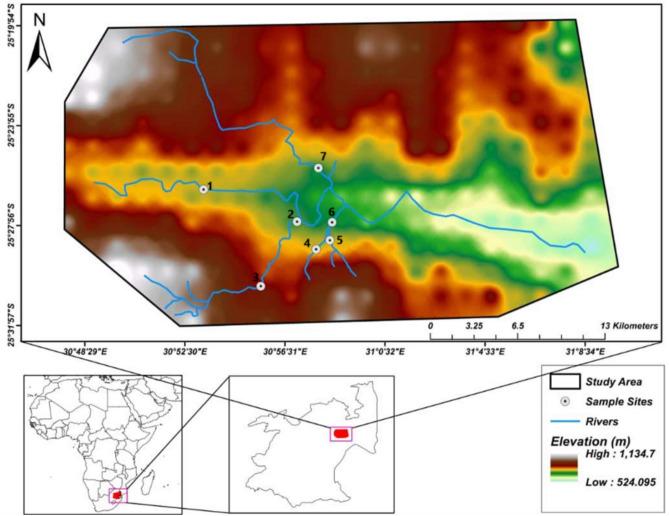
Plastic products have resulted in enormous pollution in many ecosystem types and regions worldwide. The problem is particularly prominent within aquatic environments, where multiple anthropogenic sources (i.e., agriculture, urbanisation, industries, illegal dumping) are common, exacerbated by interconnectedness between aquatic and terrestrial environments and management challenges. Regional disparities are also common within macroplastic research, with a scarcity of knowledge in African freshwaters. Here, by considering seven riparian sites across four seasons, we determined the abundance and distribution of macroplastic litter along the South African Crocodile River system and its associated tributaries. Macroplastics were sorted and classified into various polymer groups, functional origins, and physical forms for each site and season. We hypothesised that macroplastic abundances would be substantial, with differences among sites and seasons, related to differences in human activities along the river shores, particularly during the summer months when recreational activities was high. We observed significant differences in macroplastic abundances and variation across sites and seasons, with a high macroplastic abundance during autumn (338), while lower total numbers of macroplastics unexpectedly collected during spring and summer (243-263). High proportional abundances of plastic bags and film across all sites and seasons were observed, as well as high abundances of polypropylene polymers. Our study serves as a baseline for understanding seasonal abundance and distribution variations in plastic litter and their driving factors in subtropical river systems, which may help to inform management policies. The study further contributes to resolving knowledge gaps in underrepresented regions, providing novel insights into plastic pollution sources, accumulation, and impacts linked with unique socio-environmental contexts. Thus, it bridges critical data gaps, informing targeted interventions and global comparative analyses in plastic waste management.
塑料制品在全球许多生态系统类型和地区造成了巨大污染。该问题在水生环境中尤为突出,在那里多种人为来源(即农业、城市化、工业、非法倾倒)很常见,水生和陆地环境之间的相互联系以及管理挑战加剧了这一问题。宏观塑料研究中区域差异也很常见,非洲淡水领域的知识匮乏。在此,通过考虑四个季节的七个河岸站点,我们确定了南非鳄鱼河系统及其相关支流中宏观塑料垃圾的丰度和分布。对每个站点和季节的宏观塑料进行分类,并分为不同的聚合物组、功能来源和物理形式。我们假设宏观塑料丰度会很高,站点和季节之间存在差异,这与河岸沿线人类活动的差异有关,特别是在夏季娱乐活动频繁的时候。我们观察到宏观塑料丰度以及站点和季节间的变化存在显著差异,秋季宏观塑料丰度较高(338),而春季和夏季意外收集到的宏观塑料总数较低(243 - 263)。在所有站点和季节都观察到塑料袋和薄膜的比例丰度很高,以及聚丙烯聚合物的丰度很高。我们的研究为了解亚热带河流系统中塑料垃圾的季节性丰度和分布变化及其驱动因素提供了基线,这可能有助于为管理政策提供信息。该研究进一步有助于解决代表性不足地区的知识空白,为与独特社会环境背景相关的塑料污染源、积累和影响提供新见解。因此,它弥合了关键的数据差距,为塑料废物管理中的针对性干预和全球比较分析提供信息。



 Zotero 插件