
苯硼酸修饰的聚乙烯亚胺:一种靶向聚糖的抗生物膜聚合物,用于抑制细菌对粘蛋白的粘附并增强抗生素疗效。
Phenylboronic Acid-Modified Polyethyleneimine: A Glycan-Targeting Anti-Biofilm Polymer for Inhibiting Bacterial Adhesion to Mucin and Enhancing Antibiotic Efficacy.
作者信息
Rooney Lorcan J P, Marshall Andrew, Tunney Michael M, Tabaei Seyed R
机构信息
School of Chemistry and Chemical Engineering, Queen's University Belfast, David Keir Building, Stranmillis Road, Belfast BT9 5AG, U.K.
School of Pharmacy, Queen's University Belfast, Medical Biology Centre, Lisburn Road, Belfast BT9 7BL, U.K.
出版信息
ACS Appl Mater Interfaces. 2025 Apr 2;17(13):19276-19285. doi: 10.1021/acsami.4c20874. Epub 2025 Mar 18.
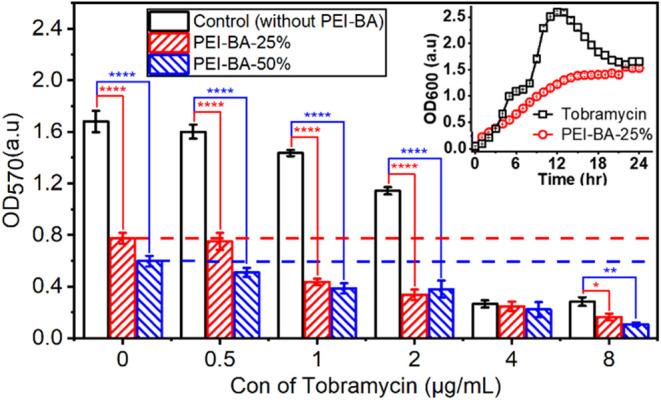
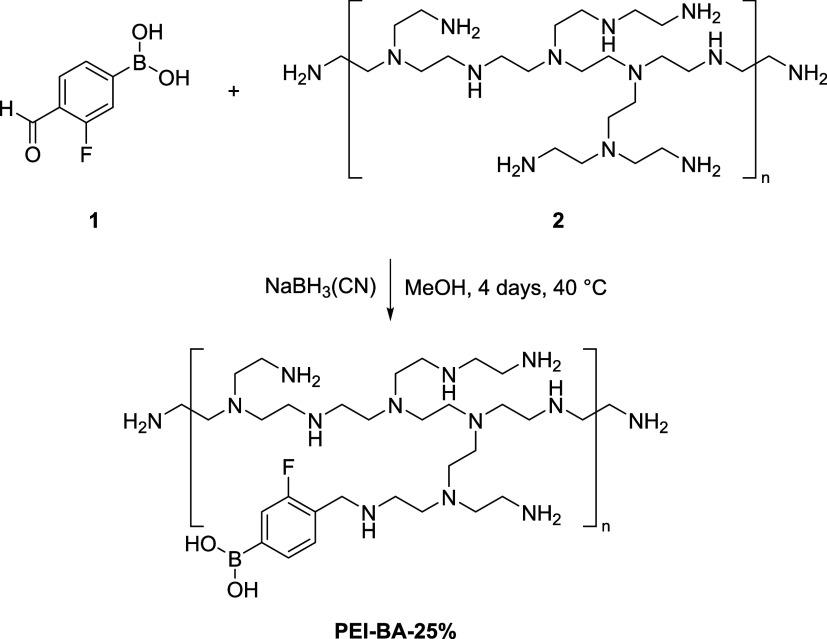
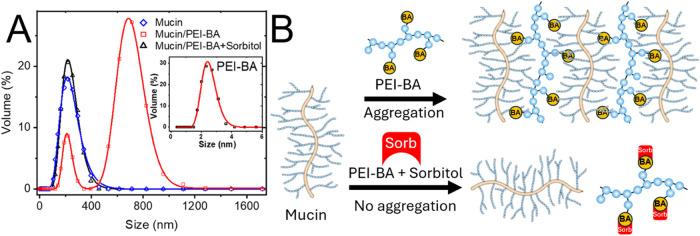
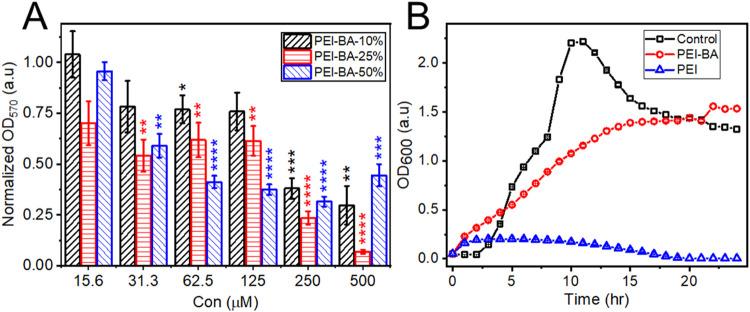
Bacterial biofilms present significant therapeutic challenges due to their resistance to conventional antimicrobial treatment. Mucins typically serve as a protective barrier against pathogens, yet certain bacteria, such as (), can exploit these glycoproteins as attachment sites for biofilm formation. This study introduces boronic acid-functionalized polyethyleneimine (PEI-BA) as a promising antibiofilm agent that effectively blocks bacterial adhesion to mucin-rich surfaces. Through the multivalent presentation of boronic acid groups, PEI-BA reversibly forms boronate ester bonds with mucin glycans, creating a protective barrier. Our findings show that PEI-BA prevents bacterial attachment through a nonbactericidal mechanism, potentially reducing the risk of resistance development. Notably, PEI-BA synergizes with a conventional antibiotic, tobramycin, significantly enhancing biofilm inhibition compared to either treatment alone. Systematic evaluation of PEI-BA formulations identified optimal functionalization levels, balancing glycan-binding capability with solubility. From a biomaterials design perspective, we demonstrate how rational polymer modification can transform a potent but cytotoxic antimicrobial agent (i.e., PEI) into a safe and effective antibiofilm material, opening further possibilities for managing biofilm-associated infections in clinical settings. This work establishes boronic acid-based nanomaterials as promising candidates for biofilm prevention and antibiotic enhancement, particularly in conditions like cystic fibrosis, where mucin-bacterial interactions contribute to disease progression.
细菌生物膜由于对传统抗菌治疗具有抗性,带来了重大的治疗挑战。粘蛋白通常作为抵御病原体的保护屏障,但某些细菌,如(此处原文缺失具体细菌名称),可以利用这些糖蛋白作为生物膜形成的附着位点。本研究引入了硼酸功能化的聚乙烯亚胺(PEI-BA)作为一种有前景的抗生物膜剂,它能有效阻止细菌粘附到富含粘蛋白的表面。通过硼酸基团的多价呈现,PEI-BA与粘蛋白聚糖可逆地形成硼酸酯键,从而形成一个保护屏障。我们的研究结果表明,PEI-BA通过非杀菌机制防止细菌附着,可能降低耐药性产生的风险。值得注意的是,PEI-BA与传统抗生素妥布霉素协同作用,与单独使用任何一种治疗相比,显著增强了生物膜抑制效果。对PEI-BA制剂的系统评估确定了最佳功能化水平,平衡了聚糖结合能力和溶解性。从生物材料设计的角度来看,我们展示了合理的聚合物修饰如何将一种强效但具有细胞毒性的抗菌剂(即PEI)转化为一种安全有效的抗生物膜材料,为临床环境中管理生物膜相关感染开辟了更多可能性。这项工作确立了基于硼酸的纳米材料作为生物膜预防和抗生素增强的有前景的候选材料,特别是在囊性纤维化等情况下,粘蛋白与细菌的相互作用会导致疾病进展。


 Zotero 插件