
GraphBAN:一种基于归纳图的方法,用于增强对化合物-蛋白质相互作用的预测。
GraphBAN: An inductive graph-based approach for enhanced prediction of compound-protein interactions.
作者信息
Hadipour Hamid, Li Yan Yi, Sun Yan, Deng Chutong, Lac Leann, Davis Rebecca, Cardona Silvia T, Hu Pingzhao
机构信息
Department of Computer Science, University of Manitoba, Winnipeg, MB, Canada.
Biostatistics Division, Dalla Lana School of Public Health, University of Toronto, Toronto, ON, Canada.
出版信息
Nat Commun. 2025 Mar 18;16(1):2541. doi: 10.1038/s41467-025-57536-9.
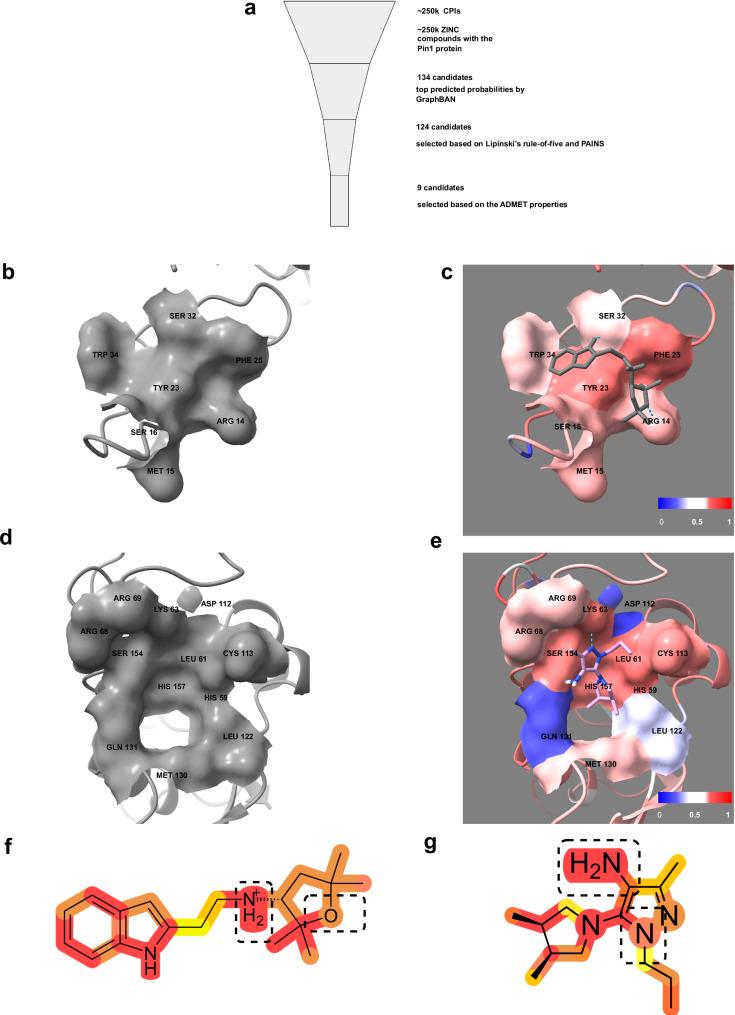
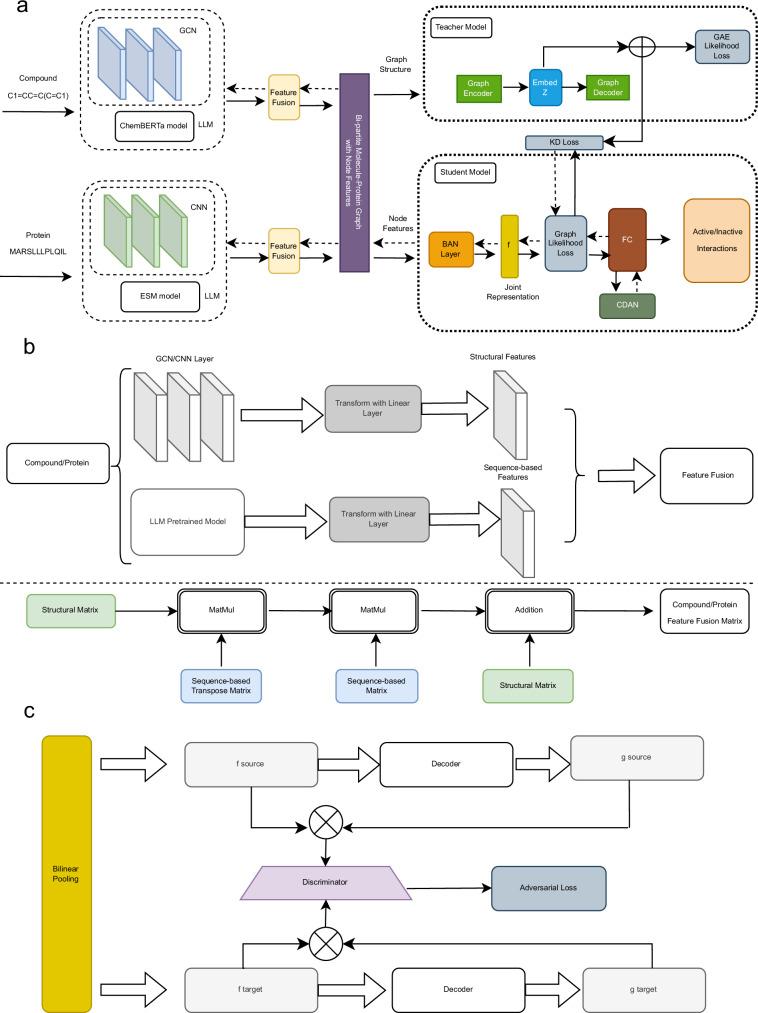
Understanding compound-protein interactions is crucial for early drug discovery, offering insights into molecular mechanisms and potential therapeutic effects of compounds. Here, we introduce GraphBAN, a graph-based framework that inductively predicts these interactions using compound and protein feature information. GraphBAN effectively handles inductive link predictions for unseen nodes, providing a robust solution for predicting interactions between entirely unseen compounds and proteins. This capability enables GraphBAN to transcend the constraints of traditional methods that are typically limited to known contexts. GraphBAN employs a knowledge distillation architecture through a teacher-student learning model. The teacher block leverages network structure information, while the student block focuses on node attributes, enhancing learning and prediction accuracy. Additionally, GraphBAN incorporates a domain adaptation module, increasing its effectiveness across different dataset domains. Empirical tests on five benchmark datasets demonstrate that GraphBAN outperforms ten baseline models, while a case study analysis with the Pin1 protein further supports the model's effectiveness in real world scenarios, making it as a promising tool for early drug discovery.
理解化合物与蛋白质的相互作用对于早期药物发现至关重要,它能为化合物的分子机制和潜在治疗效果提供见解。在此,我们介绍GraphBAN,这是一个基于图的框架,它利用化合物和蛋白质特征信息来归纳预测这些相互作用。GraphBAN有效地处理未见过节点的归纳链接预测,为预测完全未见过的化合物和蛋白质之间的相互作用提供了一个强大的解决方案。这种能力使GraphBAN能够超越传统方法通常限于已知上下文的限制。GraphBAN通过师生学习模型采用知识蒸馏架构。教师模块利用网络结构信息,而学生模块专注于节点属性,提高学习和预测准确性。此外,GraphBAN还集成了一个域适应模块,提高其在不同数据集域中的有效性。在五个基准数据集上的实证测试表明,GraphBAN优于十个基线模型,而对Pin1蛋白的案例研究分析进一步支持了该模型在实际场景中的有效性,使其成为早期药物发现的一个有前途的工具。
 Zotero 插件