
基于脑电图的麻醉深度监测研究进展
Research progress on the depth of anesthesia monitoring based on the electroencephalogram.
作者信息
He Xiaolan, Li Tingting, Wang Xiao
机构信息
Department of Anesthesiology, West China Hospital Sichuan University Chengdu China.
出版信息
Ibrain. 2024 Dec 6;11(1):32-43. doi: 10.1002/ibra.12186. eCollection 2025 Spring.
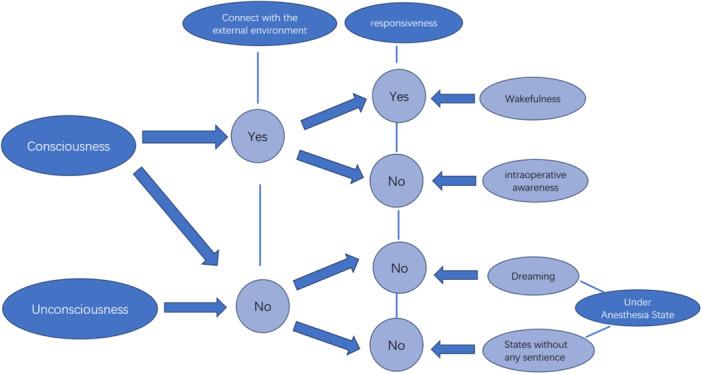
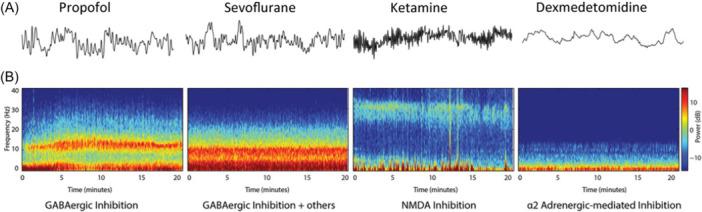
General anesthesia typically involves three key components: amnesia, analgesia, and immobilization. Monitoring the depth of anesthesia (DOA) during surgery is crucial for personalizing anesthesia regimens and ensuring precise drug delivery. Since general anesthetics act primarily on the brain, this organ becomes the target for monitoring DOA. Electroencephalogram (EEG) can record the electrical activity generated by various brain tissues, enabling anesthesiologists to monitor the DOA from real-time changes in a patient's brain activity during surgery. This monitoring helps to optimize anesthesia medication, prevent intraoperative awareness, and reduce the incidence of cardiovascular and other adverse events, contributing to anesthesia safety. Different anesthetic drugs exert different effects on the EEG characteristics, which have been extensively studied in commonly used anesthetic drugs. However, due to the limited understanding of the biological basis of consciousness and the mechanisms of anesthetic drugs acting on the brain, combined with the effects of various factors on existing EEG monitors, DOA cannot be accurately expressed via EEG. The lack of patient reactivity during general anesthesia does not necessarily indicate unconsciousness, highlighting the importance of distinguishing the mechanisms of consciousness and conscious connectivity when monitoring perioperative anesthesia depth. Although EEG is an important means of monitoring DOA, continuous optimization is necessary to extract characteristic information from EEG to monitor DOA, and EEG monitoring technology based on artificial intelligence analysis is an emerging research direction.
全身麻醉通常涉及三个关键组成部分
遗忘、镇痛和肌肉松弛。手术期间监测麻醉深度(DOA)对于个性化麻醉方案和确保精确给药至关重要。由于全身麻醉药主要作用于大脑,该器官成为监测DOA的目标。脑电图(EEG)可以记录各种脑组织产生的电活动,使麻醉医生能够在手术期间根据患者大脑活动的实时变化监测DOA。这种监测有助于优化麻醉用药,预防术中知晓,并降低心血管和其他不良事件的发生率,有助于麻醉安全。不同的麻醉药物对EEG特征有不同的影响,这在常用麻醉药物中已得到广泛研究。然而,由于对意识的生物学基础以及麻醉药物作用于大脑的机制了解有限,再加上各种因素对现有EEG监测仪的影响,无法通过EEG准确表达DOA。全身麻醉期间患者缺乏反应不一定表明无意识,这凸显了在监测围手术期麻醉深度时区分意识机制和意识连接性的重要性。尽管EEG是监测DOA的重要手段,但仍需要不断优化以从EEG中提取特征信息来监测DOA,基于人工智能分析的EEG监测技术是一个新兴的研究方向。


 Zotero 插件