
组胺受体H1-ADAM9-蜗牛蛋白/蛞蝓蛋白轴的周期性增加作为口腔鳞状细胞癌EMT介导进展的潜在治疗靶点。
Cyclic increase in the histamine receptor H1-ADAM9-Snail/Slug axis as a potential therapeutic target for EMT-mediated progression of oral squamous cell carcinoma.
作者信息
Ding Yi-Fang, Ho Kuo-Hao, Lee Wei-Jiunn, Chen Li-Hsin, Hsieh Feng-Koo, Tung Min-Che, Lin Shu-Hui, Hsiao Michael, Yang Shun-Fa, Yang Yi-Chieh, Chien Ming-Hsien
机构信息
Department of Otolaryngology, School of Medicine, College of Medicine, Taipei Medical University, Taipei, Taiwan, ROC.
Department of Otolaryngology, Wan Fang Hospital, Taipei Medical University, Taipei, Taiwan, ROC.
出版信息
Cell Death Dis. 2025 Mar 20;16(1):191. doi: 10.1038/s41419-025-07507-1.
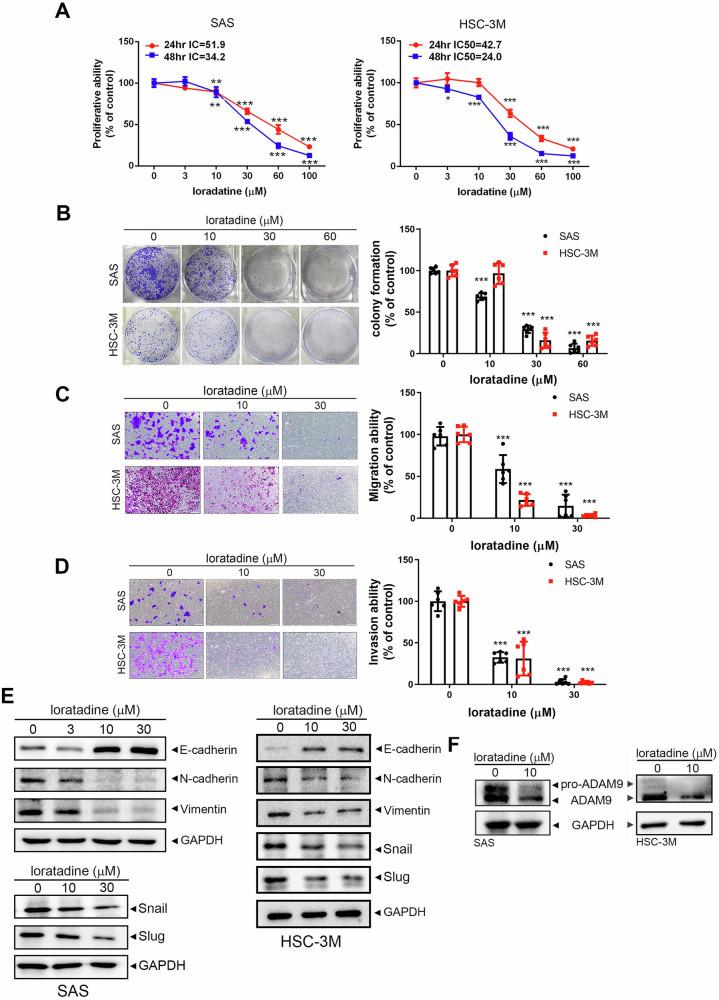
The intricate involvement of the histaminergic system, encompassing histamine and histamine receptors, in the progression of diverse neoplasias has attracted considerable scrutiny. Histamine receptor H1 (HRH1) was reported to be overexpressed in several cancer types, but its specific functional implications in oral squamous cell carcinoma (OSCC) predominantly remain unexplored. Our findings indicate that dysregulated high levels of HRH1 were correlated with lymph node (LN) metastasis and poor prognoses in OSCC patients. We identified a disintegrin and metalloprotease 9 (ADAM9) as a critical downstream target of HRH1, promoting protumorigenic and prometastatic characteristics both in vitro and in vivo. Molecular investigations revealed that the cyclic increase in the HRH1-ADAM9-Snail/Slug axis promoted progression of the epithelial-to-mesenchymal transition (EMT). Clinical analyses demonstrated significant correlations of HRH1 expression with ADAM9 and with EMT-related markers, with elevated ADAM9 also associated with LN metastasis in OSCC patients. Regarding therapeutic aspects, we discovered that activated STAT3 acts as a compensatory pathway for the long-term HRH1 signaling blockade in OSCC cells. Combining inhibition of HRH1 and STAT3 using their respective inhibitors or short hairpin (sh)RNAs enhanced the tumor-suppressive effects compared to HRH1 inhibition/depletion alone in OSCC cells and a xenograft model. In summary, HRH1 has emerged as a valuable biomarker for predicting OSCC progression, and combined targeting of HRH1 and STAT3 may represent a promising strategy for preventing OSCC progression.
组胺能系统,包括组胺和组胺受体,在多种肿瘤形成过程中的复杂参与已引起了广泛关注。据报道,组胺受体H1(HRH1)在几种癌症类型中过度表达,但其在口腔鳞状细胞癌(OSCC)中的具体功能意义主要仍未得到探索。我们的研究结果表明,HRH1的异常高水平与OSCC患者的淋巴结(LN)转移和不良预后相关。我们确定去整合素和金属蛋白酶9(ADAM9)是HRH1的关键下游靶点,在体外和体内均促进肿瘤发生和转移特征。分子研究表明,HRH1-ADAM9-Snail/Slug轴的循环增加促进了上皮-间质转化(EMT)的进展。临床分析表明,HRH1表达与ADAM9以及与EMT相关标志物之间存在显著相关性,ADAM9升高也与OSCC患者的LN转移相关。在治疗方面,我们发现激活的STAT3作为OSCC细胞中长期HRH1信号阻断的补偿途径。与单独抑制/耗尽HRH1相比,在OSCC细胞和异种移植模型中使用各自的抑制剂或短发夹(sh)RNA联合抑制HRH1和STAT3增强了肿瘤抑制作用。总之,HRH1已成为预测OSCC进展的有价值生物标志物,联合靶向HRH1和STAT3可能是预防OSCC进展的有前景的策略。



 Zotero 插件