Haubrich Josue, Vera Laura Dolón, Manahan-Vaughan Denise
Medical Faculty, Department of Neurophysiology, Ruhr University Bochum, Universitätsstr. 150, MA 4/150, 44780, Bochum, Germany.
Sci Rep. 2025 Mar 20;15(1):9692. doi: 10.1038/s41598-025-93263-3.
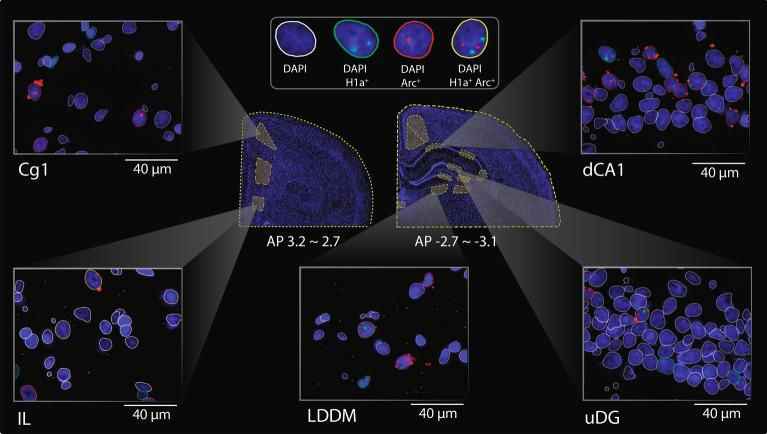
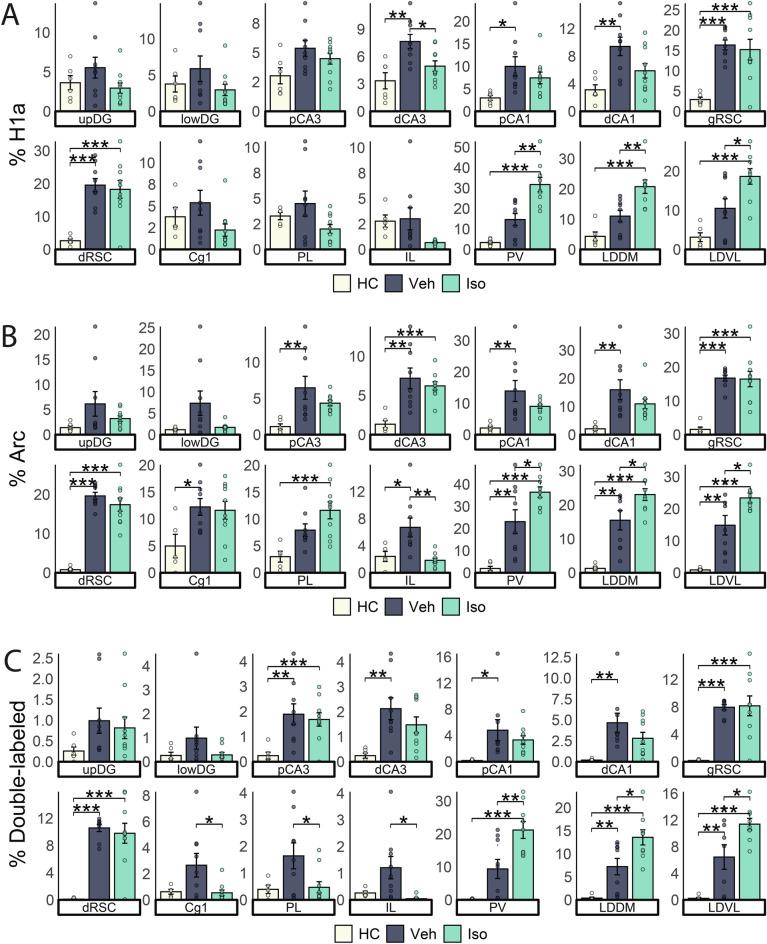
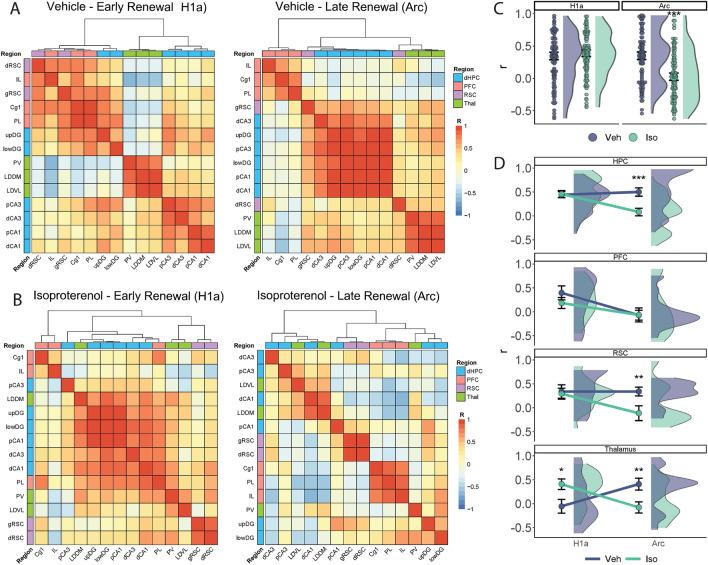
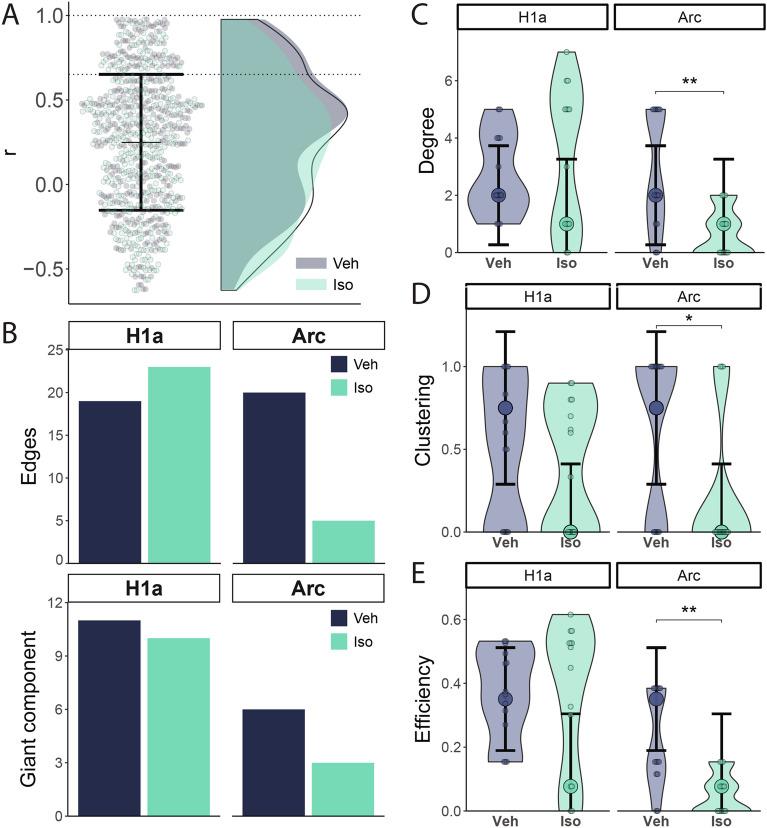
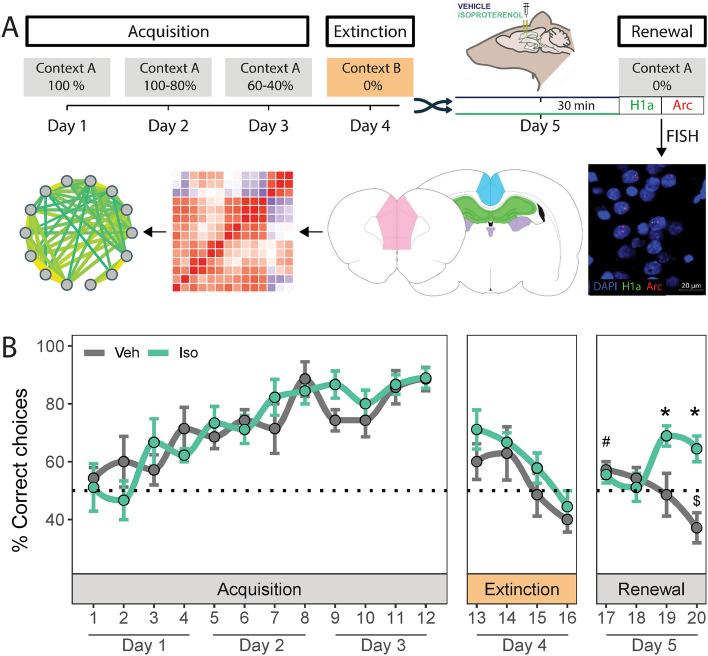
During spatial appetitive extinction learning (EL), rodents learn that previously rewarded behavior is no longer rewarded. Renewal of the extinguished behavior is enabled by re-exposure to the context in which rewarded learning occurred. When the renewal response (RR) is unrewarded, it is rapidly followed by response extinction (RE). Although the hippocampus is known to be engaged, whether this dynamic is supported by different brain networks is unclear. To clarify this, male rats engaged in context-dependent spatial memory acquisition, EL and RR testing in a T-Maze. Fluorescence in situ hybridization disambiguated somatic immediate early gene expression in neuronal somata engaged in RR or RE. Graph analysis revealed pronounced hippocampal connectivity with retrosplenial and prefrontal cortex (PFC) during initial RR. By contrast, RE was accompanied by a shift towards elevated coordinated activity within all hippocampal subfields. Given that β-adrenergic receptors (β-AR) regulate spatial memory, we activated β-AR to further scrutinize these network effects. This enhanced RR and prevented RE. Effects were associated with initially increased thalamic-hippocampus activity, followed by a decrease in hippocampal intraconnectivity and the predominance of network activity within PFC. Our findings highlight a critical hippocampal-cortical-thalamic network that underpins renewal behavior, with noradrenergic neuromodulation playing a pivotal role in governing this circuit's dynamics.
在空间性食欲消退学习(EL)过程中,啮齿动物学会了先前得到奖励的行为不再会得到奖励。重新暴露于发生奖励性学习的环境中会引发消退行为的恢复。当恢复反应(RR)未得到奖励时,随后会迅速出现反应消退(RE)。虽然已知海马体参与其中,但尚不清楚这种动态过程是否由不同的脑网络支持。为了阐明这一点,雄性大鼠在T型迷宫中进行了与环境相关的空间记忆获取、EL和RR测试。荧光原位杂交明确了参与RR或RE的神经元胞体中的体细胞即早基因表达。图谱分析显示,在初始RR期间,海马体与 retrosplenial 和前额叶皮层(PFC)之间存在明显的连接。相比之下,RE伴随着所有海马亚区协调活动的升高而发生转变。鉴于β-肾上腺素能受体(β-AR)调节空间记忆,我们激活β-AR以进一步研究这些网络效应。这增强了RR并防止了RE。这些效应与最初丘脑-海马体活动增加有关,随后海马体内连接性降低以及PFC内网络活动占主导地位。我们的研究结果突出了一个关键的海马体-皮质-丘脑网络,该网络支撑着恢复行为,去甲肾上腺素能神经调节在控制该回路的动态过程中起着关键作用。

 Zotero 插件