
维持性血液透析患者脑功能障碍中肾-肠-脑轴的研究进展
Research progress on the kidney-gut-brain axis in brain dysfunction in maintenance hemodialysis patients.
作者信息
Yu Jie, Li Yulu, Zhu Bin, Shen Jianqin, Miao Liying
机构信息
Department of Nephrology, The Third Affiliated Hospital of Soochow University, Changzhou, China.
Department of Nephrology, Taicang Loujiang New City Hospital, Suzhou, China.
出版信息
Front Med (Lausanne). 2025 Mar 6;12:1538048. doi: 10.3389/fmed.2025.1538048. eCollection 2025.
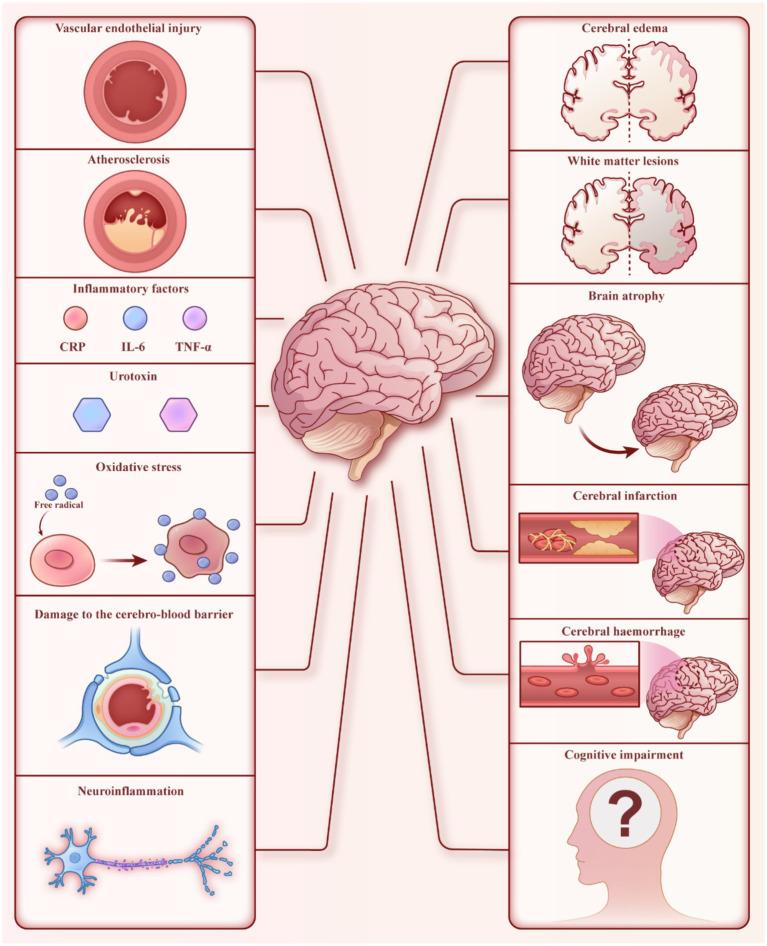
Maintenance hemodialysis (MHD) has become the primary renal replacement therapy for patients with end-stage renal disease. The kidney-gut-brain axis represents a communication network connecting the kidney, intestine and brain. In MHD patients, factors such as uremic toxins, hemodynamic changes, vascular damage, inflammation, oxidative stress, and intestinal dysbiosis in MHD patients refers to a range of clinical syndromes, including brain injury, and is manifested by conditions such as white matter disease, brain atrophy, cerebrovascular disease, cognitive impairment, depression, anxiety, and other behavioral or consciousness abnormalities. Numerous studies have demonstrated the prevalence of these brain disorders in MHD patients. Understanding the mechanisms of brain disorders in MHD patients, particularly through the lens of kidney-gut-brain axis dysfunction, offers valuable insights for future research and the development of targeted therapies. This article reviews the brain dysfunction associated with MHD, the impact of the kidney-brain axis, intestinal barrier damage, gut microbiota dysbiosis caused by MHD, and the role of the gut-brain axis in brain dysfunction.
维持性血液透析(MHD)已成为终末期肾病患者的主要肾脏替代治疗方法。肾-肠-脑轴是连接肾脏、肠道和大脑的一个通讯网络。在MHD患者中,诸如尿毒症毒素、血流动力学变化、血管损伤、炎症、氧化应激和肠道菌群失调等因素会引发一系列临床综合征,包括脑损伤,其表现为白质病变、脑萎缩、脑血管疾病、认知障碍、抑郁、焦虑以及其他行为或意识异常等情况。大量研究已证实这些脑部疾病在MHD患者中的患病率。了解MHD患者脑部疾病的发病机制,尤其是通过肾-肠-脑轴功能障碍这一视角,可为未来研究和靶向治疗的开发提供有价值的见解。本文综述了与MHD相关的脑功能障碍、肾-脑轴的影响、肠道屏障损伤、MHD导致的肠道微生物群失调以及肠-脑轴在脑功能障碍中的作用。
 Zotero 插件