
基于机器学习的重症肺炎全因死亡率预测模型。
Machine learning-based model for predicting all-cause mortality in severe pneumonia.
作者信息
Zhao Weichao, Li Xuyan, Gao Lianjun, Ai Zhuang, Lu Yaping, Li Jiachen, Wang Dong, Li Xinlou, Song Nan, Huang Xuan, Tong Zhao-Hui
机构信息
Department of Respiratory and Critical Care Medicine, Capital Medical University, Beijing, China.
Department of Respiratory Medicine, the Ninth Medical Center, Chinese PLA General Hospital, Beijing, China.
出版信息
BMJ Open Respir Res. 2025 Mar 22;12(1):e001983. doi: 10.1136/bmjresp-2023-001983.
BACKGROUND
Severe pneumonia has a poor prognosis and high mortality. Current severity scores such as Acute Physiology and Chronic Health Evaluation (APACHE-II) and Sequential Organ Failure Assessment (SOFA), have limited ability to help clinicians in classification and management decisions. The goal of this study was to analyse the clinical characteristics of severe pneumonia and develop a machine learning-based mortality-prediction model for patients with severe pneumonia.
METHODS
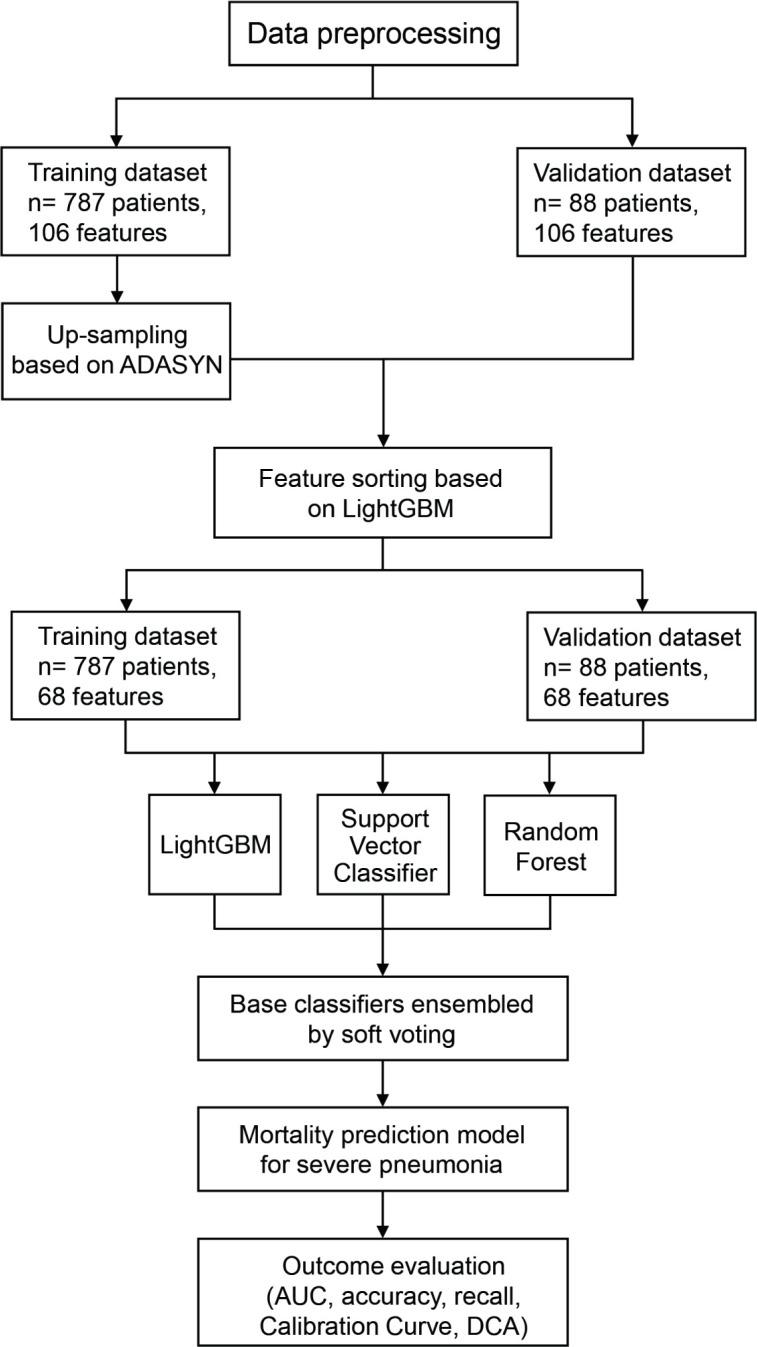
Consecutive patients with severe pneumonia between 2013 and 2022 admitted to Beijing Chaoyang Hospital affiliated with Capital Medical University were included. In-hospital all-cause mortality was the outcome of this study. We performed a retrospective analysis of the cohort, stratifying patients into survival and non-survival groups, using mainstream machine learning algorithms (light gradient boosting machine, support vector classifier and random forest). We aimed to construct a mortality-prediction model for patients with severe pneumonia based on their accessible clinical and laboratory data. The discriminative ability was evaluated using the area under the receiver operating characteristic curve (AUC). The calibration curve was used to assess the fit goodness of the model, and decision curve analysis was performed to quantify clinical utility. By means of logistic regression, independent risk factors for death in severe pneumonia were figured out to provide an important basis for clinical decision-making.
RESULTS
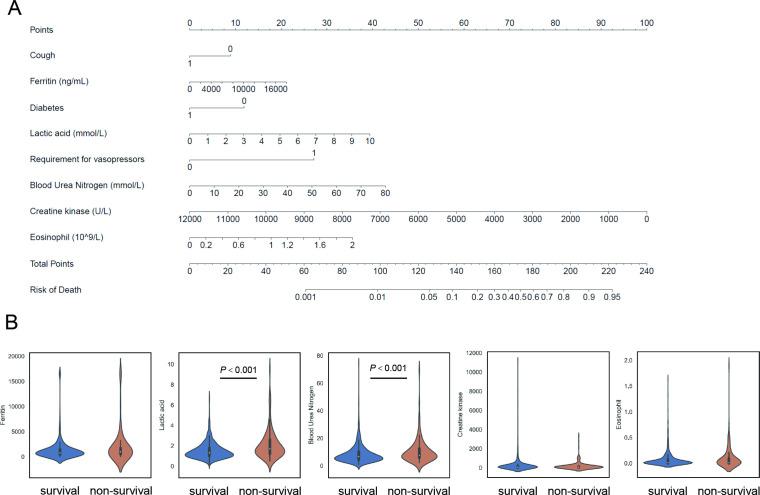
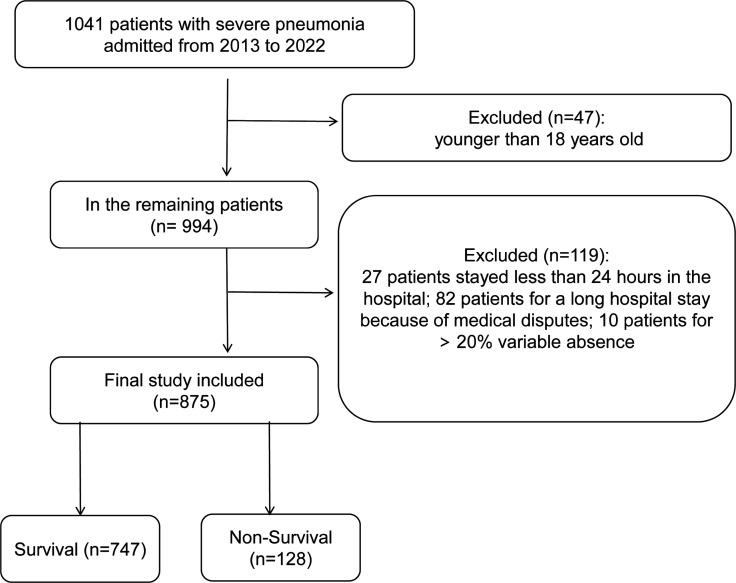
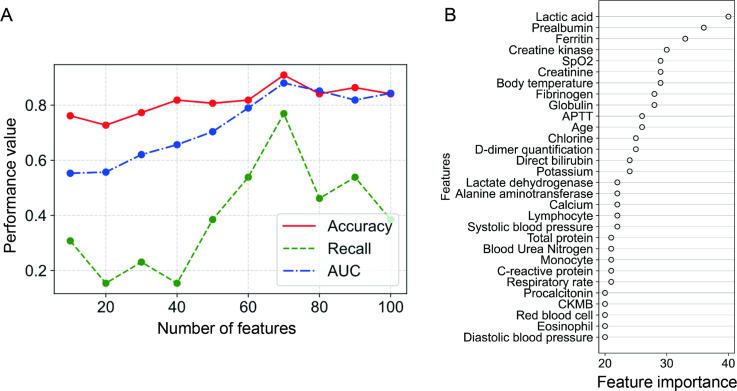
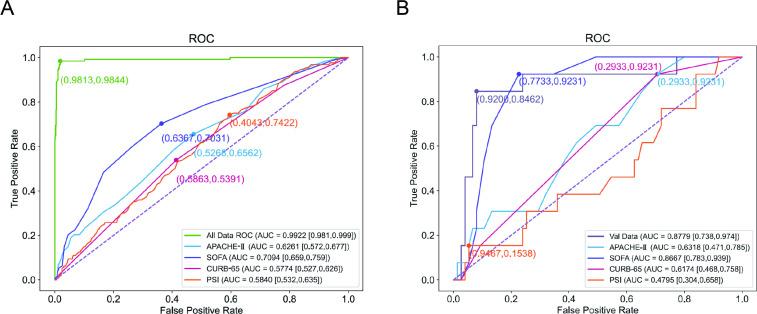
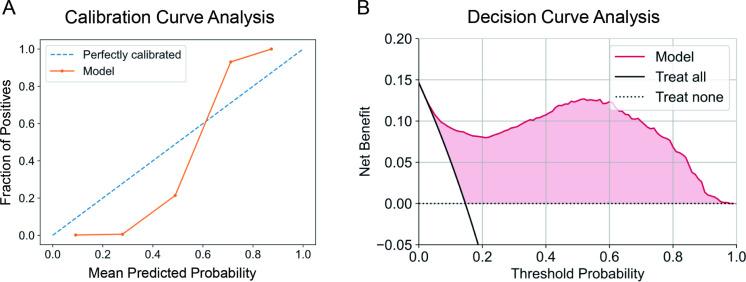
A total of 875 patients were included in the development and validation cohorts, with the in-hospital mortality rate of 14.6%. The AUC of the model in the internal validation set was 0.8779 (95% CI, 0.738 to 0.974), showing a competitive discrimination ability that outperformed those of traditional clinical scoring systems, that is, APACHE-II, SOFA, CURB-65 (confusion, urea, respiratory rate, blood pressure, age ≥65 years), Pneumonia Severity Index. The calibration curve showed that the in-hospital mortality in severe pneumonia predicted by the model fit reasonably with the actual hospital mortality. In addition, the decision curve showed that the net clinical benefit was positive in both training and validation sets of hospitalised patients with severe pneumonia. Based on ensemble machine learning algorithms and logistic regression technique, the level of ferritin, lactic acid, blood urea nitrogen, creatine kinase, eosinophil and the requirement of vasopressors were identified as top independent predictors of in-hospital mortality with severe pneumonia.
CONCLUSION
A robust clinical model for predicting the risk of in-hospital mortality after severe pneumonia was successfully developed using machine learning techniques. The performance of this model demonstrates the effectiveness of these techniques in creating accurate predictive models, and the use of this model has the potential to greatly assist patients and clinical doctors in making well-informed decisions regarding patient care.
背景
重症肺炎预后差、死亡率高。目前的严重程度评分系统,如急性生理与慢性健康状况评估系统(APACHE-II)和序贯器官衰竭评估系统(SOFA),在帮助临床医生进行分类和管理决策方面能力有限。本研究的目的是分析重症肺炎的临床特征,并为重症肺炎患者开发一种基于机器学习的死亡率预测模型。
方法
纳入2013年至2022年期间首都医科大学附属北京朝阳医院收治的连续性重症肺炎患者。本研究的结局指标为院内全因死亡率。我们对该队列进行回顾性分析,将患者分为生存组和非生存组,采用主流机器学习算法(轻梯度提升机、支持向量分类器和随机森林)。我们旨在根据患者可获取的临床和实验室数据构建重症肺炎患者的死亡率预测模型。使用受试者工作特征曲线下面积(AUC)评估模型的鉴别能力。校准曲线用于评估模型的拟合优度,并进行决策曲线分析以量化临床实用性。通过逻辑回归分析,找出重症肺炎患者死亡的独立危险因素,为临床决策提供重要依据。
结果
开发队列和验证队列共纳入875例患者,院内死亡率为14.6%。该模型在内部验证集中的AUC为0.8779(95%CI,0.738至0.974),显示出具有竞争力的鉴别能力,优于传统临床评分系统,即APACHE-II、SOFA、CURB-65(意识障碍、尿素、呼吸频率、血压、年龄≥65岁)、肺炎严重程度指数。校准曲线显示,该模型预测的重症肺炎患者院内死亡率与实际医院死亡率拟合良好。此外,决策曲线显示,在住院重症肺炎患者的训练集和验证集中,净临床获益均为阳性。基于集成机器学习算法和逻辑回归技术,铁蛋白、乳酸、血尿素氮、肌酸激酶、嗜酸性粒细胞水平以及血管活性药物的使用被确定为重症肺炎患者院内死亡的顶级独立预测因素。
结论
利用机器学习技术成功开发了一种强大的预测重症肺炎后院内死亡风险的临床模型。该模型的性能证明了这些技术在创建准确预测模型方面的有效性,使用该模型有可能极大地帮助患者和临床医生就患者护理做出明智的决策。


 Zotero 插件