
乌干达不同疟疾传播强度地区恶性疟原虫的遗传多样性和种群结构
Genetic diversity and population structure of Plasmodium falciparum across areas of varied malaria transmission intensities in Uganda.
作者信息
Mwesigwa Alex, Tukwasibwe Stephen, Cummings Bryan, Kawalya Hakiimu, Kiyaga Shahiid, Okoboi Stephen, Castelnuovo Barbara, Bikaitwoha Everd Maniple, Kalyango Joan N, Nsobya Samuel L, Karamagi Charles, Byakika-Kibwika Pauline, Nankabirwa Joaniter I
机构信息
Clinical Epidemiology Unit, School of Medicine, Makerere University College of Health Sciences, P. O. Box 7072, Kampala, Uganda.
Department of Microbiology and Immunology, School of Medicine, Kabale University, P. O. Box 314, Kabale, Uganda.
出版信息
Malar J. 2025 Mar 24;24(1):97. doi: 10.1186/s12936-025-05325-6.
BACKGROUND
Malaria remains a significant global health threat, with sub-Saharan Africa (SSA) bearing the highest burden of the disease. Plasmodium falciparum is the predominant species in the region, leading to substantial morbidity and mortality. Despite intensified control efforts over the last two decades, P. falciparum genetic diversity and multiplicity of infections (MOI) continue to pose significant challenges to malaria elimination in the region. This study assessed P. falciparum genetic diversity and population structure in areas with low, medium, and high malaria transmission intensities in Uganda.
METHODS
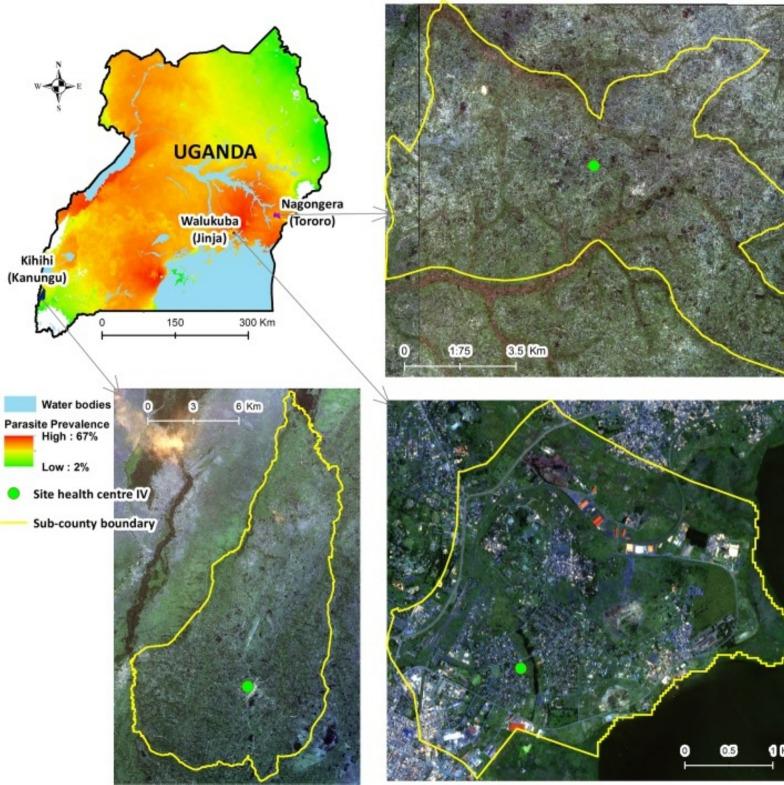
A total of 288 P. falciparum-positive samples from children (6 months to 10 years) and adults (≥ 18 years) living in Jinja (low transmission), Kanungu (medium transmission), and Tororo (high transmission) were genotyped using seven neutral microsatellite markers. Genetic diversity was assessed based on the number of alleles (N), allelic richness (Ar), and expected heterozygosity (H). Population structure was assessed using the fixation index, analysis of molecular variance (AMOVA), and clustering analysis.
RESULTS
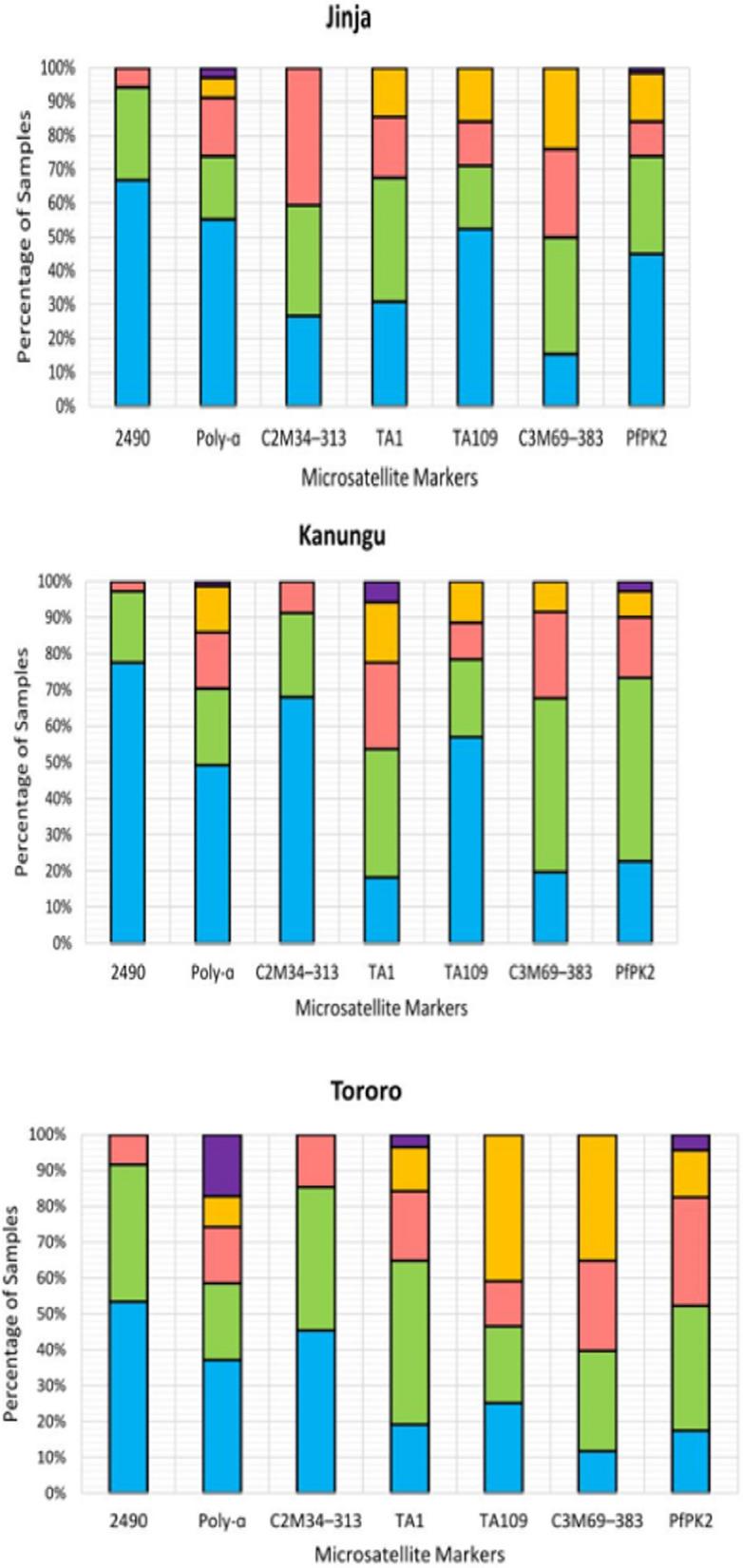
High P. falciparum genetic diversity was observed across all study sites, with Kanungu exhibiting the highest mean H (0.81 ± 0.14), while Jinja and Tororo had lower mean H (0.78 ± 0.16). P. falciparum MOI varied significantly, with Tororo showing the highest mean MOI (2.5 ± 0.5) and 70% of samples exhibiting polyclonal infections, compared to Jinja's mean MOI of 1.9 ± 0.3 and 58% polyclonal infections. Significant multilocus linkage disequilibrium (LD) was noted (p < 0.01), ranging from 0.07 in Tororo to 0.14 in Jinja. Parasite population structure showed minimal genetic differentiation (F ranged from 0.011 to 0.021) and a low AMOVA value (0.03), indicating high gene flow.
CONCLUSION
This study demonstrates high P. falciparum genetic diversity and MOI but low population structure, suggesting significant parasite gene flow between study sites. This highlights the need for integrated malaria control strategies across areas with varying malaria transmission intensities in Uganda.
背景
疟疾仍然是全球重大的健康威胁,撒哈拉以南非洲地区(SSA)负担着最重的疟疾疾病负担。恶性疟原虫是该地区的主要疟原虫种类,导致大量发病和死亡。尽管在过去二十年里加大了防控力度,但恶性疟原虫的遗传多样性和感染复数(MOI)继续给该地区消除疟疾带来重大挑战。本研究评估了乌干达疟疾传播强度低、中、高地区的恶性疟原虫遗传多样性和种群结构。
方法
使用七个中性微卫星标记对来自金贾(低传播地区)、卡农古(中等传播地区)和托罗罗(高传播地区)的288份恶性疟原虫阳性样本进行基因分型,这些样本来自6个月至10岁的儿童和≥18岁的成年人。基于等位基因数量(N)、等位基因丰富度(Ar)和期望杂合度(H)评估遗传多样性。使用固定指数、分子方差分析(AMOVA)和聚类分析评估种群结构。
结果
在所有研究地点均观察到较高的恶性疟原虫遗传多样性,卡农古的平均H最高(0.81±0.14),而金贾和托罗罗的平均H较低(0.78±0.16)。恶性疟原虫的MOI差异显著,托罗罗的平均MOI最高(2.5±0.5),70%的样本表现为多克隆感染,相比之下,金贾的平均MOI为1.9±0.3,多克隆感染率为58%。观察到显著的多位点连锁不平衡(LD)(p<0.01),范围从托罗罗的0.07到金贾的0.14。寄生虫种群结构显示出最小的遗传分化(F范围为0.011至0.021)和较低的AMOVA值(0.03),表明基因流动较高。
结论
本研究表明恶性疟原虫具有较高的遗传多样性和MOI,但种群结构较低,这表明研究地点之间存在显著的寄生虫基因流动。这突出了在乌干达不同疟疾传播强度地区实施综合疟疾控制策略的必要性。

 Zotero 插件