
血管内皮生长因子受体在胰腺肿瘤血管生成中的作用:对预后和治疗的影响
Vascular Endothelial Growth Factor Receptors in the Vascularization of Pancreatic Tumors: Implications for Prognosis and Therapy.
作者信息
Grobbelaar Craig, Steenkamp Vanessa, Mabeta Peace
机构信息
Department of Physiology, School of Medicine, Faculty of Health Sciences, University of Pretoria, Pretoria 0002, South Africa.
Department of Pharmacology, School of Medicine, Faculty of Health Sciences, University of Pretoria, Pretoria 0002, South Africa.
出版信息
Curr Issues Mol Biol. 2025 Mar 10;47(3):179. doi: 10.3390/cimb47030179.
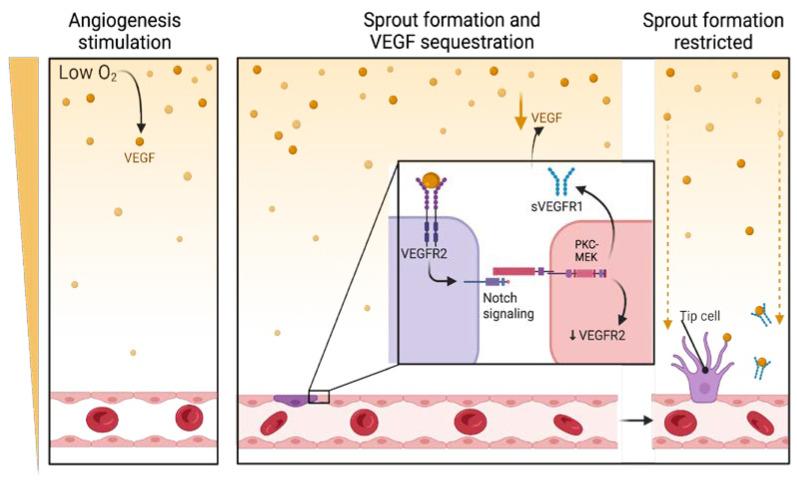
In pancreatic cancer (PC), vascular endothelial growth factor (VEGF) and its primary receptor, vascular endothelial growth factor receptor (VEGFR)-2, are central drivers of angiogenesis and metastasis, with their overexpression strongly associated with poor prognosis. In some PC patients, VEGF levels correlate with disease stage, tumor burden, and survival outcomes. However, therapies targeting VEGF and VEGFR-2, including tyrosine kinase inhibitors (TKIs) and monoclonal antibodies, have demonstrated limited efficacy, partly due to the emergence of resistance mechanisms. Resistance appears to stem from the activation of alternative vascularization pathways. This review explores the multifaceted roles of VEGFRs in pancreatic cancer, including VEGFR-1 and VEGFR-3. Potential strategies to improve VEGFR-targeting therapies, such as combination treatments, the development of more selective inhibitors, and the use of biomarkers, are discussed as promising approaches to enhance treatment efficacy and outcomes.
在胰腺癌(PC)中,血管内皮生长因子(VEGF)及其主要受体血管内皮生长因子受体(VEGFR)-2是血管生成和转移的核心驱动因素,它们的过度表达与不良预后密切相关。在一些PC患者中,VEGF水平与疾病分期、肿瘤负荷和生存结果相关。然而,针对VEGF和VEGFR-2的疗法,包括酪氨酸激酶抑制剂(TKIs)和单克隆抗体,疗效有限,部分原因是耐药机制的出现。耐药似乎源于替代血管生成途径的激活。本综述探讨了VEGFRs在胰腺癌中的多方面作用,包括VEGFR-1和VEGFR-3。讨论了改善VEGFR靶向治疗的潜在策略,如联合治疗、开发更具选择性的抑制剂以及使用生物标志物,这些都是提高治疗疗效和结果的有前景的方法。


 Zotero 插件