
染色体不稳定与EGFR-TKI难治性非小细胞肺癌中的cGAS-STING激活相关。
Chromosomal Instability Is Associated with cGAS-STING Activation in EGFR-TKI Refractory Non-Small-Cell Lung Cancer.
作者信息
Yonesaka Kimio, Kurosaki Takashi, Tanizaki Junko, Kawakami Hisato, Tanaka Kaoru, Maenishi Osamu, Takamura Shiki, Sakai Kazuko, Chiba Yasutaka, Teramura Takeshi, Goto Hiroki, Otsuka Eri, Okida Hiroaki, Funabashi Masanori, Hashimoto Yuuri, Hirotani Kenji, Kamai Yasuki, Kagari Takashi, Nishio Kazuto, Kakimi Kazuhiro, Hayashi Hidetoshi
机构信息
Department of Medical Oncology, Kindai University Faculty of Medicine, Osaka 589-8511, Japan.
Department of Medical Oncology, Kishiwada City Hospital, Osaka 589-8511, Japan.
出版信息
Cells. 2025 Mar 17;14(6):447. doi: 10.3390/cells14060447.
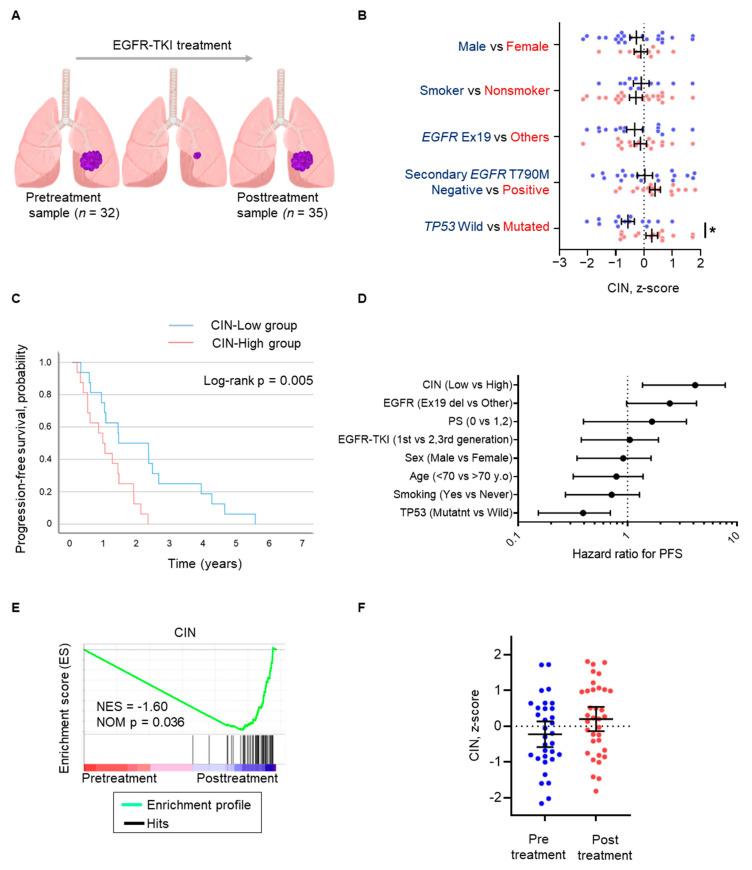
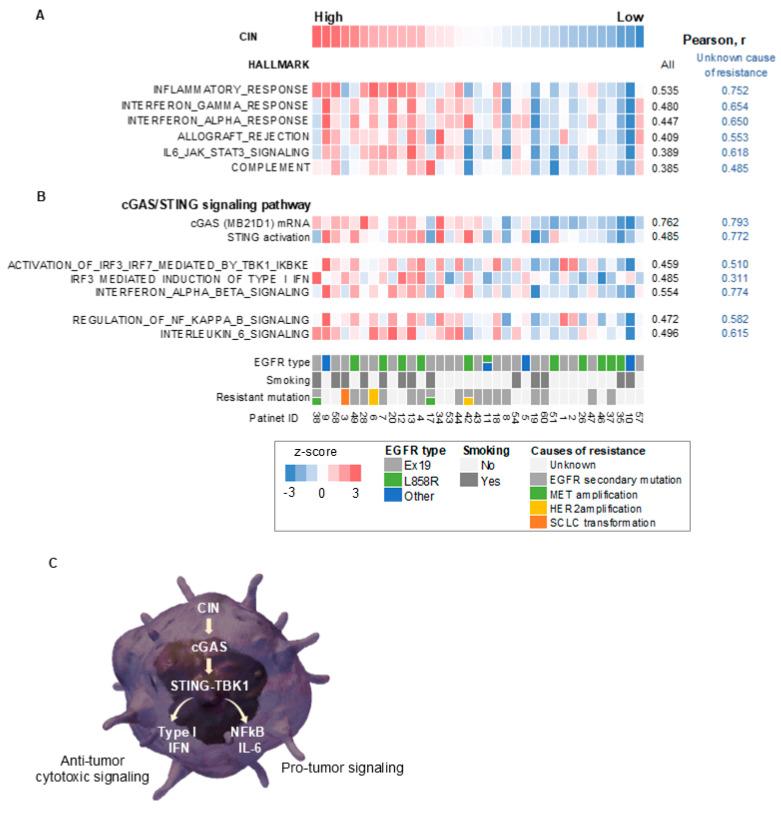
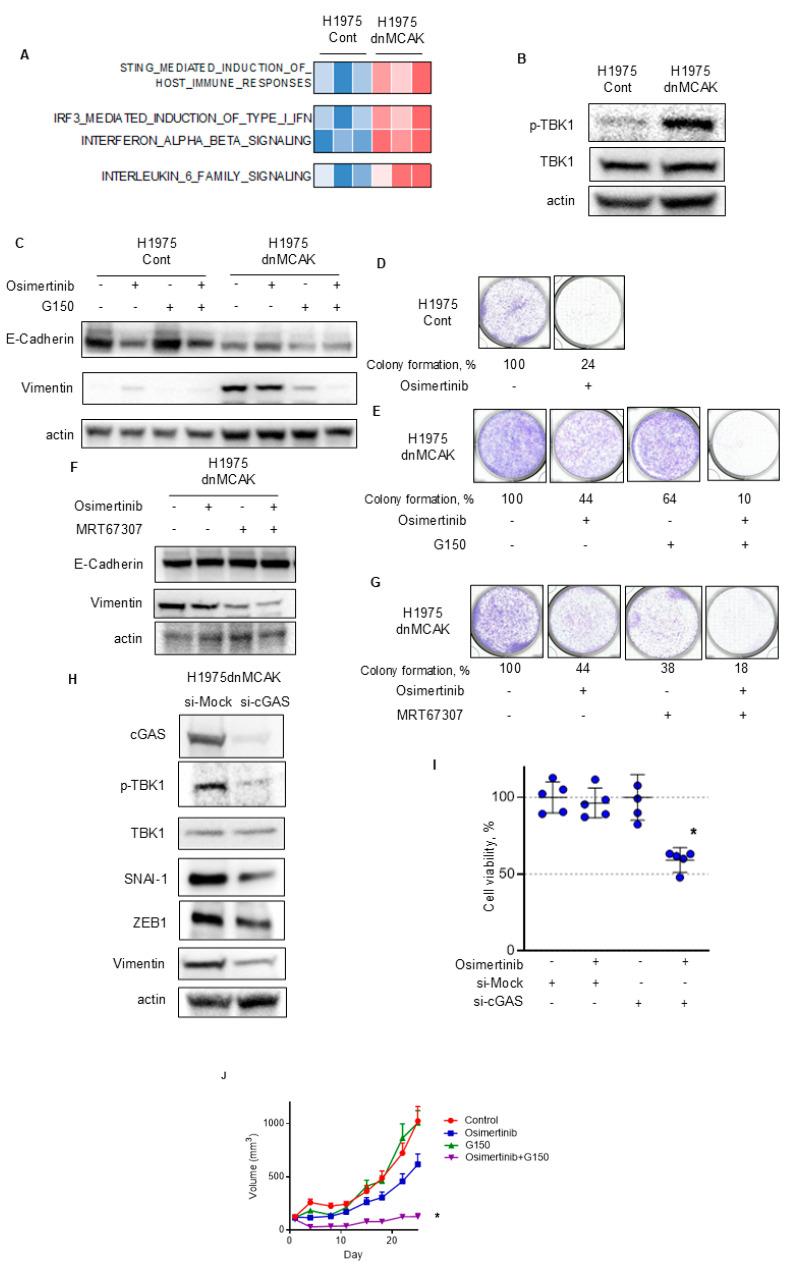
Epidermal growth factor receptor tyrosine kinase inhibitors (EGFR-TKIs) are standard therapies for -mutated non-small-cell lung cancer (NSCLC); however, their efficacy is inconsistent. Secondary mutations in the or other genes that lead to resistance have been identified, but resistance mechanisms have not been fully identified. Chromosomal instability (CIN) is a hallmark of cancer and results in genetic diversity. In this study, we demonstrated by transcriptomic analysis that CIN activates the cGAS-STING signaling pathway, which leads to EGFR-TKI refractoriness in a subset of -mutated NSCLC patients. Furthermore, -mutated H1975dnMCAK cells, which frequently underwent chromosomal mis-segregation, demonstrated refractoriness to the EGFR-TKI osimertinib compared to control cells. Second, H1975dnMCAK cells exhibited activation of cGAS-STING signaling and its downstream signaling, including tumor-promoting cytokine IL-6. Finally, chromosomally unstable -mutated NSCLC exhibited enhanced epithelial-mesenchymal transition (EMT). Blockade of cGAS-STING-TBK1 signaling reversed EMT, resulting in restored susceptibility to EGFR-TKIs in vitro and in vivo. These results suggest that CIN may lead to the activation of cGAS-STING signaling in some -mutated NSCLC, resulting in EMT-associated EGFR-TKI resistance.
表皮生长因子受体酪氨酸激酶抑制剂(EGFR-TKIs)是治疗表皮生长因子受体(EGFR)突变的非小细胞肺癌(NSCLC)的标准疗法;然而,它们的疗效并不一致。已经鉴定出EGFR或其他导致耐药的基因中的继发性突变,但耐药机制尚未完全明确。染色体不稳定性(CIN)是癌症的一个标志,会导致基因多样性。在本研究中,我们通过转录组分析证明,CIN激活cGAS-STING信号通路,这导致一部分EGFR突变的NSCLC患者对EGFR-TKI产生耐药。此外,与对照细胞相比,经常发生染色体错分离的EGFR突变的H1975dnMCAK细胞对EGFR-TKI奥希替尼表现出耐药。其次,H1975dnMCAK细胞表现出cGAS-STING信号及其下游信号(包括促肿瘤细胞因子IL-6)的激活。最后,染色体不稳定的EGFR突变的NSCLC表现出增强的上皮-间质转化(EMT)。阻断cGAS-STING-TBK1信号可逆转EMT,在体外和体内均可恢复对EGFR-TKIs的敏感性。这些结果表明,CIN可能导致一些EGFR突变的NSCLC中cGAS-STING信号的激活,从而导致与EMT相关的EGFR-TKI耐药。


 Zotero 插件