
探索鼠尾草对多囊卵巢综合征患者脂质和氧化应激标志物的治疗作用——一项随机安慰剂对照临床试验。
Exploring the therapeutic impact of Salvia officinalis on lipid and oxidative stress markers in patients with polycystic ovary syndrome - a randomized placebo-controlled clinical trial.
作者信息
Maleki-Hajiagha Arezoo, Mojab Faraz, Amidi Fardin, Amini Leila
机构信息
Department of Anatomy, School of Medicine, Tehran University of Medical Sciences, Tehran, Iran.
Students' Scientific Research Center (SSRC), Tehran University of Medical Sciences, Tehran, Iran.
出版信息
BMC Complement Med Ther. 2025 Mar 26;25(1):114. doi: 10.1186/s12906-025-04858-2.
BACKGROUND
Salvia.officinalis (S. officinalis), is recognized for its antihyperlipidemic, metabolism-regulating, and antioxidant properties in diabetic and hyperlipidemic disorders. This study examining its effects on lipid and oxidative stress (OS) markers in patients with Polycystic Ovary Syndrome (PCOS), thereby substantiating its role in managing metabolic disorders.
METHODS
In this randomized placebo-controlled trial was performed in gynecology clinics affiliated to Iran University of Medical Sciences. Accordingly, 70 Iranian married women aged 15-40 years with newly diagnosed PCOS were included. They were randomized to receive either 330 mg of S. officinalis extract or placebo daily for eight weeks. The study outcomes included lipid profile and OS markers.
RESULTS
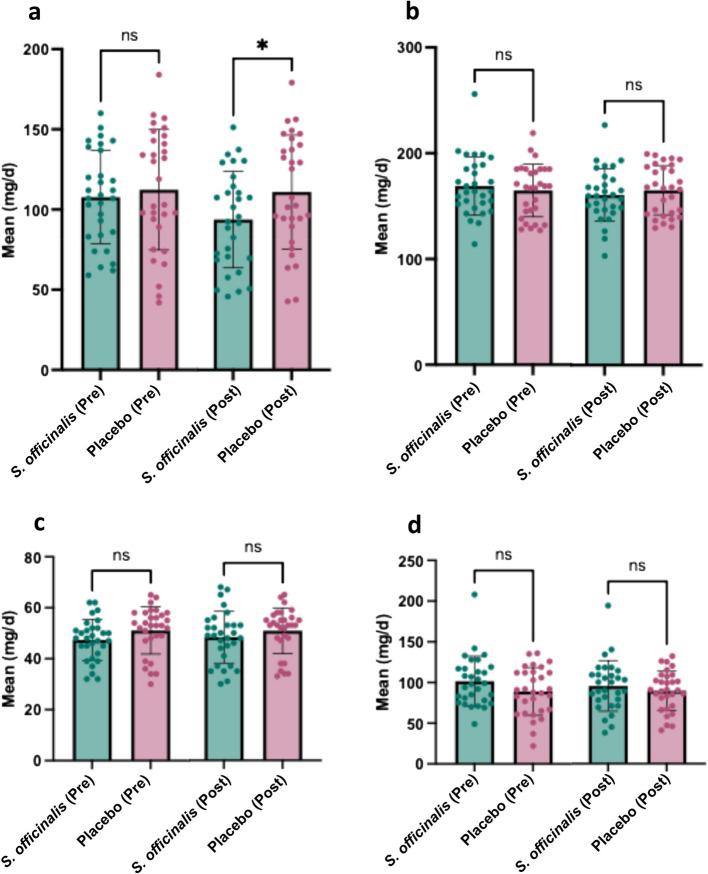
The study found a significantly lower triglyceride levels and malondialdehyde after eight weeks of S. officinalis extract intake compared to placebo. Also, the mean change of triglyceride, high-density lipoprotein cholesterol, malondialdehyde, and total antioxidant capacity were statistically significant in intervention group.
CONCLUSION
The study demonstrates that S. officinalis extract can significantly reduce triglyceride levels and OS in patients with PCOS, suggesting its potential as an adjunctive natural therapy for managing metabolic and oxidative imbalances associated with this condition. While the extract did not significantly alter other lipid profile markers, the observed improvements highlight the therapeutic promise of S. officinalis. These findings support further investigation into the clinical applications S. officinalis for PCOS and its potential benefits for metabolic health.
TRIAL REGISTRATION
IRCT201504146917N2 on 2015-10-03 (registered while recruiting).
背景
鼠尾草(Salvia.officinalis,即药用鼠尾草)在糖尿病和高脂血症疾病中具有抗高血脂、调节代谢和抗氧化特性,因而为人所知。本研究旨在探究其对多囊卵巢综合征(PCOS)患者脂质和氧化应激(OS)标志物的影响,从而证实其在管理代谢紊乱方面的作用。
方法
本随机安慰剂对照试验在伊朗医科大学附属的妇科诊所进行。据此,纳入了70名年龄在15 - 40岁、新诊断为PCOS的伊朗已婚女性。她们被随机分为两组,一组每天服用330毫克药用鼠尾草提取物,另一组服用安慰剂,为期八周。研究结果包括血脂谱和OS标志物。
结果
研究发现,与安慰剂组相比,服用药用鼠尾草提取物八周后,甘油三酯水平和丙二醛显著降低。此外,干预组甘油三酯、高密度脂蛋白胆固醇、丙二醛和总抗氧化能力的平均变化具有统计学意义。
结论
该研究表明,药用鼠尾草提取物可显著降低PCOS患者的甘油三酯水平和氧化应激,表明其作为辅助天然疗法来管理与该病症相关的代谢和氧化失衡具有潜力。虽然该提取物并未显著改变其他血脂谱标志物,但观察到的改善突出了药用鼠尾草的治疗前景。这些发现支持进一步研究药用鼠尾草在PCOS中的临床应用及其对代谢健康的潜在益处。
试验注册
于2015年10月3日注册为IRCT201504146917N2(招募时注册)


 Zotero 插件