
微塑料和纳米塑料对肺部和肾脏产生的不良健康影响与氧化应激和炎症有关。
Micro- and Nano-Plastic-Induced Adverse Health Effects on Lungs and Kidneys Linked to Oxidative Stress and Inflammation.
作者信息
Lee Seung Eun, Kim Do Yun, Jeong Taek Seung, Park Yong Seek
机构信息
Department of Microbiology, College of Medicine, Kyung Hee University, Seoul 02447, Republic of Korea.
Department of Biomedical Science, Graduate School, Kyung Hee University, Seoul 02447, Republic of Korea.
出版信息
Life (Basel). 2025 Mar 3;15(3):392. doi: 10.3390/life15030392.
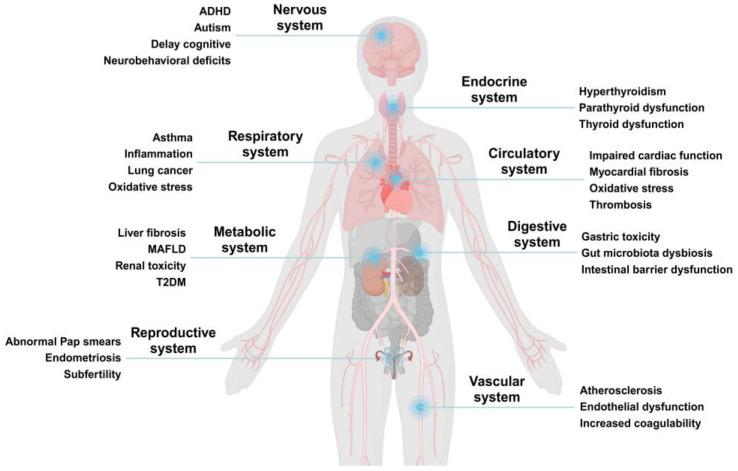
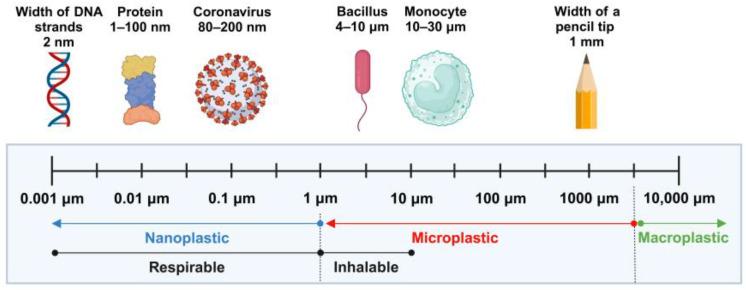
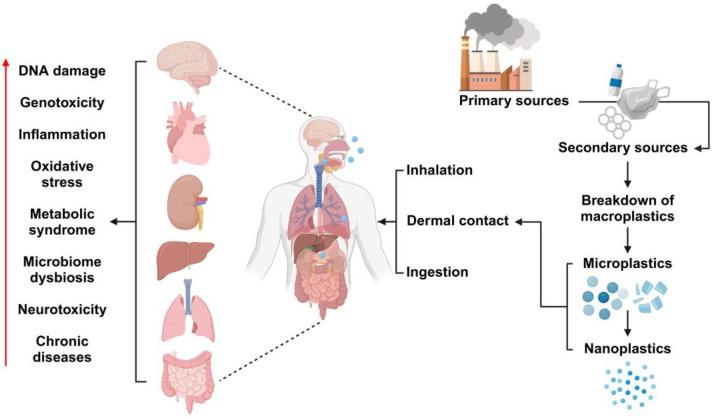
Micro- and nano-plastics (MNPs) are small plastic particles that result from the breakdown of larger plastics. They are widely dispersed in the environment and pose a threat to wildlife and humans. MNPs are present in almost all everyday items, including food, drinks, and household products. Air inhalation can also lead to exposure to MNPs. Research in animals indicates that once MNPs are absorbed, they can spread to various organs, including the liver, spleen, heart, lungs, thymus, reproductive organs, kidneys, and even the brain by crossing the blood-brain barrier. Furthermore, MPs can transport persistent organic pollutants or heavy metals from invertebrates to higher levels in the food chain. When ingested, the additives and monomers that comprise MNPs can disrupt essential biological processes in the human body, thereby leading to disturbances in the endocrine and immune systems. During the 2019 coronavirus (COVID-19) pandemic, there was a significant increase in the global use of polypropylene-based face masks, leading to insufficient waste management and exacerbating plastic pollution. This review examines the existing research on the impact of MNP inhalation on human lung and kidney health based on in vitro and in vivo studies. Over the past decades, a wide range of studies suggest that MNPs can impact both lung and kidney tissues under both healthy and diseased conditions. Therefore, this review emphasizes the need for additional studies employing multi-approach analyses of various associated biomarkers and mechanisms to gain a comprehensive and precise understanding of the impact of MNPs on human health.
微塑料和纳米塑料(MNPs)是较大塑料分解产生的小塑料颗粒。它们广泛散布于环境中,对野生动物和人类构成威胁。MNPs几乎存在于所有日常用品中,包括食品、饮料和家用产品。吸入空气也会导致接触MNPs。对动物的研究表明,MNPs一旦被吸收,就可以扩散到各个器官,包括肝脏、脾脏、心脏、肺、胸腺、生殖器官、肾脏,甚至通过血脑屏障进入大脑。此外,微塑料可以将持久性有机污染物或重金属从无脊椎动物传递到食物链中更高的营养级。当被摄入时,构成MNPs的添加剂和单体可能会扰乱人体中的基本生物过程,从而导致内分泌和免疫系统紊乱。在2019冠状病毒病(COVID-19)大流行期间,全球基于聚丙烯的口罩使用量大幅增加,导致废物管理不足,加剧了塑料污染。这篇综述基于体外和体内研究,考察了关于吸入MNPs对人类肺部和肾脏健康影响的现有研究。在过去几十年中,大量研究表明,MNPs在健康和患病条件下都会对肺和肾组织产生影响。因此,这篇综述强调需要采用多种方法分析各种相关生物标志物和机制进行更多研究,以全面、精确地了解MNPs对人类健康的影响。
 Zotero 插件