
25分钟与60分钟午睡对精英青少年足球运动员敏捷性和垂直跳跃表现的急性影响:个体昼夜节律类型的作用
The Acute Effects of 25- Versus 60-Minute Naps on Agility and Vertical Jump Performance in Elite Youth Soccer Players: The Role of Individual Chronotype.
作者信息
Eken Özgür, Öncü Mertkan, Kurtoğlu Ahmet, Bozkurt Oguzhan, Türkmen Musa, Aldhahi Monira I
机构信息
Department of Physical Education and Sport Teaching, Faculty of Sports Sciences, Inonu University, Malatya 44280, Türkiye.
Department of Physical Education and Sport, Institute of Health Sciences, Inonu University, Malatya 44280, Türkiye.
出版信息
Life (Basel). 2025 Mar 7;15(3):422. doi: 10.3390/life15030422.
INTRODUCTION
While napping is recognized as an effective strategy for mitigating insufficient sleep and enhancing athletic recovery, limited research exists on its effects on football players' anaerobic performance, particularly concerning chronotype variations. This study investigated the impact of strategic napping durations on anaerobic performance and agility in football players under the age of 19 (U19), considering individual chronotypes and psychological factors.
METHODS
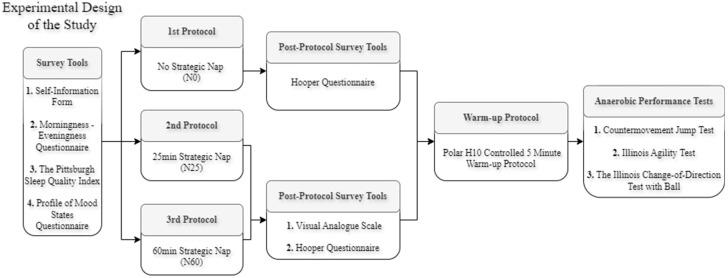
Sixteen young football players (age: 17.18 ± 1.04 years) participated in this crossover randomized controlled study. Participants underwent three conditions: no nap (NoN), 25 min nap (N25), and 60 min nap (N60), with 48 h washout periods between sessions. Performance was assessed using the Countermovement Jump Test (CMJ), Illinois Agility Test, and Illinois Change-of-Direction Test with Ball. Chronotype assessment, sleep quality, and mood states were evaluated using the Morningness-Eveningness Questionnaire, Pittsburgh Sleep Quality Index, and Profile of Mood States Questionnaire, respectively.
RESULTS
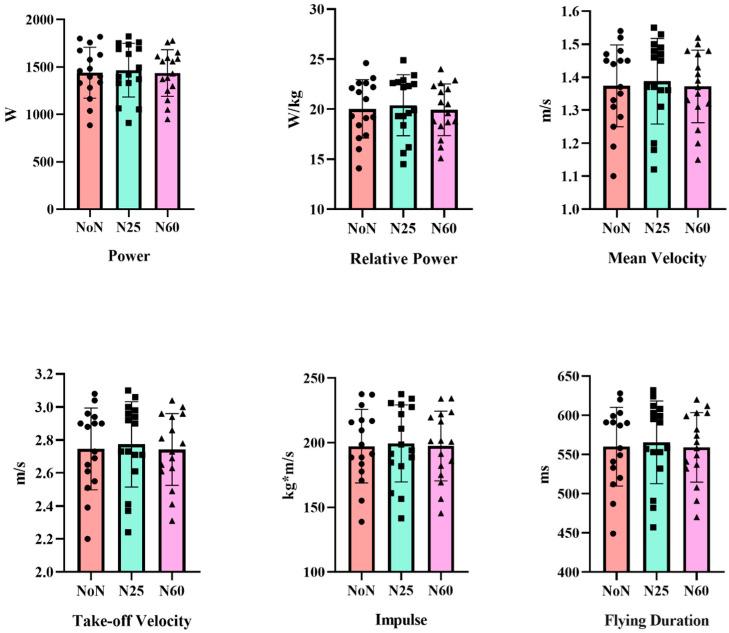
The 60 min nap protocol demonstrated significant improvements in agility performance compared to other conditions, particularly in the Illinois Agility Test and Change-of-Direction Test with Ball. However, no significant differences were observed in CMJ parameters across napping conditions. Chronotype variations showed correlations with agility performance and psychological factors, with evening-type participants displaying different responses to napping interventions compared to morning-type participants.
CONCLUSIONS
While a 60 min post-lunch nap did not affect anaerobic performance, it positively influenced agility performance in soccer players. Chronotypic differences significantly impacted both agility performance and associated psychological factors. These findings suggest that integrating napping strategies into athletic training programs, while considering individual chronotypic variations, may present opportunities for enhancing specific aspects of athletic performance. Further research is needed to elucidate the underlying physiological, psychological, and cognitive mechanisms of these effects.
引言
虽然午睡被认为是缓解睡眠不足和促进运动员恢复的有效策略,但关于其对足球运动员无氧运动表现的影响,尤其是与昼夜节律类型差异相关的研究有限。本研究探讨了策略性午睡时长对19岁以下(U19)足球运动员无氧运动表现和敏捷性的影响,同时考虑了个体昼夜节律类型和心理因素。
方法
16名年轻足球运动员(年龄:17.18±1.04岁)参与了这项交叉随机对照研究。参与者经历了三种情况:不午睡(NoN)、25分钟午睡(N25)和60分钟午睡(N60),各阶段之间有48小时的洗脱期。使用反向移动跳跃测试(CMJ)、伊利诺伊敏捷性测试和带球伊利诺伊变向测试来评估运动表现。分别使用晨型-夜型问卷、匹兹堡睡眠质量指数和情绪状态剖面图问卷来评估昼夜节律类型、睡眠质量和情绪状态。
结果
与其他情况相比,60分钟午睡方案在敏捷性表现上有显著改善,尤其是在伊利诺伊敏捷性测试和带球变向测试中。然而,在不同午睡情况下,CMJ参数未观察到显著差异。昼夜节律类型差异与敏捷性表现和心理因素相关,夜型参与者与晨型参与者相比,对午睡干预表现出不同的反应。
结论
虽然午餐后60分钟的午睡对无氧运动表现没有影响,但对足球运动员的敏捷性表现有积极影响。昼夜节律类型差异显著影响了敏捷性表现和相关心理因素。这些发现表明,在考虑个体昼夜节律类型差异的同时,将午睡策略纳入运动训练计划,可能为提高运动表现的特定方面提供机会。需要进一步研究以阐明这些影响背后的生理、心理和认知机制。



 Zotero 插件