
新冠疫情对巴西巴伊亚州严重急性呼吸道感染临床和流行病学特征的影响:疫情前后趋势的比较分析
The Impact of the COVID-19 Pandemic on the Clinical and Epidemiological Profile of Severe Acute Respiratory Infection in Bahia, Brazil: A Comparative Analysis of Pre- and Post-Pandemic Trends.
作者信息
Magalhães Bronze Káriton, Dos Santos Uener Ribeiro, Barbosa Costa Galileu, Sevá Anaiá da Paixão, Guimarães Kersul Maíra, Sacramento Pinto Cathianne, Rego Albuquerque George, Melo Mariano Ana Paula, Gadelha Sandra Rocha
机构信息
Laboratório de Farmacogenômica e Epidemiologia Molecular, Universidade Estadual de Santa Cruz, Ilhéus 45662-900, Bahia, Brazil.
Programa de Pós-Graduação em Ciências da Saúde (PPGCS), Universidade Estadual de Santa Cruz, Ilhéus 45662-900, Bahia, Brazil.
出版信息
Viruses. 2025 Mar 9;17(3):389. doi: 10.3390/v17030389.
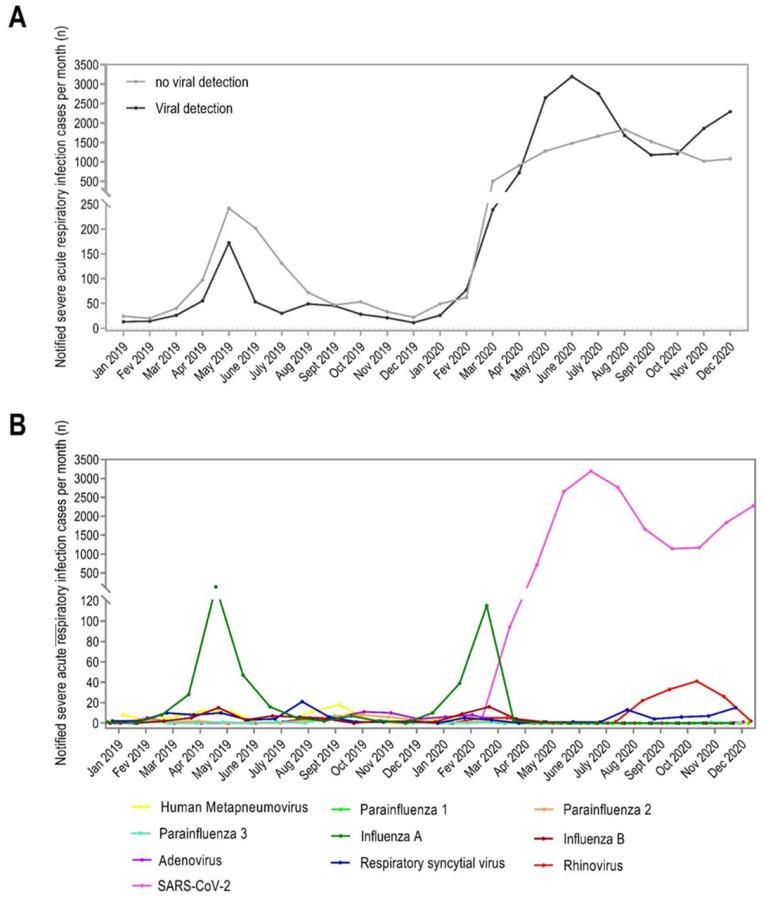
In recent years, the incidence of Severe Acute Respiratory Infection (SARI) has increased due to the emergence of SARS-CoV-2. However, the impact of the COVID-19 pandemic extends beyond mortality rates. Recent analyses suggest that the introduction and spread of SARS-CoV-2 have significantly affected the epidemiology of other key respiratory viruses, such as influenza virus (FLUV), respiratory syncytial virus (RSV), and rhinovirus (RV). These changes raise new questions about the dynamics and incidence of post-COVID-19 respiratory infections, as well as potential alterations in symptom profiles and clinical outcomes. In this study, we analyzed data from the Epidemiological Surveillance Information System of Respiratory Viral Agents (SIVEP-Gripe), established by the Brazilian Ministry of Health, to examine the profile of SARI before and during the COVID-19 pandemic in Brazil. Our data reveal a distinct epidemiological pattern, with a significant decrease in FLUV notifications during the pandemic, accompanied by peaks in RSV and RV cases in late 2020. Additionally, there was a shift in the age distribution of RSV and other viral infections, with individuals infected during the pandemic being older than those infected before the pandemic. Interestingly, the introduction and spread of SARS-CoV-2 in Bahia State resulted in a reduction in the frequency of symptoms associated with non-SARS-CoV-2 SARI, without altering clinical outcomes. Our findings suggest that the circulation of SARS-CoV-2 has contributed to a clinical and epidemiological shift, particularly for FLUV, RSV, and other viruses, marked by a reduction in symptoms such as fever, dyspnea, respiratory distress, and the need for ventilatory support. The underlying mechanisms driving these changes remain unclear. These insights are crucial for public health authorities and policymakers to refine surveillance strategies and enhance control measures for respiratory viruses, particularly those causing SARI.
近年来,由于新冠病毒(SARS-CoV-2)的出现,严重急性呼吸道感染(SARI)的发病率有所上升。然而,新冠疫情的影响不仅限于死亡率。最近的分析表明,SARS-CoV-2的出现和传播对其他关键呼吸道病毒的流行病学产生了重大影响,如流感病毒(FLUV)、呼吸道合胞病毒(RSV)和鼻病毒(RV)。这些变化引发了关于新冠后呼吸道感染的动态变化和发病率,以及症状特征和临床结果潜在改变的新问题。在本研究中,我们分析了巴西卫生部建立的呼吸道病毒病原体流行病学监测信息系统(SIVEP-Gripe)的数据,以研究巴西新冠疫情之前和期间SARI的情况。我们的数据揭示了一种独特的流行病学模式,疫情期间FLUV通报显著减少,同时2020年末RSV和RV病例出现高峰。此外,RSV和其他病毒感染的年龄分布发生了变化,疫情期间感染的个体比疫情前感染的个体年龄更大。有趣的是,SARS-CoV-2在巴伊亚州的出现和传播导致与非SARS-CoV-2 SARI相关症状的频率降低,而临床结果未发生改变。我们的研究结果表明,SARS-CoV-2的传播导致了临床和流行病学的转变,特别是对于FLUV、RSV和其他病毒,其特征是发热、呼吸困难、呼吸窘迫和通气支持需求等症状减少。驱动这些变化的潜在机制尚不清楚。这些见解对于公共卫生当局和政策制定者完善呼吸道病毒,特别是导致SARI的病毒的监测策略和加强控制措施至关重要。



 Zotero 插件