
长期超觉静坐练习可能的抗老化和抗应激作用:基因表达差异、认知功能的脑电图关联及毛发类固醇
Possible Anti-Aging and Anti-Stress Effects of Long-Term Transcendental Meditation Practice: Differences in Gene Expression, EEG Correlates of Cognitive Function, and Hair Steroids.
作者信息
Wenuganen Supaya, Walton Kenneth G, Travis Frederick T, Stalder Tobias, Wallace R Keith, Srivastava Meera, Fagan John
机构信息
Center for Brain, Cognition and Consciousness, Maharishi International University, Fairfield, IA 52557, USA.
Department of Physiology and Health, Maharishi International University, Fairfield, IA 52557, USA.
出版信息
Biomolecules. 2025 Feb 20;15(3):317. doi: 10.3390/biom15030317.
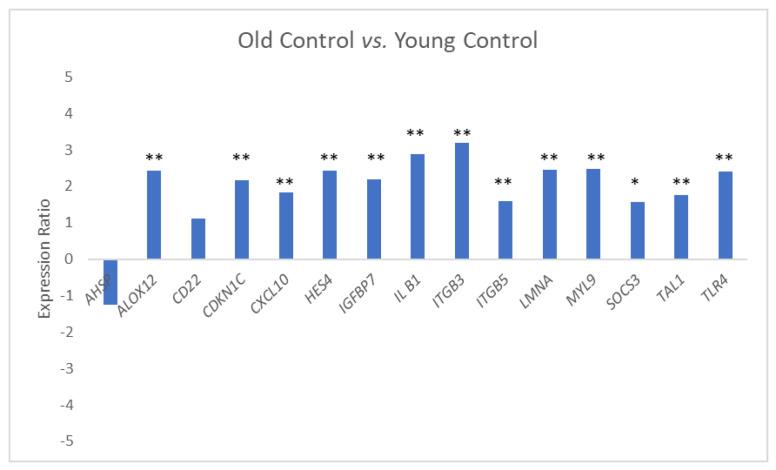
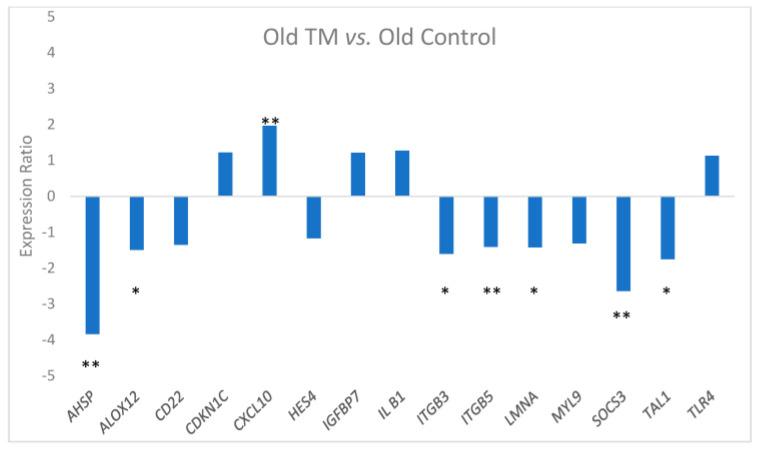
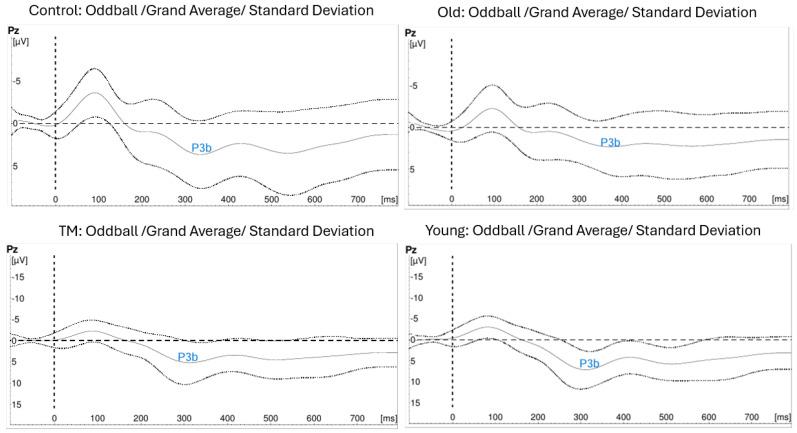
: Our previous comparison of peripheral blood mononuclear cells (PBMCs) from long-term Transcendental Meditation (TM) practitioners and matched non-practitioner controls found 200 differentially expressed (DE) genes. Bioinformatics analyses of these DE genes suggested a reduced risk of diseases associated with stress and aging in the TM group. Here we assessed additional signs of reduced stress and aging. : A sample of 15 of the 200 DE genes was studied using qPCR in PBMCs from 40-year TM practitioners ("Old TM", = 23) compared to a "Young Control" group ( = 19) and an "Old Control" group ( = 21) of non-meditators. In these three groups, plus a "Young TM", 12-year practitioner group ( = 26), we also studied EEG-based parameters of cognitive function (the Brain Integration Scale (BIS), and latency of three components of the event-related potential (ERP)). Finally, using LC/MS/MS, we compared persistent levels of cortisol (F) and its inactive congener, cortisone (E), in hair. : qPCR analysis showed that 13 of the 15 genes were more highly expressed in Old Controls than in Young Controls. In the Old TM group, 7 of these 13 were lower than in Old Controls. Both TM groups had higher BIS scores than their age-matched controls. The Old TM group had shorter N2, P3a, and P3b latencies than the Old Control group, and latencies in the Old TM group were not longer than in the Young Control group. The Hair F/Hair E ratio was higher in the control subgroups than in their age-matched TM subgroups, and Hair F was higher in the Young Control and combined control groups than in the Young TM and combined TM groups. : These results are consistent with reductions in biomarkers of chronic stress and biological age in long-term TM meditators. They are also consistent with results from the previous study suggesting that TM practice lowers energy consumption or leads to more efficient energy metabolism.
我们之前对长期超觉静坐(TM)练习者和匹配的非练习者对照组的外周血单个核细胞(PBMC)进行比较,发现了200个差异表达(DE)基因。对这些DE基因的生物信息学分析表明,TM组中与压力和衰老相关疾病的风险降低。在此,我们评估了压力和衰老减轻的其他迹象。
使用qPCR对200个DE基因中的15个基因进行了研究,样本来自40年TM练习者(“老年TM”,n = 23)的PBMC,与非冥想者的“年轻对照组”(n = 19)和“老年对照组”(n = 21)进行比较。在这三组中,加上一个“年轻TM”,即12年练习者组(n = 26),我们还研究了基于脑电图的认知功能参数(大脑整合量表(BIS)以及事件相关电位(ERP)三个成分的潜伏期)。最后,使用液相色谱/串联质谱法(LC/MS/MS),我们比较了头发中皮质醇(F)及其无活性同类物可的松(E)的持续水平。
qPCR分析表明,15个基因中的13个在老年对照组中的表达高于年轻对照组。在老年TM组中,这13个基因中有7个低于老年对照组。两个TM组的BIS评分均高于其年龄匹配的对照组。老年TM组的N2、P3a和P3b潜伏期比老年对照组短,且老年TM组的潜伏期不超过年轻对照组。头发F/头发E比值在对照组亚组中高于其年龄匹配的TM亚组,且头发F在年轻对照组和联合对照组中高于年轻TM组和联合TM组。
这些结果与长期TM冥想者慢性压力和生物学年龄生物标志物的降低一致。它们也与先前研究结果一致,表明TM练习降低了能量消耗或导致更有效的能量代谢。




 Zotero 插件