
传统知识与科学知识之间的相互作用:植物成分及其在肺癌和结直肠癌信号通路中的作用
Interplay Between Traditional and Scientific Knowledge: Phytoconstituents and Their Roles in Lung and Colorectal Cancer Signaling Pathways.
作者信息
Imtiaz Ilma, Schloss Janet, Bugarcic Andrea
机构信息
National Centre for Naturopathic Medicine, Faculty of Health, Southern Cross University, Military Road, Lismore, NSW 2480, Australia.
出版信息
Biomolecules. 2025 Mar 5;15(3):380. doi: 10.3390/biom15030380.
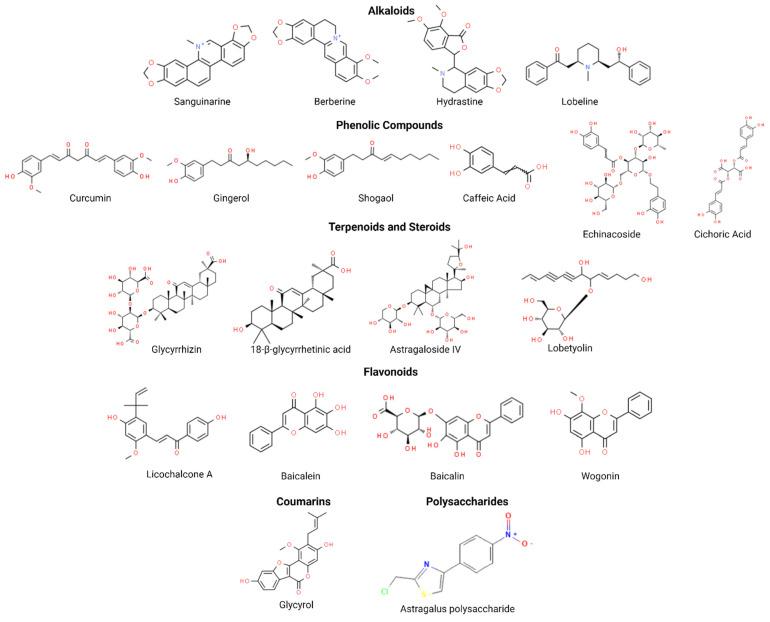
Natural plant products have been used for cancer treatment since ancient times and continue to play a vital role in modern anticancer drug development. However, only a small fraction of identified medicinal plants has been thoroughly investigated, particularly for their effects on cellular pathways in lung and colorectal cancers, two under-researched cancers with poor prognostic outcomes (lung cancers). This review focuses on the lung and colorectal cancer signaling pathways modulated by bioactive compounds from eleven traditional medicinal plants: , , , , , , , , , , and . These plants were selected based on their documented use in traditional medicine and modern clinical practice. Selection criteria involved cross-referencing herbs identified in a scoping review of traditional cancer treatments and findings from an international survey on herbal medicine currently used for lung and colorectal cancer management by our research group and the availability of existing literature on their anticancer properties. The review identifies several isolated phytoconstituents from these plants that exhibit anticancer properties by modulating key signaling pathways such as PI3K/Akt/mTOR, RAS/RAF/MAPK, Wnt/β-catenin, and TGF-β in vitro. Notable constituents include sanguinarine, berberine, hydrastine, lobeline, curcumin, gingerol, shogaol, caffeic acid, echinacoside, cichoric acid, glycyrrhizin, 18-β-glycyrrhetinic acid, astragaloside IV, lobetyolin, licochalcone A, baicalein, baicalin, wogonin, and glycyrol. Curcumin and baicalin show preclinical effectiveness but face bioavailability challenges, which may be overcome by combining them with piperine or using oral extracts to enhance gut microbiome conversion, integrating traditional knowledge with modern strategies for improved outcomes. Furthermore, herbal extracts from , , and identified in traditional knowledge, are currently in clinical trials. Notably, curcumin and baicalin also modulate miRNA pathways, highlighting a promising intersection of modern science and traditional medicine. Thus, the development of anticancer therapeutics continues to benefit from the synergy of traditional knowledge, scientific innovation, and technological advancements.
自古以来,天然植物产品就被用于癌症治疗,并且在现代抗癌药物研发中继续发挥着至关重要的作用。然而,已鉴定的药用植物中只有一小部分得到了深入研究,尤其是它们对肺癌和结直肠癌细胞通路的影响,这两种癌症研究较少且预后不良(肺癌)。本综述聚焦于11种传统药用植物中的生物活性化合物所调节的肺癌和结直肠癌信号通路:[此处原文未提及具体植物名称,无法准确翻译]。这些植物是根据它们在传统医学和现代临床实践中的应用记录挑选出来的。选择标准包括交叉参考我们研究小组在传统癌症治疗范围综述中确定的草药以及关于目前用于肺癌和结直肠癌管理的草药的国际调查结果,以及现有关于它们抗癌特性的文献的可用性。该综述确定了这些植物中几种分离出的植物成分,它们通过在体外调节关键信号通路如PI3K/Akt/mTOR、RAS/RAF/MAPK、Wnt/β -连环蛋白和TGF -β而表现出抗癌特性。值得注意的成分包括血根碱、黄连素、白毛茛碱、洛贝林、姜黄素、姜酚、姜辣素、咖啡酸、紫锥菊苷、菊苣酸、甘草甜素、18 -β -甘草次酸、黄芪甲苷、党参炔苷、甘草查尔酮A、黄芩素、黄芩苷、汉黄芩素和甘草醇。姜黄素和黄芩苷显示出临床前有效性,但面临生物利用度挑战,这可以通过将它们与胡椒碱联合使用或使用口服提取物来增强肠道微生物群转化来克服,将传统知识与现代策略相结合以改善结果。此外,在传统知识中确定的[此处原文未提及具体植物名称,无法准确翻译]、[此处原文未提及具体植物名称,无法准确翻译]和[此处原文未提及具体植物名称,无法准确翻译]的草药提取物目前正在进行临床试验。值得注意的是,姜黄素和黄芩苷还调节miRNA通路,突出了现代科学与传统医学一个有前景的交叉点。因此,抗癌治疗的发展继续受益于传统知识、科学创新和技术进步的协同作用。


 Zotero 插件