
全身健康状况不佳的儿童牙龈炎和牙周炎患者的牙周状况与疱疹病毒科、细菌和真菌:一项系统评价
Periodontal Status and Herpesiviridae, Bacteria, and Fungi in Gingivitis and Periodontitis of Systemically Compromised Pediatric Subjects: A Systematic Review.
作者信息
Di Spirito Federica, Pisano Massimo, Di Palo Maria Pia, De Benedetto Giuseppina, Rizki Iman, Franci Gianluigi, Amato Massimo
机构信息
Department of Medicine, Surgery and Dentistry, University of Salerno, Via S. Allende, 84081 Baronissi, Italy.
出版信息
Children (Basel). 2025 Mar 17;12(3):375. doi: 10.3390/children12030375.
BACKGROUND
Gingivitis and periodontitis are microbially associated diseases, with some features characteristic of pediatric age and others linked to systemic diseases. While the role of periodontal pathogenic bacteria is well recognized, the contribution of fungi and viruses, particularly , remains controversial. Studies in adults have highlighted the presence of , but evidence in pediatric subjects, especially systemically compromised, is limited. This systematic review aimed to assess periodontal status (e.g., health, gingivitis, periodontitis, necrotizing gingivitis, and/or periodontitis) and the subgingival and/or salivary microbial (bacterial, viral, and fungal) profile in systemically compromised pediatric (≤18 years) subjects with gingivitis and/or periodontitis compared to clinical periodontal health.
METHODS
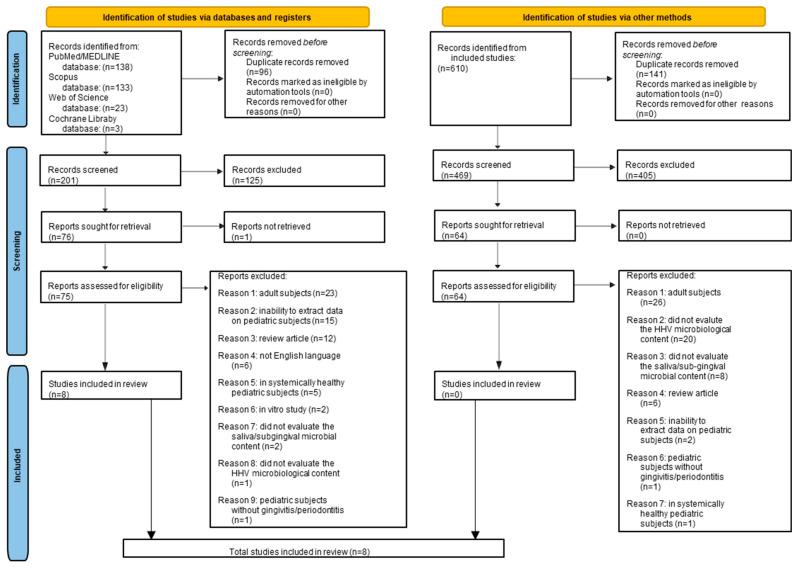
The review protocol was registered on PROSPERO (CRD42024597695) and followed the PRISMA statement. Data from eight studies were descriptively analyzed and qualitatively assessed through ROBINS-I and JBI tools.
RESULTS
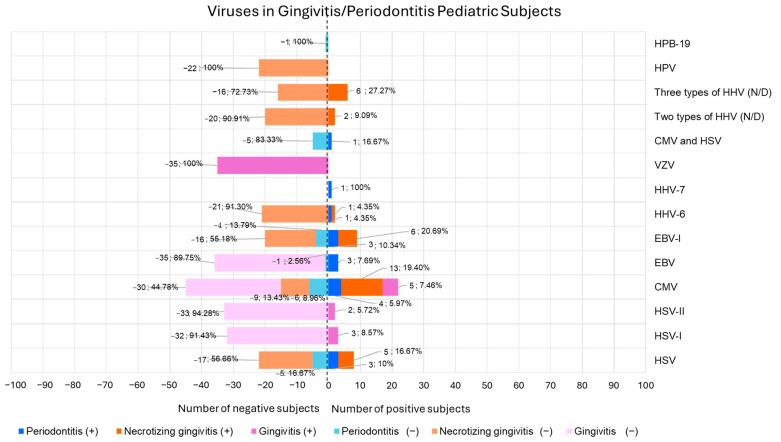
CMV was frequently detected, particularly in necrotizing gingivitis (19.40%). EBV was found in necrotizing gingivitis (20.69%) and periodontitis (10.34%); HSV was mainly associated with gingivitis and necrotizing gingivitis. Bacteria species in periodontitis included , , , and species. was detected in periodontitis, suggesting a fungal involvement in the disease's pathogenesis. Although the bacterial and fungal profile was not investigated, limited viral presence was noted in subjects with healthy periodontium, indicating a stable microbiome.
CONCLUSIONS
These findings underscore the dynamics of microbial interactions in the progression of periodontal disease in systemically compromised pediatric subjects.
背景
牙龈炎和牙周炎是与微生物相关的疾病,具有一些儿童期特有的特征,还有一些与全身性疾病有关。虽然牙周病原菌的作用已得到充分认识,但真菌和病毒,尤其是[此处原文缺失具体病毒名称]的作用仍存在争议。成人研究强调了[此处原文缺失具体病毒名称]的存在,但儿科受试者,尤其是全身健康状况不佳者的相关证据有限。本系统评价旨在评估全身健康状况不佳的儿科(≤18岁)牙龈炎和/或牙周炎患者与临床牙周健康者相比的牙周状况(如健康、牙龈炎、牙周炎、坏死性牙龈炎和/或牙周炎)以及龈下和/或唾液微生物(细菌、病毒和真菌)谱。
方法
该评价方案已在PROSPERO(CRD42024597695)上注册,并遵循PRISMA声明。通过ROBINS-I和JBI工具对八项研究的数据进行了描述性分析和定性评估。
结果
巨细胞病毒(CMV)经常被检测到,尤其是在坏死性牙龈炎中(19.40%)。在坏死性牙龈炎(20.69%)和牙周炎(10.34%)中发现了爱泼斯坦-巴尔病毒(EBV);单纯疱疹病毒(HSV)主要与牙龈炎和坏死性牙龈炎相关。牙周炎中的细菌种类包括[此处原文缺失具体细菌名称]、[此处原文缺失具体细菌名称]、[此处原文缺失具体细菌名称]和[此处原文缺失具体细菌名称]种。在牙周炎中检测到[此处原文缺失具体真菌名称],表明真菌参与了该疾病的发病机制。虽然未对细菌和真菌谱进行研究,但在牙周健康的受试者中发现病毒存在有限,表明微生物群稳定。
结论
这些发现强调了全身健康状况不佳的儿科受试者牙周疾病进展过程中微生物相互作用的动态变化。


 Zotero 插件