
眼系统中的副炎症:关于干眼病潜在机制及治疗的思考
Parainflammation in the Ocular System: Considerations on the Underlying Mechanisms and Treatment of Dry Eye Disease.
作者信息
Barabino Stefano, Aragona Pasquale, Baudouin Christophe, Boboridis Kostas, Salgado-Borges José, Benitez-Del-Castillo Jose M, Messmer Elisabeth M, Stanila Adriana, Horwath-Winter Jutta, Wylegala Edward, Rolando Maurizio
机构信息
Ocular Surface & Dry Eye Center, ASST Fatebenefratelli SACCO, Milan University, 20123, Milan, Italy.
Department of Biomedical Sciences, Section of Ophthalmology, University of Messina, Messina, Italy.
出版信息
Ophthalmol Ther. 2025 May;14(5):883-895. doi: 10.1007/s40123-025-01115-0. Epub 2025 Mar 29.
INTRODUCTION
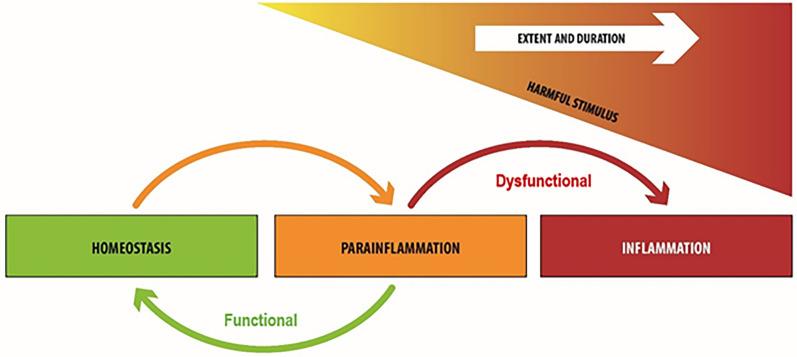
The transition from regulated to dysregulated parainflammation is a new concept that needs to be elucidated to clarify the pathogenesis of dry eye disease (DED). This review summarizes the recent evidence about mechanisms that could lead to dysregulated parainflammation, proposing a new hypothesis to correlate this process with the progression to chronic inflammation.
METHODS
A group of European experts on DED participated in a roundtable to discuss the role of parainflammation in the most common ocular diseases with regard to DED. Starting from the roundtable contents, a narrative review was conducted through a PubMed search based on the main topics discussed, namely: parainflammation, dysfunctional parainflammation, tear film lipid and mucin alterations, and tear cortisol.
RESULTS
Parainflammation is involved in different ocular pathologies and is characterized by the involvement of the immune system and complement factors. In DED, continuous and persistent insults are responsible for the qualitative and quantitative alteration of the lipid and mucin components of the tear film. In addition, other contributing factors have recently been described, such as the reduction of cortisol synthesis by corneal epithelial cells. This altered condition leads to excessive macrophage activity, releasing cytokines and adhesion molecules, losing tissue homeostasis, and possibly progressing to chronic inflammation.
CONCLUSIONS
Literature evidence supports the crucial role of parainflammation and its usefulness in improving the diagnosis and treatment of DED. At the same time, further investigations are necessary to better define the transition from functional to dysfunctional parainflammation, including the role of ocular surface components other than the tear film.
引言
从调节性副炎症向失调性副炎症的转变是一个需要阐明的新概念,以明确干眼疾病(DED)的发病机制。本综述总结了关于可能导致副炎症失调的机制的最新证据,提出了一个将这一过程与向慢性炎症进展相关联的新假说。
方法
一组欧洲干眼疾病专家参加了一次圆桌会议,讨论副炎症在与干眼疾病相关的最常见眼部疾病中的作用。从圆桌会议内容出发,基于所讨论的主要主题,即:副炎症、功能失调性副炎症、泪膜脂质和黏蛋白改变以及泪液皮质醇,通过PubMed搜索进行了叙述性综述。
结果
副炎症参与不同的眼部病理过程,其特征是免疫系统和补体因子的参与。在干眼疾病中,持续和反复的损伤导致泪膜脂质和黏蛋白成分在质和量上的改变。此外,最近还描述了其他促成因素,如角膜上皮细胞皮质醇合成的减少。这种改变的状况导致巨噬细胞过度活跃,释放细胞因子和黏附分子,破坏组织稳态,并可能进展为慢性炎症。
结论
文献证据支持副炎症的关键作用及其在改善干眼疾病诊断和治疗方面的有用性。同时,需要进一步研究以更好地界定从功能性副炎症向功能失调性副炎症的转变,包括泪膜以外的眼表成分的作用。

 Zotero 插件