
癌症研究中的网络药理学与人工智能:揭示RALGDS突变的生物标志物和治疗靶点
Network pharmacology and AI in cancer research uncovering biomarkers and therapeutic targets for RALGDS mutations.
作者信息
Zaidh S Mohammed, Vengateswaran Hariharan Thirumalai, Habeeb Mohammad, Aher Kiran Balasaheb, Bhavar Girija Balasaheb, Irfan N, Lakshmi K N V Chenchu
机构信息
Crescent School of Pharmacy, BS Abdur Rahman Crescent Institute of Science and Technology, Chennai, 600048, India.
D3 Drug Tech Lab Pvt Ltd, Chennai, 600048, India.
出版信息
Sci Rep. 2025 Mar 29;15(1):10938. doi: 10.1038/s41598-025-91568-x.
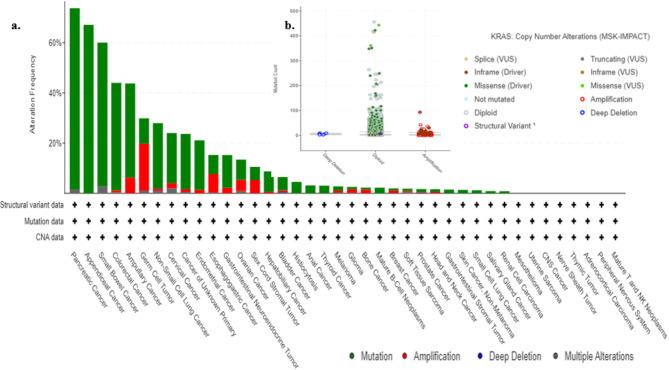
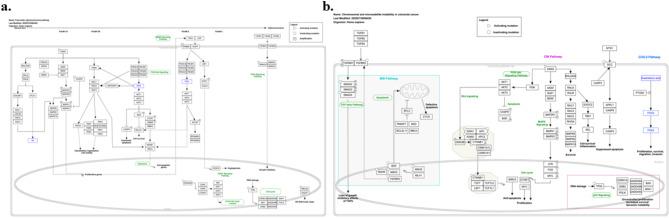
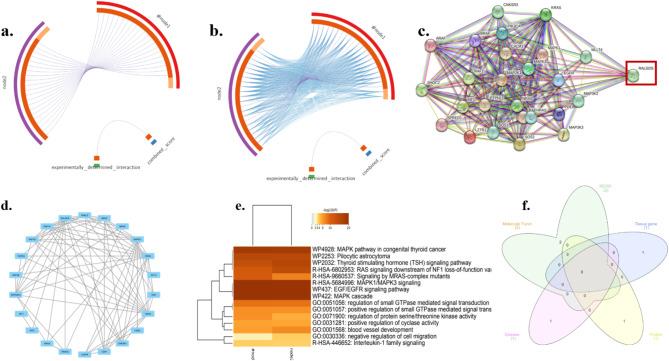
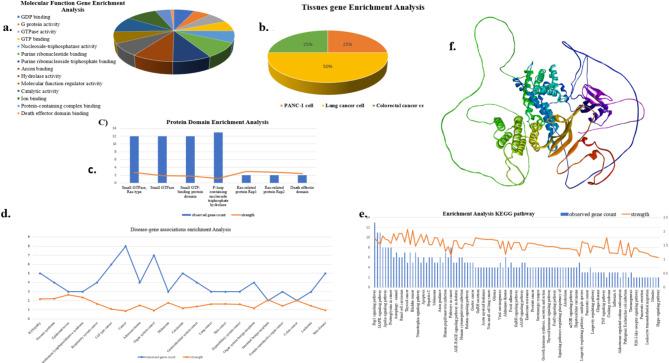
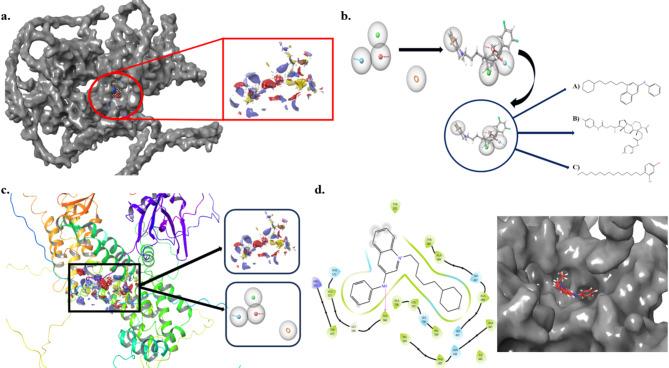
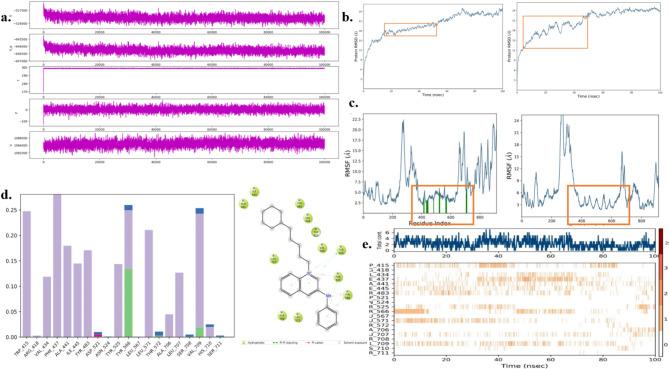
The lack of target therapies is accountable for the higher mortality of various types of cancer. To address this issue, we selected a target mutated Kirsten rat sarcoma virus oncogene homologue, which plays a significant role in various cancers. Our study aims to identify selective biomarkers and develop diagnostic and therapeutic strategies for KRAS-associated genes using artificial intelligence. Initially, Genomic data, cancer epidemiology, proteomics network interactions, and omics enrichment were analyzed. Structured E-pharmacophore model aided in capturing the binding cavity using eraser algorithms and fabricating a new selective lead compound for the KRSA. The selective molecule was abridged inside the binding cavity and stability was validated through 100 ns molecular dynamics simulations. Epidemiological-neural network studies indicated KRAS mutations leads 40 types of cancer, exclusively pancreatic and colorectal cancers, with diploid and missense mutations as primary factors. Pathway analysis highlighted the involvement of the MAPK and RAS signaling pathways in cancer development and proteomics analysis identified RALGDS as a key protein. Protein-based pharmacophore analysis mapped the biologically active features such as donor, acceptor and aromatic ring with the designed ligands. The results of interaction interpretation illustrate that the amino acid Tyr566 formed an H-bond interaction with the amine group of the octyl ring system and 20 amino acids crafted to properly orient the molecule to fit inside the polar cavity of KRAS protein. The MMGBSA score of - 53.33 kcal/mol conformed to the well-configured binding with KRSA and realistic model simulation exposed the π-π, π-cationic and hydrophobic interactions stabilised the molecule inside the KRSA protein throughout 100 ns simulation. The study demonstrates the vitality of AI and network pharmacology to identify potential-target biomarkers for KRAS-associated genes, paving the way for improved cancer diagnostics and therapeutics.
缺乏靶向治疗是各类癌症死亡率较高的原因。为解决这一问题,我们选择了一种发生靶向突变的 Kirsten 大鼠肉瘤病毒癌基因同源物,它在多种癌症中发挥着重要作用。我们的研究旨在利用人工智能识别选择性生物标志物,并开发针对 KRAS 相关基因的诊断和治疗策略。首先,对基因组数据、癌症流行病学、蛋白质组学网络相互作用和组学富集进行了分析。结构化电子药效团模型借助橡皮擦算法辅助捕捉结合腔,并为 KRSA 构建一种新的选择性先导化合物。选择性分子被缩合在结合腔内,并通过 100 纳秒的分子动力学模拟验证其稳定性。流行病学神经网络研究表明,KRAS 突变导致 40 种癌症,尤其是胰腺癌和结直肠癌,二倍体和错义突变是主要因素。通路分析突出了 MAPK 和 RAS 信号通路在癌症发展中的作用,蛋白质组学分析确定 RALGDS 为关键蛋白。基于蛋白质的药效团分析将供体、受体和芳香环等生物活性特征与设计的配体进行了映射。相互作用解释结果表明,氨基酸 Tyr566 与辛基环系统的胺基形成氢键相互作用,并且精心设计的 20 种氨基酸使分子正确定向以适合 KRAS 蛋白的极性腔。-53.33 kcal/mol 的 MMGBSA 评分符合与 KRSA 的良好结合配置,实际模型模拟表明,在 100 纳秒的模拟过程中,π-π、π-阳离子和疏水相互作用使分子在 KRSA 蛋白内部保持稳定。该研究证明了人工智能和网络药理学在识别 KRAS 相关基因潜在靶标生物标志物方面的重要性,为改善癌症诊断和治疗铺平了道路。
 Zotero 插件