
乳腺癌中的组蛋白乙酰化调节剂
Histone acetylation modulators in breast cancer.
作者信息
Yuan Xueying, Rosen Jeffrey M
机构信息
Department of Molecular and Cellular Biology, Baylor College of Medicine, 1 Baylor Plaza, Houston, TX, USA.
出版信息
Breast Cancer Res. 2025 Mar 31;27(1):49. doi: 10.1186/s13058-025-02006-9.
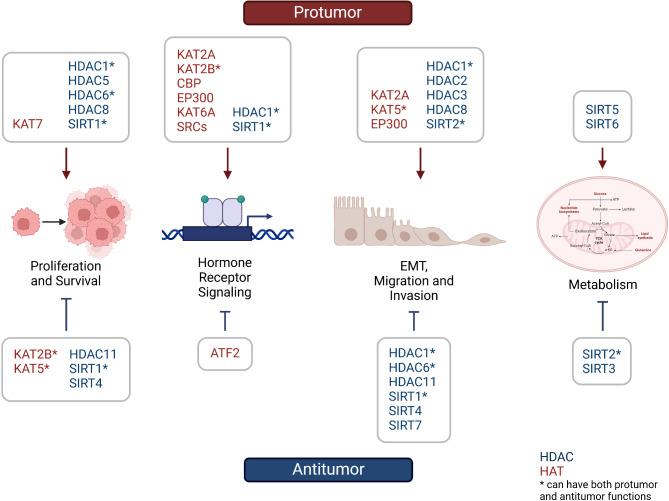
Breast cancer is the most prevalent cancer in women worldwide. Aberrant epigenetic reprogramming such as dysregulation of histone acetylation has been associated with the development of breast cancer. Histone acetylation modulators have been targeted as potential treatments for breast cancer. This review comprehensively discusses the roles of these modulators and the effects of their inhibitors on breast cancer. In addition, epigenetic reprogramming not only affects breast cancer cells but also the immunosuppressive myeloid cells, which can facilitate breast cancer progression. Therefore, the review also highlights the roles of these immunosuppressive myeloid cells and summarizes how histone acetylation modulators affect their functions and phenotypes. This review provides insights into histone acetylation modulators as potential therapeutic targets for breast cancer.
乳腺癌是全球女性中最常见的癌症。异常的表观遗传重编程,如组蛋白乙酰化失调,已与乳腺癌的发生发展相关联。组蛋白乙酰化调节剂已被作为乳腺癌的潜在治疗靶点。本综述全面讨论了这些调节剂的作用及其抑制剂对乳腺癌的影响。此外,表观遗传重编程不仅影响乳腺癌细胞,还影响免疫抑制性髓系细胞,后者可促进乳腺癌进展。因此,本综述还强调了这些免疫抑制性髓系细胞的作用,并总结了组蛋白乙酰化调节剂如何影响其功能和表型。本综述为组蛋白乙酰化调节剂作为乳腺癌的潜在治疗靶点提供了见解。
 Zotero 插件