
一种用于评估肺炎球菌疫苗接种在美国影响的动态传播模型。
A dynamic transmission model for assessing the impact of pneumococcal vaccination in the United States.
作者信息
Malik Tufail M, Bakker Kevin M, Oidtman Rachel J, Sharomi Oluwaseun, Meleleo Giulio, Nachbar Robert B, Elbasha Elamin H
机构信息
Merck & Co., Inc., Rahway, New Jersey, United States of America.
Wolfram Research, Inc., Champaign, Illinois, United States of America.
出版信息
PLoS One. 2025 Apr 2;20(4):e0305892. doi: 10.1371/journal.pone.0305892. eCollection 2025.
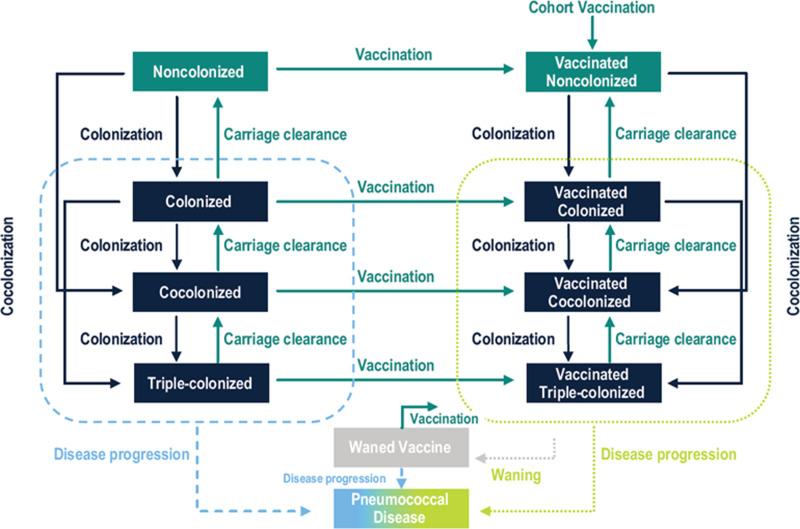
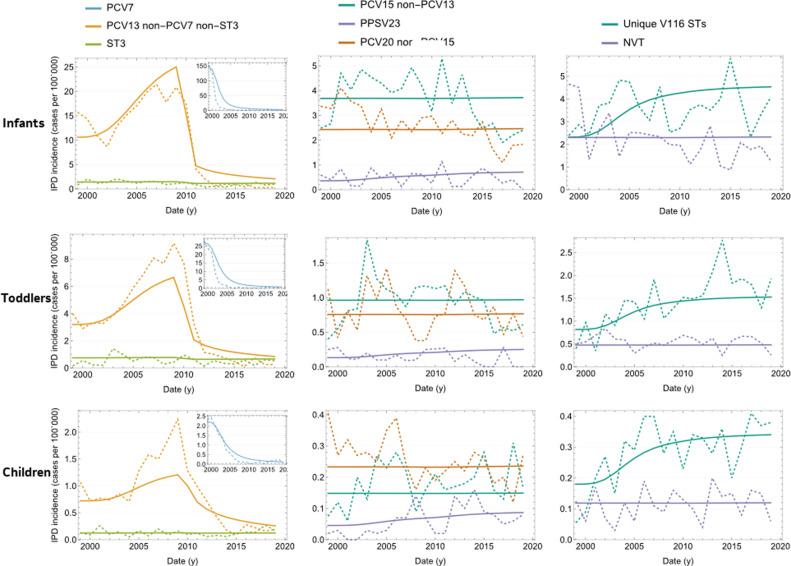
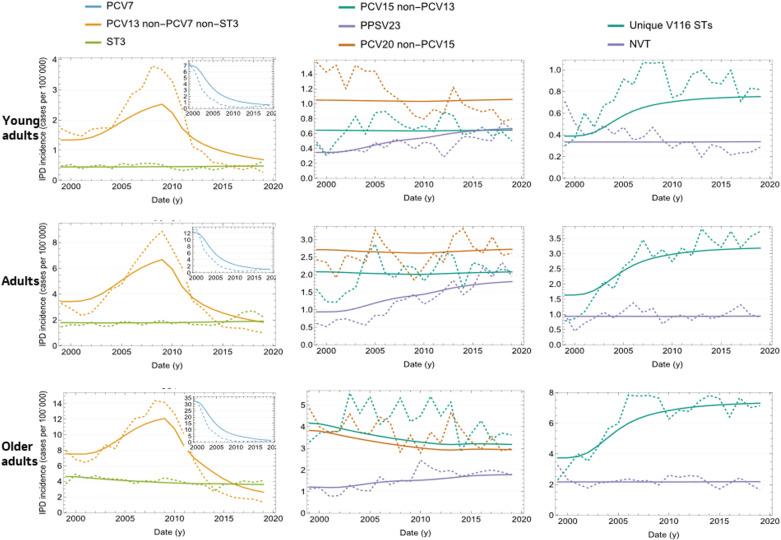
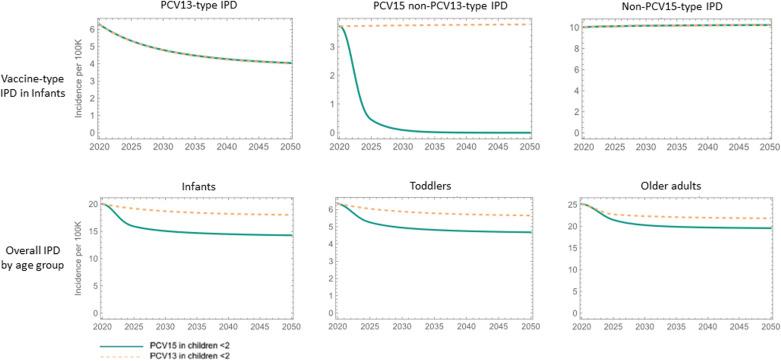
Streptococcus pneumoniae (SP) is a bacterial pathogen that kills more than 300,000 children every year across the globe. Multiple vaccines exist that prevent pneumococcal disease, with each vaccine covering a variable number of the more than 100 known serotypes. Due to the high effectiveness of these vaccines, each new pneumococcal conjugate vaccine (PCV) introduction has resulted in a decrease in vaccine-type disease and a shift in the serotype distribution towards non-vaccine types in a phenomenon called serotype replacement. Here, an age-structured compartmental model was created that reproduced historical carriage transmission dynamics in the United States and was used to evaluate the population-level impact of new vaccine introductions into the pediatric population. The model incorporates co-colonization and serotype competition, which drives replacement of the vaccine types by the non-vaccine types. The model was calibrated to historical age- and serotype-specific invasive pneumococcal disease (IPD) data from the United States. Vaccine-specific coverage and effectiveness were integrated in accordance with the recommended timelines for each age group. Demographic parameters were derived from US-population-specific databases, while population mixing patterns were informed by US-specific published literature on age-group based mixing matrices. The calibrated model was then used to project the epidemiological impact of PCV15, a 15-valent pneumococcal vaccine, compared with the status quo vaccination with PCV13 and demonstrated the value of added serotypes in PCV15. Projections revealed that PCV15 would reduce IPD incidence by 6.04% (range: 6.01% to 6.06%) over 10 years when compared to PCV13.
肺炎链球菌(SP)是一种细菌病原体,全球每年有超过30万儿童死于该病菌感染。现有多种预防肺炎球菌疾病的疫苗,每种疫苗覆盖的已知血清型数量超过100种中的一部分且各不相同。由于这些疫苗效果显著,每引入一种新的肺炎球菌结合疫苗(PCV)都会使疫苗型疾病发病率下降,并导致血清型分布向非疫苗型转变,这种现象称为血清型替换。在此,构建了一个年龄结构分区模型,该模型再现了美国历史上的携带传播动态,并用于评估向儿科人群引入新疫苗对人群水平的影响。该模型纳入了共同定植和血清型竞争,这推动了非疫苗型对疫苗型的替换。该模型根据美国历史上年龄和血清型特异性侵袭性肺炎球菌疾病(IPD)数据进行校准。根据每个年龄组的推荐时间表纳入疫苗特异性覆盖率和有效性。人口统计学参数来自美国特定人群数据库,而人群混合模式则参考了美国关于基于年龄组的混合矩阵的已发表文献。然后,使用校准后的模型预测15价肺炎球菌疫苗PCV15与现状PCV13疫苗接种相比的流行病学影响,并证明了PCV15中新增血清型的价值。预测结果显示,与PCV13相比,PCV15在10年内将使IPD发病率降低6.04%(范围:6.01%至6.06%)。

 Zotero 插件