
使用双通道脑电图特征的痴呆症分类
Dementia classification using two-channel electroencephalography features.
作者信息
Jang Kuk-In, Kim Yeong In, Ju Hyo Jin, An Sang Joon, Park Pyong Woon
机构信息
Corporate Research Institute, Panaxtos Corp, Seoul, Republic of Korea.
Department of Neurology, International St. Mary's Hospital, Catholic Kwandong University College of Medicine, Incheon, Republic of Korea.
出版信息
Sci Rep. 2025 Apr 3;15(1):11513. doi: 10.1038/s41598-025-93513-4.
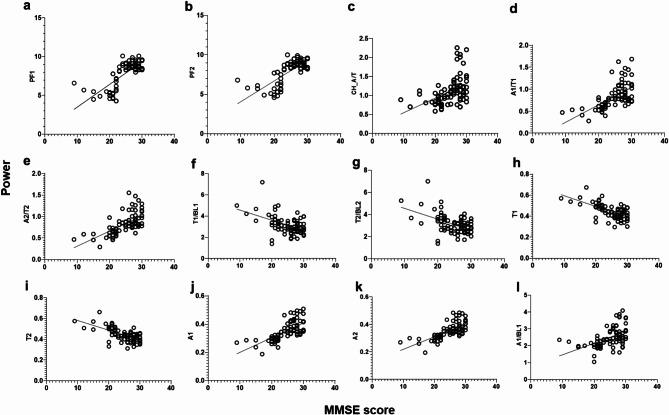
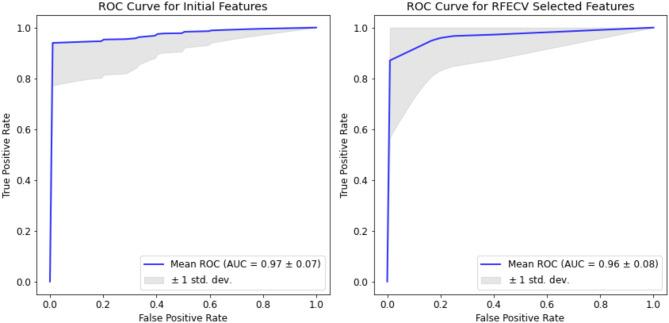
This study aimed to develop a novel classification model using wearable two-channel electroencephalography (EEG) data to differentiate between patients with dementia and normal controls (NCs). We employed an extreme gradient boosting (Xgboost) model combined with recursive feature elimination with cross-validation (RFECV) to classify patients and NCs. The study included 54 NCs and 29 patients with dementia. Resting-state EEG was recorded, and Mini-Mental Status Exam (MMSE) and Clinical Dementia Rating (CDR) assessments were conducted. Significant differences were observed in peak frequency (PF), alpha (A), theta (T), the ratio of alpha to theta (A/T), the ratio of alpha to low-beta (A/BL), and coherence (CH) between patients and NCs. Patients with dementia exhibited decreases in PF, CH_A/T, CH_A/BL, A/T, and A/BL, while an increase in T was noted. The primary finding was that the Xgboost model, a tree ensemble classification, achieved a balanced accuracy of 97.05% with the RFECV-selected feature, which was PF. This study suggests that the novel Xgboost with RFECV classification model using two-channel EEG data could be a valuable tool for diagnosing dementia.
本研究旨在开发一种新型分类模型,利用可穿戴双通道脑电图(EEG)数据区分痴呆患者和正常对照(NC)。我们采用极端梯度提升(Xgboost)模型结合带交叉验证的递归特征消除(RFECV)对患者和NC进行分类。该研究纳入了54名NC和29名痴呆患者。记录静息态EEG,并进行简易精神状态检查(MMSE)和临床痴呆评定量表(CDR)评估。观察到患者与NC在峰值频率(PF)、α波(A)、θ波(T)、α波与θ波的比值(A/T)、α波与低β波的比值(A/BL)以及相干性(CH)方面存在显著差异。痴呆患者的PF、CH_A/T、CH_A/BL、A/T和A/BL降低,而T升高。主要发现是,作为一种树集成分类的Xgboost模型,在使用RFECV选择的特征(即PF)时,平衡准确率达到了97.05%。本研究表明,利用双通道EEG数据的新型带RFECV的Xgboost分类模型可能是诊断痴呆的一个有价值的工具。
 Zotero 插件