
致癌性KRAS成瘾状态对肺腺癌中MTH1表达和8-氧代鸟嘌呤三磷酸酶活性有不同影响。
Oncogenic KRAS addiction states differentially influence MTH1 expression and 8-oxodGTPase activity in lung adenocarcinoma.
作者信息
Mateo-Victoriano Beatriz, Samaranayake Govindi J, Pokharel Sheela, Sahayanathan Gracy Jenifer, Jayaraj Christina, Troccoli Clara I, Watson Dionysios C, Mohsen Michael G, Guo Yan, Kool Eric T, Rai Priyamvada
机构信息
Department of Radiation Oncology, Division of Biology, University of Miami Miller School of Medicine, Miami, FL 33136, USA; Sheila and David Fuente Graduate Program in Cancer Biology, University of Miami Miller School of Medicine, Miami, FL 33136, USA.
Sheila and David Fuente Graduate Program in Cancer Biology, University of Miami Miller School of Medicine, Miami, FL 33136, USA.
出版信息
Redox Biol. 2025 May;82:103610. doi: 10.1016/j.redox.2025.103610. Epub 2025 Mar 23.
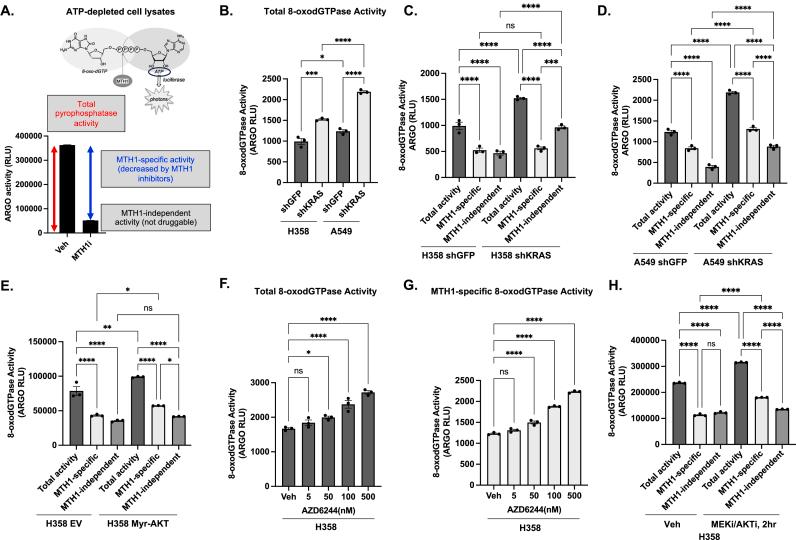
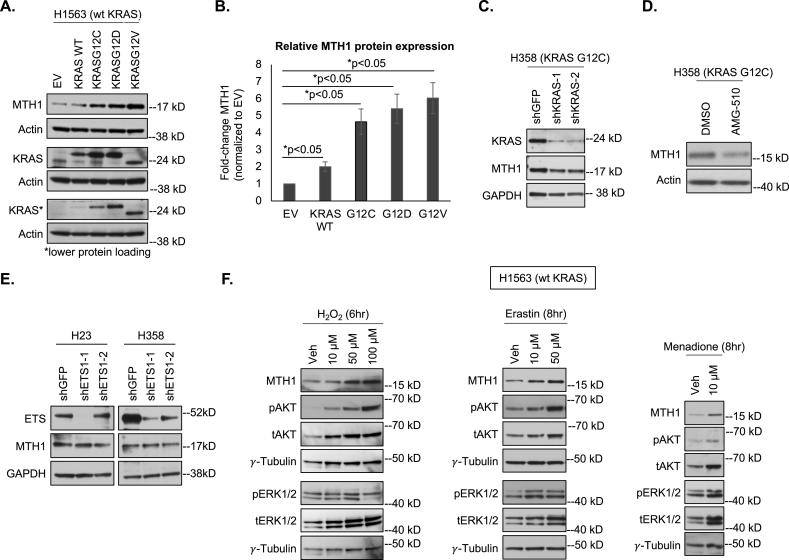
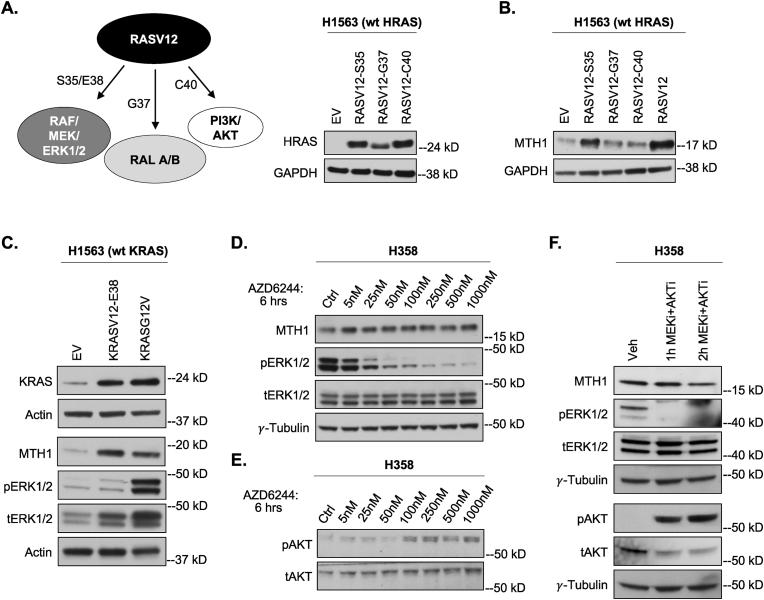
The efficacy of strategies targeting oncogenic RAS, prevalent in lung adenocarcinoma (LUAD), is limited by rapid adaptive resistance mechanisms. These include loss of RAS addiction and hyperactivation of downstream signaling pathways, such as PI3K/AKT. We previously reported that oncogenic RAS-driven LUAD cells possess an enhanced reliance on MTH1, the mammalian 8-oxodGTPase, to prevent genomic incorporation of oxidized nucleotides, and that MTH1 depletion compromises tumorigenesis and oncogenic signaling. Here, we show that elevated MTH1 correlates with poor prognosis in LUAD and that its redox-protective 8-oxodGTPase activity is variably regulated in KRAS-addicted vs. non-addicted states. Multiple oncogenic KRAS mutants or overexpression of wildtype (wt) KRAS increased MTH1 expression. Conversely, KRAS depletion or its inhibition by AMG-510 (sotorasib) decreased MTH1 in KRASG12C-addicted LUAD cells. Separation-of-function MEK/ERK1/2-activating mutants recapitulated the elevated MTH1 expression induced by oncogenic RAS in wt KRAS LUAD cells. However, upon inhibition of the MEK/ERK1/2 pathway, compensatory AKT activation maintained MTH1 expression. Indeed, elevated AKT signaling maintained high MTH1 expression even when KRAS oncoprotein was low. We previously reported that cancer cells possess variable MTH1-specific and MTH1-independent 8-oxodGTPase activity levels. Whereas both ERK1/2 and AKT could regulate MTH1 protein levels in KRAS-addicted cells, only AKT signaling was associated with elevated MTH1-specific 8-oxodGTPase activity under KRAS-low or KRAS non-addicted states. Our studies suggest that despite loss of KRAS dependency, LUAD cells retain the requirement for high MTH1 8-oxodGTPase activity due to redox vulnerabilities associated with AKT signaling. Thus, MTH1 may serve as a novel orthogonal vulnerability in LUAD that has lost KRAS addiction.
针对致癌性RAS(在肺腺癌(LUAD)中普遍存在)的策略疗效受到快速适应性耐药机制的限制。这些机制包括RAS成瘾性的丧失和下游信号通路(如PI3K/AKT)的过度激活。我们之前报道过,致癌性RAS驱动的LUAD细胞对MTH1(哺乳动物8-氧代鸟嘌呤三磷酸酶)具有更强的依赖性,以防止氧化核苷酸掺入基因组,并且MTH1缺失会损害肿瘤发生和致癌信号传导。在此,我们表明LUAD中MTH1水平升高与预后不良相关,并且其氧化还原保护的8-氧代鸟嘌呤三磷酸酶活性在KRAS成瘾与非成瘾状态下受到不同调节。多个致癌性KRAS突变体或野生型(wt)KRAS的过表达增加了MTH1的表达。相反,KRAS缺失或其被AMG-510(索托拉西布)抑制会降低KRASG12C成瘾的LUAD细胞中的MTH1水平。功能分离的MEK/ERK1/2激活突变体重现了致癌性RAS在wt KRAS LUAD细胞中诱导的MTH1表达升高。然而,在抑制MEK/ERK1/2途径后,代偿性AKT激活维持了MTH1的表达。实际上,即使KRAS癌蛋白水平较低,AKT信号传导增强也维持了较高的MTH1表达。我们之前报道过,癌细胞具有不同的MTH1特异性和非MTH1依赖性的8-氧代鸟嘌呤三磷酸酶活性水平。虽然ERK1/2和AKT都可以调节KRAS成瘾细胞中的MTH1蛋白水平,但在KRAS低表达或KRAS非成瘾状态下,只有AKT信号传导与升高的MTH1特异性8-氧代鸟嘌呤三磷酸酶活性相关。我们的研究表明,尽管失去了对KRAS的依赖性,但由于与AKT信号传导相关的氧化还原脆弱性,LUAD细胞仍然需要高MTH1 8-氧代鸟嘌呤三磷酸酶活性。因此,MTH1可能是LUAD中一种新的正交脆弱性,这种LUAD已经失去了对KRAS的成瘾性。



 Zotero 插件