
三叉神经节电刺激缓解难治性三叉神经带状疱疹并预防带状疱疹后神经痛:一例报告
Trigeminal ganglion electrical stimulation relieves refractory trigeminal herpes zoster and prevents postherpetic neuralgia: a case report.
作者信息
Wu Wenhui, Wang Siwei, Zhou Mo, Ao Qian, Liao Jianhao, Qin Bangyong, Yuan Jie
机构信息
Department of Anesthesiology, Affiliated Hospital of Zunyi Medical University, No. 149, Dalian Road, Huichuan District, Zunyi, 563000, Guizhou, China.
Department of Pain Medicine, Affiliated Hospital of Zunyi Medical University, Zunyi, 563000, China.
出版信息
J Med Case Rep. 2025 Apr 5;19(1):162. doi: 10.1186/s13256-025-05201-6.
INTRODUCTION
Herpes zoster is an acute condition caused by the reactivation of varicella zoster virus, often affecting the skin and mucosa. When varicella zoster virus invades the trigeminal ganglion, it can lead to trigeminal herpes zoster, with postherpetic neuralgia as the most common complication. Postherpetic neuralgia, characterized by persistent pain for over 3 months after skin lesions heal, significantly impacts quality of life, including sleep, mood, and social interactions. Current treatments, including antiviral drugs, analgesics, and neurotrophic agents, are often insufficient, and many patients still suffer from refractory postherpetic neuralgia. This highlights the need for alternative treatments. Trigeminal ganglion electrical stimulation has shown potential in managing refractory trigeminal herpes zoster and preventing postherpetic neuralgia. However, reports on its effectiveness remain scarce. This article presents two rare cases where trigeminal ganglion electrical stimulation was successfully used to treat refractory trigeminal herpes zoster and prevent postherpetic neuralgia.
CASE PRESENTATION
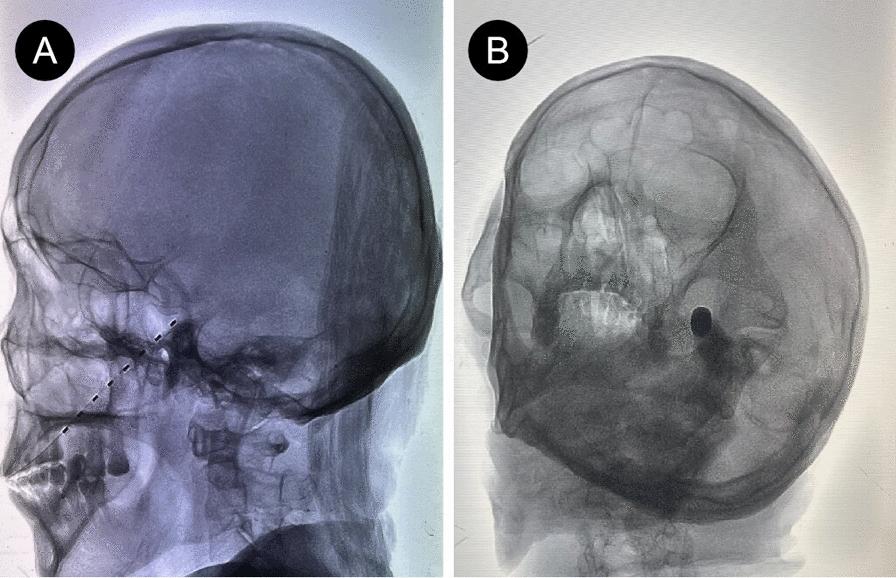
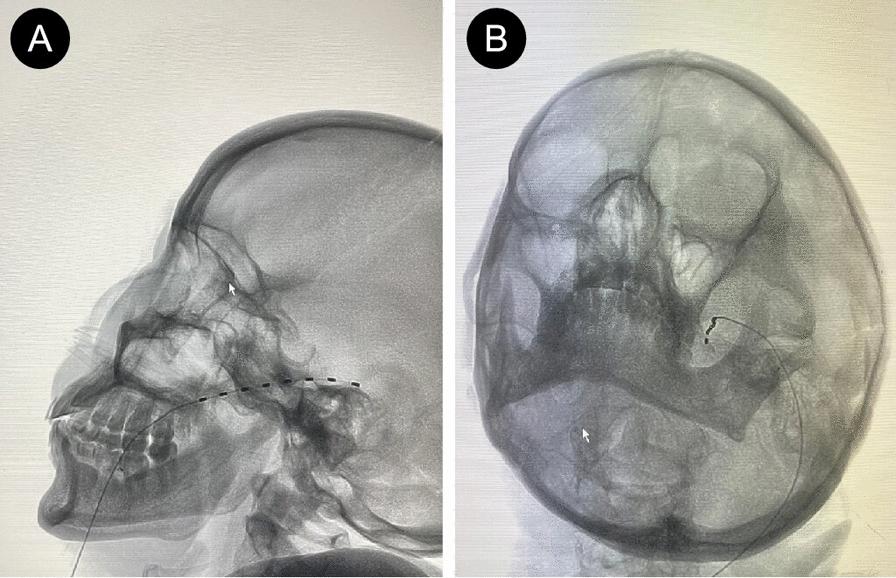
This study reports two cases of trigeminal herpes zoster that were refractory to pharmacological treatment and successfully alleviated using trigeminal ganglion electrical stimulation, which also effectively prevented postherpetic neuralgia. Both patients, a 62-year-old Chinese female and a 65-year-old Chinese male, presented with severe pain, itching, sensory disturbances, and extensive vesicular lesions on the left side of the face, involving the ophthalmic (V1) and maxillary (V2) branches. Despite receiving antiviral drugs, analgesics, and neurotrophic agents, their symptoms remained inadequately controlled, with pain scores ranging from 8 to 10. After undergoing trigeminal ganglion electrical stimulation, the pain score of both patients dropped to 2-3 on the first day post-treatment, with significant improvement in the herpes zoster blisters and pain. During follow-up, the pain continued to improve, with marked reduction in the pain and itching in the affected areas, and sleep quality also improved. At 1, 3, and 6 months of follow-up, neither patient had developed postherpetic neuralgia. These cases suggest that trigeminal ganglion electrical stimulation may be an effective method for treating refractory trigeminal herpes zoster and preventing postherpetic neuralgia, significantly improving herpes symptoms and alleviating pain.
CONCLUSIONS
These cases demonstrate that trigeminal ganglion electrical stimulation can provide rapid and sustained pain relief while preventing postherpetic neuralgia in refractory trigeminal herpes zoster patients. This highlights the potential of trigeminal ganglion electrical stimulation as a novel therapeutic approach, particularly for patients who do not respond to conventional treatments. Its success in these cases suggests a promising direction for further research and clinical application.
引言
带状疱疹是由水痘-带状疱疹病毒再激活引起的一种急性病症,常累及皮肤和黏膜。当水痘-带状疱疹病毒侵犯三叉神经节时,可导致三叉神经带状疱疹,疱疹后神经痛是最常见的并发症。疱疹后神经痛的特征是皮肤损伤愈合后持续疼痛超过3个月,对生活质量有显著影响,包括睡眠、情绪和社交互动。目前的治疗方法,包括抗病毒药物、镇痛药和神经营养药物,往往效果不佳,许多患者仍患有难治性疱疹后神经痛。这凸显了寻求替代治疗方法的必要性。三叉神经节电刺激在治疗难治性三叉神经带状疱疹和预防疱疹后神经痛方面已显示出潜力。然而,关于其有效性的报道仍然很少。本文介绍了两例罕见病例,其中三叉神经节电刺激成功用于治疗难治性三叉神经带状疱疹并预防疱疹后神经痛。
病例报告
本研究报告了两例药物治疗无效的三叉神经带状疱疹病例,通过三叉神经节电刺激成功缓解了症状,并且有效预防了疱疹后神经痛。两名患者,一名62岁的中国女性和一名65岁的中国男性,均表现为左侧面部严重疼痛、瘙痒、感觉障碍以及广泛的水疱性皮损,累及眼支(V1)和上颌支(V2)。尽管接受了抗病毒药物、镇痛药和神经营养药物治疗,他们的症状仍未得到充分控制,疼痛评分在8至10分之间。在接受三叉神经节电刺激后,两名患者在治疗后的第一天疼痛评分降至2 - 3分,带状疱疹水疱和疼痛均有显著改善。在随访期间,疼痛持续改善,受累区域的疼痛和瘙痒明显减轻,睡眠质量也有所提高。在随访的1个月、3个月和6个月时,两名患者均未发生疱疹后神经痛。这些病例表明,三叉神经节电刺激可能是治疗难治性三叉神经带状疱疹和预防疱疹后神经痛的有效方法,可显著改善疱疹症状并减轻疼痛。
结论
这些病例表明,三叉神经节电刺激能够为难治性三叉神经带状疱疹患者提供快速且持续的疼痛缓解,同时预防疱疹后神经痛。这凸显了三叉神经节电刺激作为一种新型治疗方法的潜力,特别是对于那些对传统治疗无反应的患者。其在这些病例中的成功为进一步研究和临床应用指明了一个有前景的方向。
 Zotero 插件