
可食用营养保健品改良蒙脱石粘土对全氟和多氟烷基物质的吸附:体外、体内和计算机模拟肠吸附策略
Adsorption of Per- and Polyfluoroalkyl Substances by Edible Nutraceutical-Amended Montmorillonite Clays: In Vitro, In Vivo and In Silico Enterosorption Strategies.
作者信息
Oladele Johnson O, Xenophontos Xenophon, Wang Meichen, Tamamis Phanourios, Phillips Timothy D
机构信息
Interdisciplinary Faculty of Toxicology, Texas A&M University, College Station, TX 77843 USA.
Department of Veterinary Physiology and Pharmacology, College of Veterinary Medicine & Biomedical Sciences, Texas a&M University, College Station, TX 77843 USA.
出版信息
Water Air Soil Pollut. 2025;236(5):293. doi: 10.1007/s11270-025-07930-2. Epub 2025 Apr 4.
UNLABELLED
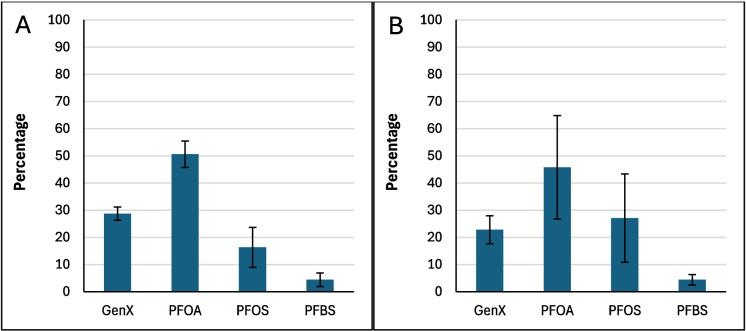
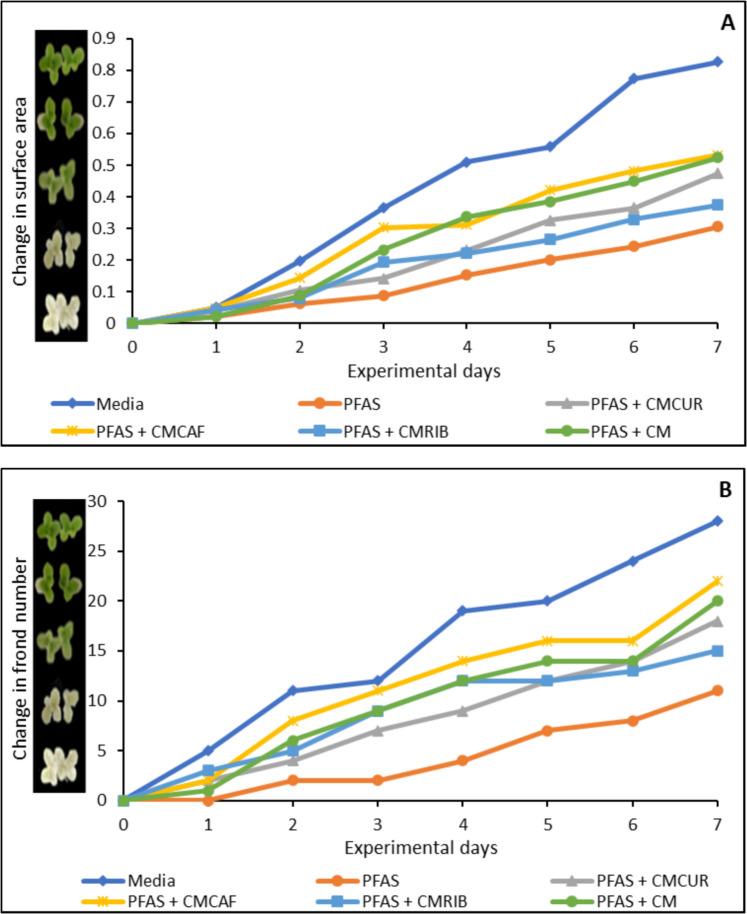
Exposure of animals and humans to PFAS through contaminated water and foods pose significant threats to public health. To tackle this challenge, this study aimed to develop edible clays that might enhance the binding, detoxification, and elimination of PFAS in the gastrointestinal tract. Montmorillonite clays (CM) were amended with caffeine (CMCAF), curcumin (CMCUR), and riboflavin (CMRIB), and the binding efficacy for a mixture of four PFAS (PFOS, GenX, PFOA and PFBS) was determined. In vitro studies were used to explore adsorption isotherms while computational simulations investigate PFAS mixture, delineate the contribution of each PFAS molecule to clays and determine if amended clays can contribute to enhanced binding of different PFAS in the mixture. In vivo models ( and ) were used to validate in vitro and in silico studies and establish the safety and effectiveness of these amended clays. The resulting Q and K values along with the curved shape of the Langmuir plot indicated saturable binding of GenX, PFOA and PFOS to active surfaces of CM and the amended clays. All three clays demonstrated a slightly higher binding capacity for GenX than the parent clay. Furthermore, the simulations elucidated the binding contribution of each PFAS molecule to parent and amended clays as well as predicting how amended clays can contribute to mechanisms of binding of different PFAS in the mixture. The proof-of-concept for the efficacy of the clays was established in and , where the clays (at 1% w/v inclusion) protected against toxicities of the four PFAS controls. This protection could be attributed to PFAS binding to the amended clays and the biological activities of these nutraceuticals (caffeine, riboflavin, and curcumin) including antioxidative, anti-inflammatory and modulatory activities which mitigate the oxidative stress and inflammatory effects of PFAS. These edible toxin binders may be delivered in mixtures as additives in flavored drinking water and food to decrease PFAS exposure.
SUPPLEMENTARY INFORMATION
The online version contains supplementary material available at 10.1007/s11270-025-07930-2.
未标注
动物和人类通过受污染的水和食物接触全氟和多氟烷基物质(PFAS)对公众健康构成重大威胁。为应对这一挑战,本研究旨在开发可食用粘土,以增强胃肠道中PFAS的结合、解毒和消除能力。用咖啡因(CMCAF)、姜黄素(CMCUR)和核黄素(CMRIB)对蒙脱石粘土(CM)进行改性,并测定其对四种PFAS(全氟辛烷磺酸(PFOS)、GenX、全氟辛酸(PFOA)和全氟丁烷磺酸(PFBS))混合物的结合效果。体外研究用于探索吸附等温线,而计算模拟则研究PFAS混合物,描述每种PFAS分子对粘土的贡献,并确定改性粘土是否有助于增强混合物中不同PFAS的结合。体内模型(和)用于验证体外和计算机模拟研究,并确定这些改性粘土的安全性和有效性。所得的Q和K值以及朗缪尔等温线的曲线形状表明GenX、PFOA和PFOS与CM和改性粘土的活性表面存在饱和结合。所有三种粘土对GenX的结合能力均略高于原始粘土。此外,模拟阐明了每种PFAS分子对原始粘土和改性粘土的结合贡献,并预测了改性粘土如何促进混合物中不同PFAS的结合机制。在和中建立了粘土功效的概念验证,其中粘土(以1% w/v的添加量)可防止四种PFAS对照物的毒性。这种保护作用可归因于PFAS与改性粘土的结合以及这些营养保健品(咖啡因、核黄素和姜黄素)的生物活性,包括抗氧化、抗炎和调节活性,这些活性可减轻PFAS的氧化应激和炎症影响。这些可食用的毒素结合剂可以作为添加剂以混合物的形式添加到调味饮用水和食物中,以减少PFAS暴露。
补充信息
在线版本包含可在10.1007/s11270-025-07930-2获取的补充材料。





 Zotero 插件