
经动脉化疗栓塞联合酪氨酸激酶抑制剂和免疫检查点抑制剂与单纯酪氨酸激酶抑制剂和免疫检查点抑制剂治疗晚期肝细胞癌的疗效和安全性比较:一项系统评价和荟萃分析
Comparative efficacy and safety of transarterial chemoembolization combined with tyrosine kinase inhibitors and immune checkpoint inhibitors versus tyrosine kinase inhibitors and immune checkpoint inhibitors alone in advanced hepatocellular carcinoma: a systematic review and meta-analysis.
作者信息
Tian Hengyu, Wan Chidan
机构信息
Department of Hepatobiliary Surgery, Union Hospital, Tongji Medical College, Huazhong University of Science and Technology, 1277 Jiefang Avenue, Wuhan, 430022, No, China.
出版信息
World J Surg Oncol. 2025 Apr 7;23(1):126. doi: 10.1186/s12957-025-03788-0.
BACKGROUND
Hepatocellular carcinoma (HCC) is a leading cause of cancer-related mortality worldwide, and advanced-stage disease presents significant therapeutic challenges. Combining transarterial chemoembolization (TACE) with tyrosine kinase inhibitors (TKIs) and immune checkpoint inhibitors (ICIs) has emerged as a promising strategy to enhance treatment efficacy. This meta-analysis evaluates efficacy and safety of TACE + TKIs + ICIs compared to TKIs + ICIs alone in patients with HCC.
METHODS
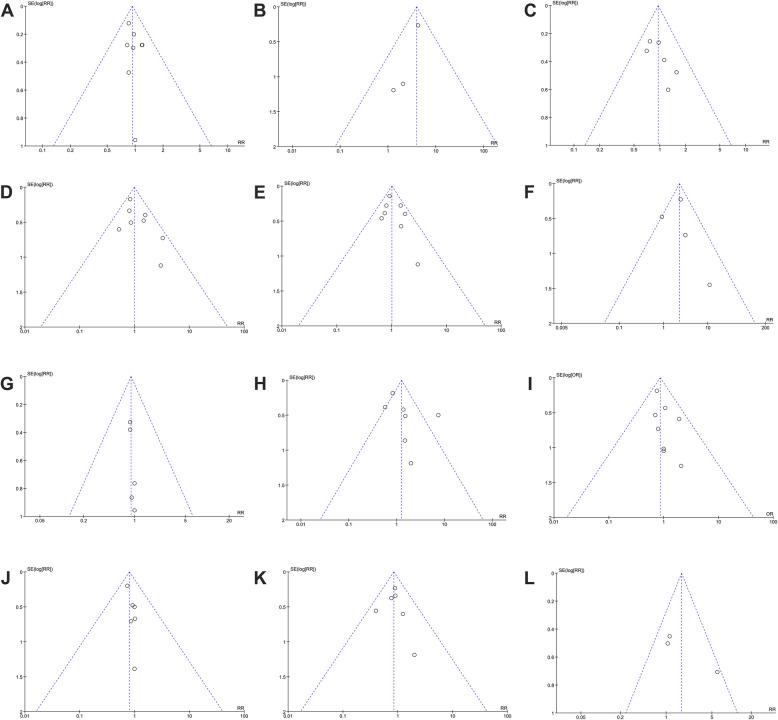
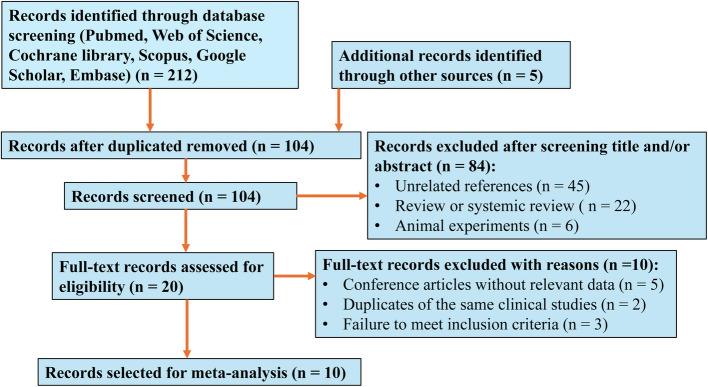
A systematic search was conducted across "PubMed", "Web of Science", "Cochrane Library", "Scopus", "Google Scholar", and "Embase" to screen studies up to November 2024. Studies comparing TACE + TKIs + ICIs with TKIs + ICIs alone in advanced HCC were included. Outcomes of interest included objective response rate (ORR), disease control rate (DCR), overall survival (OS), progression-free survival (PFS), and adverse events. Results were reported as relative risk (RR) or hazard ratios (HR) with 95% confidence intervals (CI). Funnel plots was used to assess publication bias.
RESULTS
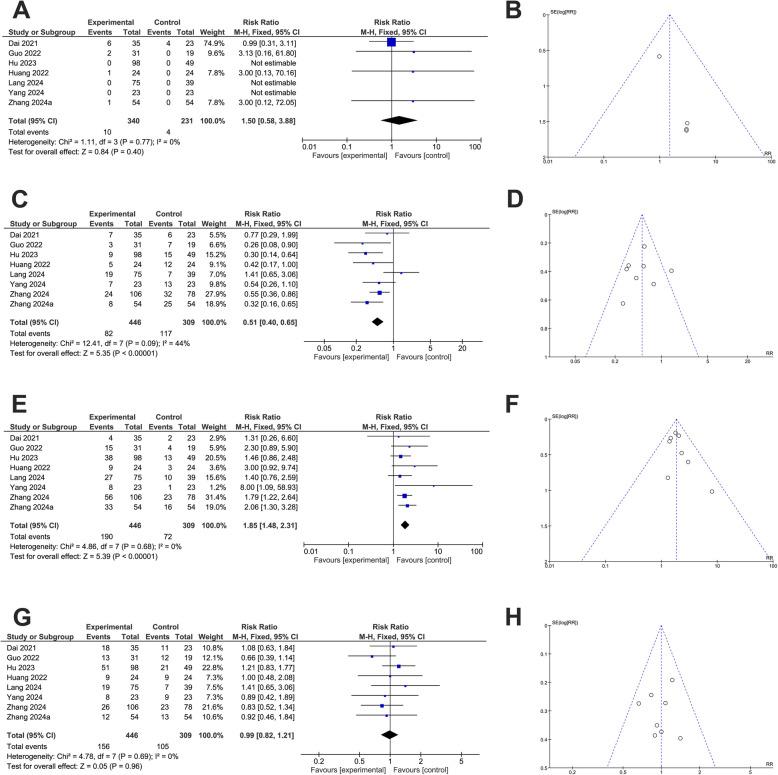
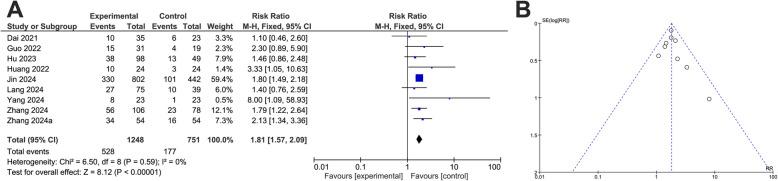
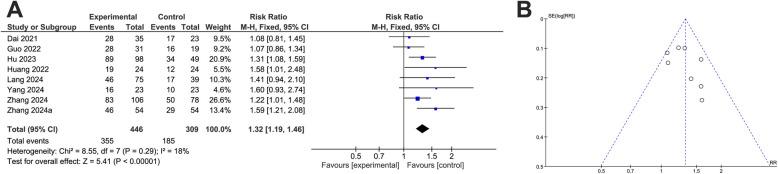
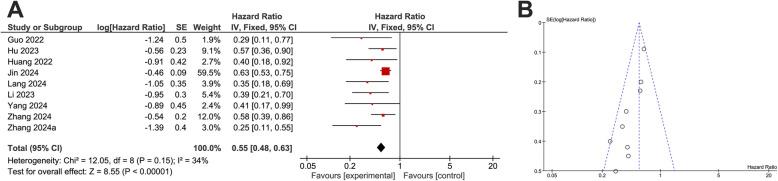
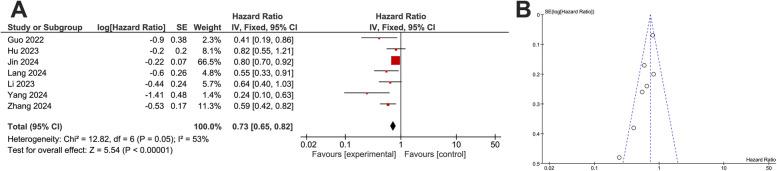
Ten studies comprising 1999 patients were included. The combination of TACE + TKIs + ICIs marked improved ORR (RR = 1.81, 95%CI:1.57-2.09, P < 0.00001) and DCR (RR = 1.32, 95%CI: 1.19-1.46, P < 0.00001) comparing with TKIs + ICIs alone. OS and PFS were also significantly prolonged in combination group, with HR of 0.55 (95%CI:0.48-0.63, P < 0.00001) and 0.73 (95%CI:0.65-0.82, P < 0.00001), respectively. Adverse events such as pain (RR = 3.94, 95%CI:2.40-6.47, P < 0.001) and nausea/vomiting (RR = 2.28, 95% CI:1.56-3.33, P < 0.001) were more frequent in the TACE + TKIs + ICIs group, though rates of hypertension, diarrhea, and rash were similar between groups. Funnel plots indicated minimal publication bias for primary outcomes.
CONCLUSIONS
The combination of TACE, TKIs, and ICIs significantly improves ORR, DCR, OS, and PFS compared to TKIs and ICIs alone, demonstrating superior efficacy with an acceptable safety profile. These findings provide evidence for the integration of TACE with systemic therapies in the management of HCC.
背景
肝细胞癌(HCC)是全球癌症相关死亡的主要原因,晚期疾病带来了重大的治疗挑战。将经动脉化疗栓塞术(TACE)与酪氨酸激酶抑制剂(TKIs)和免疫检查点抑制剂(ICIs)联合使用已成为提高治疗效果的一种有前景的策略。本荟萃分析评估了TACE + TKIs + ICIs与单独使用TKIs + ICIs相比在HCC患者中的疗效和安全性。
方法
在“PubMed”、“科学引文索引”、“Cochrane图书馆”、“Scopus”、“谷歌学术”和“Embase”数据库中进行系统检索,以筛选截至2024年11月的研究。纳入比较TACE + TKIs + ICIs与单独使用TKIs + ICIs治疗晚期HCC的研究。感兴趣的结果包括客观缓解率(ORR)、疾病控制率(DCR)、总生存期(OS)、无进展生存期(PFS)和不良事件。结果以相对风险(RR)或风险比(HR)及95%置信区间(CI)报告。采用漏斗图评估发表偏倚。
结果
纳入了10项研究,共1999例患者。与单独使用TKIs + ICIs相比,TACE + TKIs + ICIs联合治疗显著提高了ORR(RR = 1.81,95%CI:1.57 - 2.09,P < 0.00001)和DCR(RR = 1.32,95%CI:1.19 - 1.46,P < 0.00001)。联合治疗组的OS和PFS也显著延长,HR分别为0.55(95%CI:0.48 - 0.63,P < 0.00001)和0.73(95%CI:0.65 - 0.82,P < 0.00001)。TACE + TKIs + ICIs组疼痛(RR = 3.94,95%CI:2.40 - 6.47,P < 0.001)和恶心/呕吐(RR = 2.28,95%CI:1.56 - 3.33,P < 0.001)等不良事件更常见,不过两组间高血压、腹泻和皮疹的发生率相似。漏斗图表明主要结局的发表偏倚最小。
结论
与单独使用TKIs和ICIs相比,TACE、TKIs和ICIs联合使用显著提高了ORR、DCR、OS和PFS,显示出卓越的疗效且安全性可接受。这些发现为TACE与全身治疗联合用于HCC管理提供了证据。
 Zotero 插件