
通过使生存曲线变陡的干预措施来压缩发病率。
Compression of morbidity by interventions that steepen the survival curve.
作者信息
Yang Yifan, Mayo Avi, Levy Tomer, Raz Naveh, Shenhar Ben, Jarosz Daniel F, Alon Uri
机构信息
Department of Molecular Cell Biology, Weizmann Institute of Science, Rehovot, Israel.
Center for Interdisciplinary Studies, Westlake University, Hangzhou, Zhejiang, China.
出版信息
Nat Commun. 2025 Apr 8;16(1):3340. doi: 10.1038/s41467-025-57807-5.
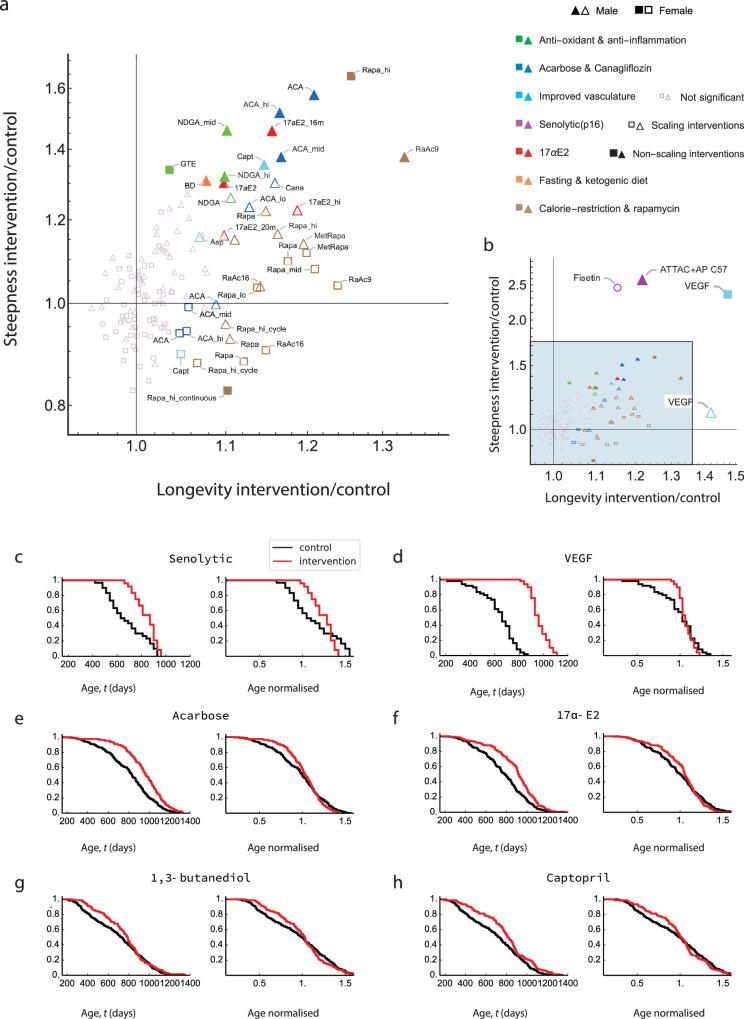
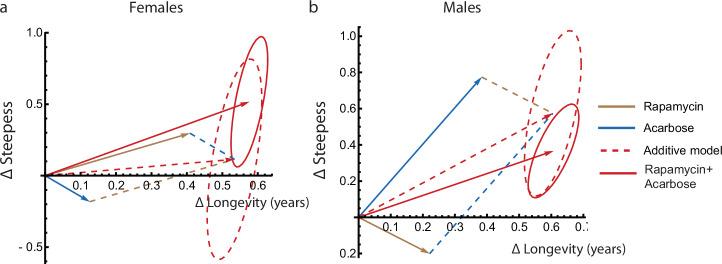
Longevity research aims to extend the healthspan while minimizing the duration of disability and morbidity, known as the sickspan. Most longevity interventions in model organisms extend healthspan, but it is not known whether they compress sickspan relative to the lifespan. Here, we present a theory that predicts which interventions compress relative sickspan, based on the shape of the survival curve. Interventions such as caloric restriction that extend mean lifespan while preserving the shape of the survival curve, are predicted to extend the sickspan proportionally, without compressing it. Conversely, a subset of interventions that extend lifespan and steepen the shape of the survival curve are predicted to compress the relative sickspan. We explain this based on the saturating-removal mathematical model of aging, and present evidence from longitudinal health data in mice, Caenorhabditis elegans and Drosophila melanogaster. We apply this theory to identify potential interventions for compressing the sickspan in mice, and to combinations of longevity interventions. This approach offers potential strategies for compressing morbidity and extending healthspan.
长寿研究旨在延长健康寿命,同时尽量缩短残疾和发病的持续时间,即患病期。模式生物中的大多数长寿干预措施都能延长健康寿命,但尚不清楚它们相对于寿命是否能压缩患病期。在此,我们提出一种理论,该理论基于生存曲线的形状预测哪些干预措施能压缩相对患病期。诸如热量限制等能延长平均寿命同时保持生存曲线形状的干预措施,预计会按比例延长患病期,而不会压缩它。相反,一部分能延长寿命并使生存曲线变陡的干预措施预计会压缩相对患病期。我们基于衰老的饱和清除数学模型对此进行了解释,并展示了来自小鼠、秀丽隐杆线虫和黑腹果蝇纵向健康数据的证据。我们应用这一理论来确定压缩小鼠患病期的潜在干预措施,以及长寿干预措施的组合。这种方法为压缩发病率和延长健康寿命提供了潜在策略。
 Zotero 插件