
金黄色葡萄球菌在牛奶中生长期间适应性决定因素的全基因组分析。
Genome-wide analysis of fitness determinants of Staphylococcus aureus during growth in milk.
作者信息
Mårli Marita Torrissen, Nordraak Anne Olsdatter Ohren, de Bakker Vincent, Winther Anja Ruud, Liu Xue, Veening Jan-Willem, Porcellato Davide, Kjos Morten
机构信息
Faculty of Chemistry, Biotechnology and Food Science, Norwegian University of Life Sciences, Ås, Norway.
Department of Fundamental Microbiology, University of Lausanne, Lausanne, Switzerland.
出版信息
PLoS Pathog. 2025 Apr 9;21(4):e1013080. doi: 10.1371/journal.ppat.1013080. eCollection 2025 Apr.
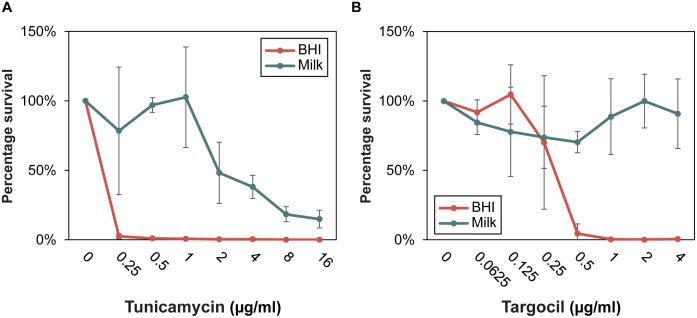
Staphylococcus aureus is a major concern in the dairy industry due to its significance as a pathogen causing bovine mastitis as well as a source of food poisoning. The nutrient-rich milk environment supports bacterial growth, but the specific genetic determinants that facilitate S. aureus proliferation and persistence in milk are poorly understood. In this study, we conducted a genome-wide CRISPR interference sequencing (CRISPRi-seq) screen with the laboratory strain S. aureus NCTC8325-4, to identify fitness determinants essential for S. aureus growth and survival in milk. We identified 282 milk-essential genes, including those with key roles in DNA replication, protein synthesis, and metabolism. Comparative analysis with brain heart infusion (BHI) as growth medium, revealed 79 genes with differential fitness, highlighting specific adaptations required for growth in milk. Notably, we found that purine biosynthesis, folate cycle pathways, and metal acquisition were particularly important in this environment. Based on this, we further demonstrate that S. aureus is more sensitive to the folate inhibitors trimethoprim-sulfamethoxazole (TMP-SMX) in milk and identify several genes whose knockdown results in hypersensitivity to TMP-SMX in milk. Additionally, our analysis showed a relatively reduced importance of cell wall components, such as teichoic acids, for S. aureus fitness in milk, which is also reflected in reduced efficiency of antimicrobials targeting teichoic acids. Together, these findings provide new insights into the genetic basis of S. aureus fitness and antibiotic susceptibility in milk, offering directions for novel treatment strategies against bovine mastitis.
金黄色葡萄球菌是乳制品行业的一个主要关注点,因为它作为引起牛乳腺炎的病原体以及食物中毒的来源具有重要意义。营养丰富的牛奶环境支持细菌生长,但促进金黄色葡萄球菌在牛奶中增殖和持续存在的具体遗传决定因素却知之甚少。在本研究中,我们对实验室菌株金黄色葡萄球菌NCTC8325 - 4进行了全基因组CRISPR干扰测序(CRISPRi - seq)筛选,以确定金黄色葡萄球菌在牛奶中生长和存活所必需的适应性决定因素。我们鉴定出282个牛奶必需基因,包括那些在DNA复制、蛋白质合成和代谢中起关键作用的基因。与脑心浸液(BHI)作为生长培养基的比较分析显示,有79个基因具有不同的适应性,突出了在牛奶中生长所需的特定适应性。值得注意的是,我们发现嘌呤生物合成、叶酸循环途径和金属获取在这种环境中尤为重要。基于此,我们进一步证明金黄色葡萄球菌在牛奶中对叶酸抑制剂甲氧苄啶 - 磺胺甲恶唑(TMP - SMX)更敏感,并鉴定出几个基因,其敲低导致在牛奶中对TMP - SMX过敏。此外,我们的分析表明,细胞壁成分如磷壁酸对金黄色葡萄球菌在牛奶中的适应性重要性相对降低,这也反映在针对磷壁酸的抗菌剂效率降低上。总之,这些发现为金黄色葡萄球菌在牛奶中的适应性和抗生素敏感性的遗传基础提供了新的见解,为对抗牛乳腺炎的新治疗策略提供了方向。


 Zotero 插件