
挖掘光循环和电循环平台在实现废塑料可持续未来方面的潜力。
Excavating the Potential of Photo- and Electroupcycling Platforms Toward a Sustainable Future for Waste Plastics.
作者信息
Chang Ling, Xia Yan
机构信息
International Collaborative Laboratory of 2D Materials for Optoelectronic Science & Technology Engineering Technology Research Center for 2D Materials Information Functional Devices and Systems of Guangdong Province Institute of Microscale Optoeletronics Shenzhen University Shenzhen 518060 China.
Institute of Fire Safety Materials, School of Materials Science and Engineering NingboTech University Ningbo 315100 China.
出版信息
Small Sci. 2023 Nov 27;4(2):2300096. doi: 10.1002/smsc.202300096. eCollection 2024 Feb.
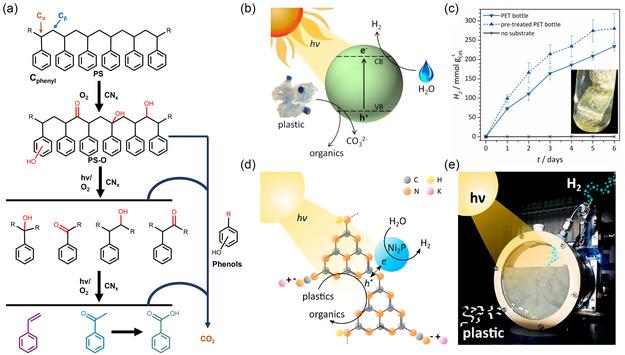
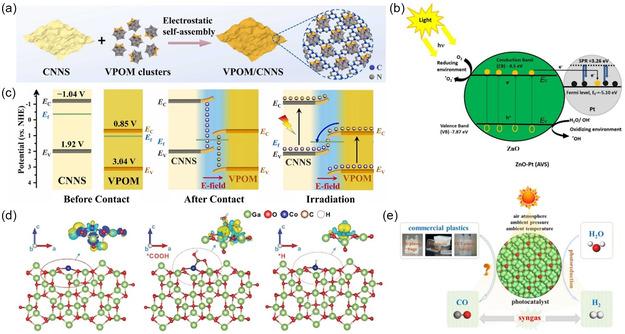
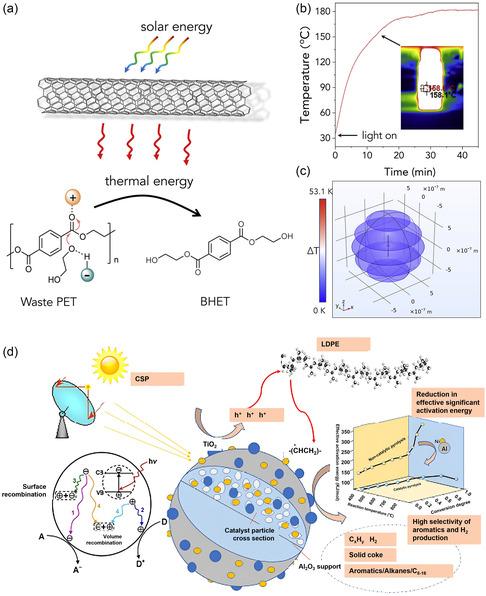
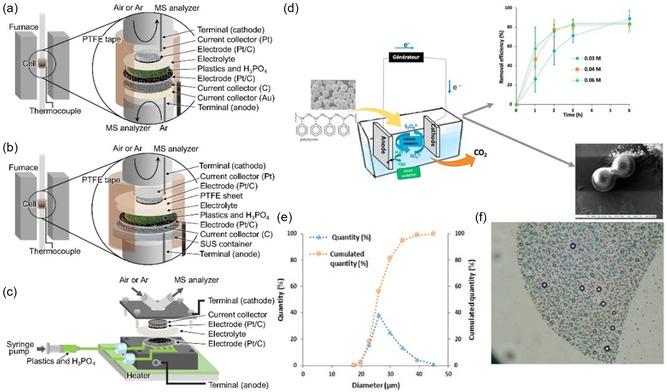
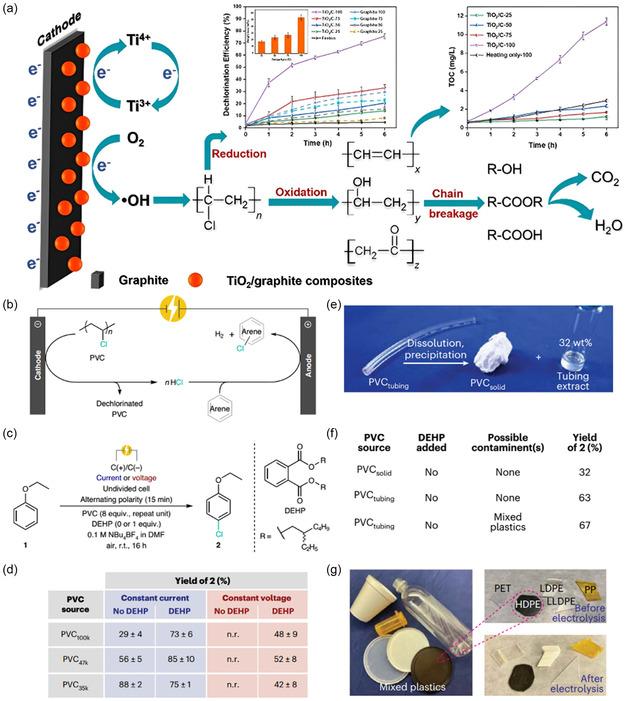
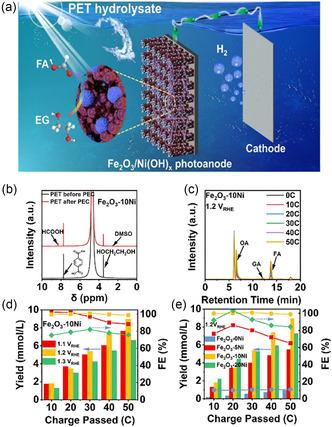
Traditionally, waste plastics have been recycled using crude recycling processes, which pose serious environmental pollution and low recycling efficiency. The best option for managing waste plastics is to upgrade them into high-value-added chemicals by breaking down specific chemical bonds in plastic polymers. Herein, this article reviews recent representative research advancements in photo- and electrodegradation of plastics for obtaining small-molecule, high-value-added chemicals. The focus is on the application and analysis of emerging technological processes and catalytic materials concepts in these upcycling pathways, with particular emphasis on the diverse functions exhibited by various catalysts. Through the optimization of plastic degradation processes with the rational design of degradation technical processes and catalysts, efficient and selective access to the target products, with the assistance of light and electrical energy with similar action principles, can be achieved. These efforts have yielded promising results, paving the way for resourceful plastic recycling. Particularly, the challenges that arise in upcycling of waste plastics are seriously discussed, and reasonable recommendations have been made to understand future developments and prospects in this research area. It is believed that photocatalysis and electrocatalysis, two emerging degradation methods, play an increasingly important role in the field of plastic upcycling.
传统上,废塑料一直通过粗回收工艺进行回收利用,这种方法会造成严重的环境污染且回收效率低下。管理废塑料的最佳选择是通过破坏塑料聚合物中的特定化学键,将其升级为高附加值化学品。在此,本文综述了近期在通过光降解和电极降解塑料以获得小分子、高附加值化学品方面的代表性研究进展。重点在于这些升级循环途径中新兴技术工艺和催化材料概念的应用与分析,尤其强调了各种催化剂所展现的多样功能。通过合理设计降解技术工艺和催化剂来优化塑料降解过程,借助具有相似作用原理的光能和电能,能够高效且有选择性地获得目标产物。这些努力已取得了令人鼓舞的成果,为资源丰富的塑料回收铺平了道路。特别地,文中深入讨论了废塑料升级循环过程中出现的挑战,并提出了合理建议以了解该研究领域的未来发展和前景。人们认为,光催化和电催化这两种新兴的降解方法在塑料升级循环领域正发挥着越来越重要的作用。


 Zotero 插件