
睡眠中的儿童是否会接触到来自床垫的增塑剂、阻燃剂和紫外线过滤剂?
Are Sleeping Children Exposed to Plasticizers, Flame Retardants, and UV-Filters from Their Mattresses?
作者信息
Vaezafshar Sara, Wolk Sylvia, Simpson Kayla, Akhbarizadeh Razegheh, Blum Arlene, Jantunen Liisa M, Diamond Miriam L
机构信息
Department of Earth Sciences, University of Toronto, 22 Ursula Franklin St., Toronto, Ontario M5S 3B1, Canada.
Green Science Policy Institute, Berkeley, California 94709, United States.
出版信息
Environ Sci Technol. 2025 Apr 29;59(16):7909-7918. doi: 10.1021/acs.est.5c03560. Epub 2025 Apr 14.
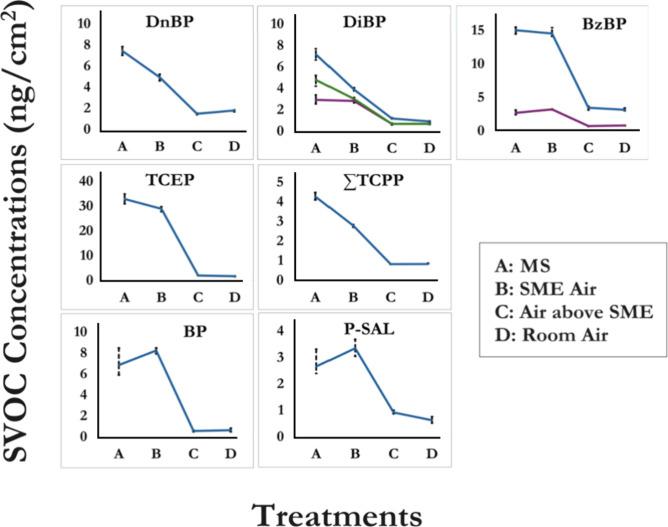
Our research found that children aged 1-4 years are being exposed to elevated levels of semivolatile organic compounds (SVOCs) in their sleeping microenvironment (SME). We detected 21 SVOCs in four classes (ortho-phthalates, organophosphate esters, benzophenones, and salicylates) in 16 new children's mattresses. One mattress exceeded the Canadian regulatory limit of 0.1% (by weight) for children's mattresses for di--butyl phthalate (DnBP), while five had >0.1% diisobutyl phthalate (DiBP), di--octyl phthalate (DnOP), and diisononyl phthalate (DiNP), which are regulated in children's toys but not in mattresses. One mattress contained high levels of tris(2-chloroethyl) phosphate (TCEP), which has been prohibited from use in Canada since 2014. Five mattresses had from 1 to 3% of several organophosphate esters. No consistent trend was found between the number or concentrations of SVOCs in mattress covers and their polymer type, e.g., rigid polyvinyl chloride vs flexible polypropylene-polyethylene, identified using Fourier transform infrared spectroscopy (FTIR). Twelve out of 45 SVOCs measured were emitted from eight mattresses tested at room temperature, rising to 20 detected at body temperature, and 21 were detected at body temperature and when body weight was applied. Given the likelihood of exposure, these results show the need for stricter regulations of all harmful chemicals in children's mattresses and improved oversight by manufacturers to minimize the use of harmful chemicals, especially when they are not needed.
我们的研究发现,1至4岁的儿童在其睡眠微环境(SME)中接触到的半挥发性有机化合物(SVOCs)水平有所升高。我们在16个新的儿童床垫中检测到了四类(邻苯二甲酸盐、有机磷酸酯、二苯甲酮和水杨酸盐)中的21种SVOCs。一张床垫中邻苯二甲酸二丁酯(DnBP)超过了加拿大儿童床垫0.1%(按重量计)的监管限值,而五张床垫中邻苯二甲酸二异丁酯(DiBP)、邻苯二甲酸二辛酯(DnOP)和邻苯二甲酸二异壬酯(DiNP)的含量>0.1%,这些物质在儿童玩具中受到监管,但在床垫中不受监管。一张床垫含有高浓度的磷酸三(2-氯乙基)酯(TCEP),自2014年起加拿大已禁止使用该物质。五张床垫中几种有机磷酸酯的含量为1%至3%。使用傅里叶变换红外光谱(FTIR)确定,床垫罩中SVOCs的数量或浓度与其聚合物类型(如硬质聚氯乙烯与软质聚丙烯-聚乙烯)之间未发现一致的趋势。在室温下测试的八张床垫中,45种被测SVOCs中有12种释放出来,体温下检测到20种,体温并施加体重时检测到21种。鉴于接触的可能性,这些结果表明需要对儿童床垫中的所有有害化学物质制定更严格的规定,并加强制造商的监督,以尽量减少有害化学物质的使用,尤其是在不需要的时候。


 Zotero 插件