
癌症治疗——合成致死精准医学策略、分子机制、治疗靶点及当前技术挑战的展望
Perspectives on cancer therapy-synthetic lethal precision medicine strategies, molecular mechanisms, therapeutic targets and current technical challenges.
作者信息
Peng Shixuan, Long Mengle, Chen Qisheng, Yin Zhijian, Zeng Chang, Zhang Wanyong, Wen Qingyang, Zhang Xinwen, Ke Weiqi, Wu Yongjun
机构信息
Department of Oncology, Graduate Collaborative Training Base of The First People's Hospital of Xiangtan City, Hengyang Medical School, University of South China, Hengyang, Hunan, 421001, China.
Department of Oncology, The First People's Hospital of Xiangtan City, Xiangtan, Hunan, 411101, China.
出版信息
Cell Death Discov. 2025 Apr 16;11(1):179. doi: 10.1038/s41420-025-02418-8.
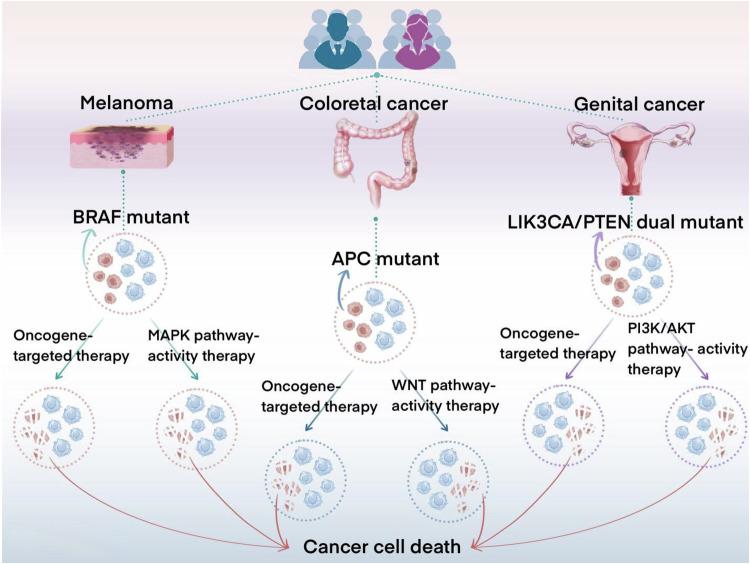
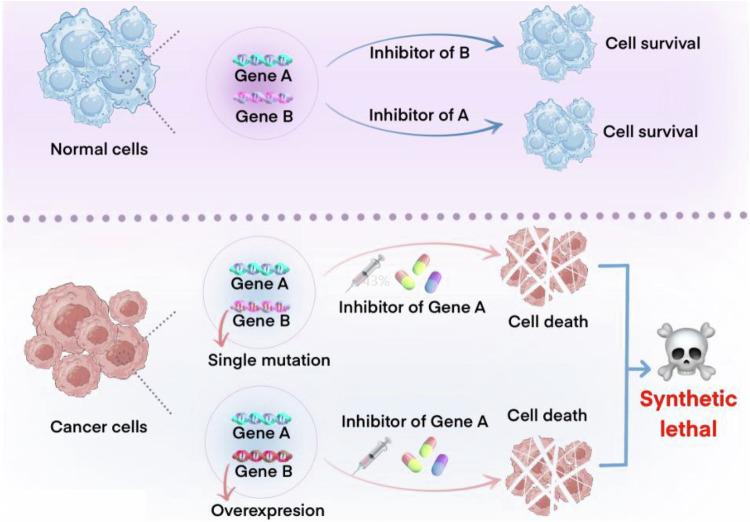
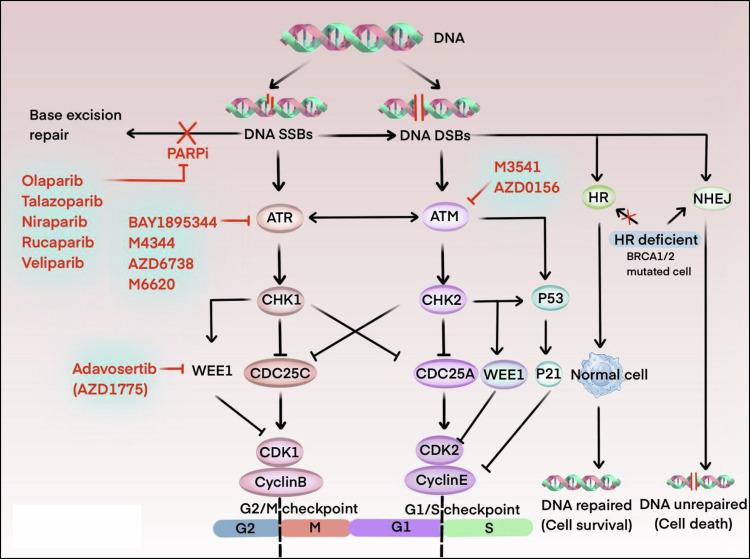
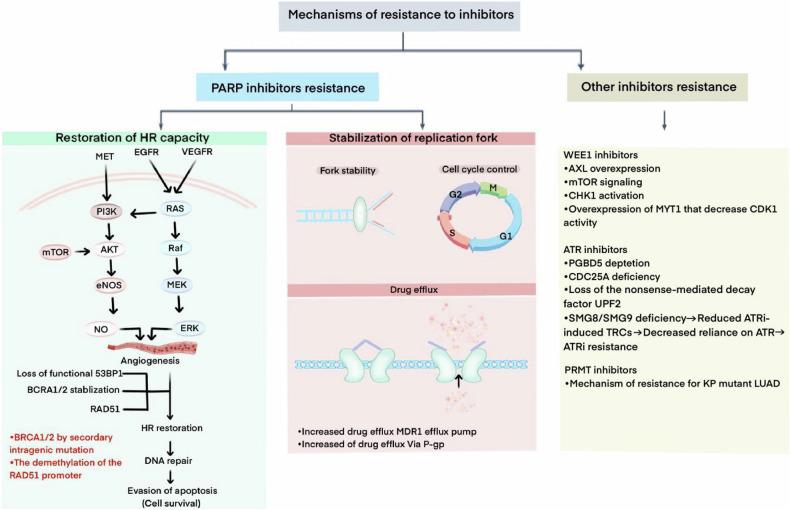
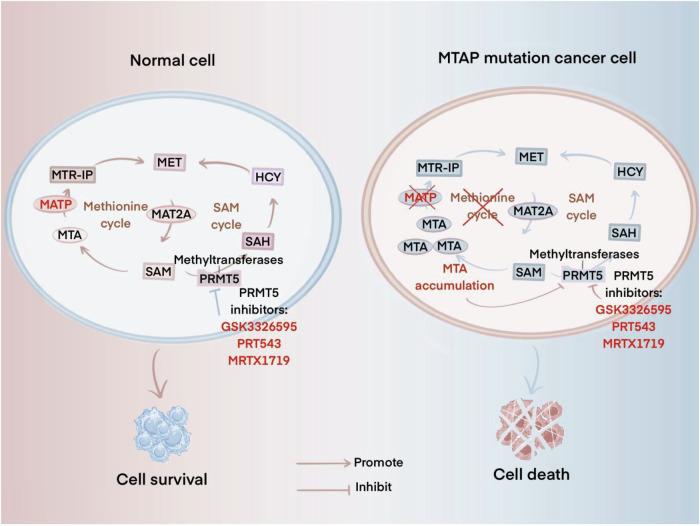
In recent years, synthetic lethality has become an important theme in the field of targeted cancer therapy. Synthetic lethality refers to simultaneous defects in two or more genes leading to cell death, whereas defects in any single gene do not lead to cell death. Taking advantage of the genetic vulnerability that exists within cancer cells, it theoretically has no negative impact on healthy cells and has fewer side effects than non-specific chemotherapy. Currently, targeted cancer therapies focus on inhibiting key pathways in cancer. However, it has been found that over-activation of oncogenic-related signaling pathways can also induce cancer cell death, which is a major breakthrough in the new field of targeted therapies. In this review, we summarize the conventional gene targets in synthetic lethality (PARP, ATR, ATM, WEE1, PRMT) and provide an in-depth analysis of their latest potential mechanisms. We explore the impact of over-activation of pathways such as PI3K/AKT, MAPK, and WNT on cancer cell survival, and present the technical challenges of current research. Important theoretical foundations and insights are provided for the application of synthetic lethal strategies in cancer therapy, as well as future research directions.
近年来,合成致死已成为靶向癌症治疗领域的一个重要主题。合成致死是指两个或更多基因同时存在缺陷导致细胞死亡,而单个基因缺陷不会导致细胞死亡。利用癌细胞中存在的基因脆弱性,理论上它对健康细胞没有负面影响,并且比非特异性化疗副作用更少。目前,靶向癌症治疗专注于抑制癌症中的关键信号通路。然而,已发现致癌相关信号通路的过度激活也可诱导癌细胞死亡,这是靶向治疗新领域的一项重大突破。在本综述中,我们总结了合成致死中的传统基因靶点(PARP、ATR、ATM、WEE1、PRMT),并对其最新潜在机制进行了深入分析。我们探讨了PI3K/AKT、MAPK和WNT等信号通路过度激活对癌细胞存活的影响,并介绍了当前研究的技术挑战。为合成致死策略在癌症治疗中的应用以及未来研究方向提供了重要的理论基础和见解。
 Zotero 插件