
阿谢曼综合征的新型治疗策略:使用月经血源性干细胞进行子宫内膜再生。
Novel therapeutic strategies for Asherman's syndrome: Endometrial regeneration using menstrual blood-derived stem cells.
作者信息
Awano-Kim Sena, Hosoya Satoshi, Yokomizo Ryo, Kishi Hiroshi, Okamoto Aikou
机构信息
Department of Obstetrics and Gynecology, The Jikei University School of Medicine, 3-25-8, Nishi-shimbashi, Minato-ku, Tokyo 105-8461, Japan.
出版信息
Regen Ther. 2025 Apr 5;29:328-340. doi: 10.1016/j.reth.2025.03.019. eCollection 2025 Jun.
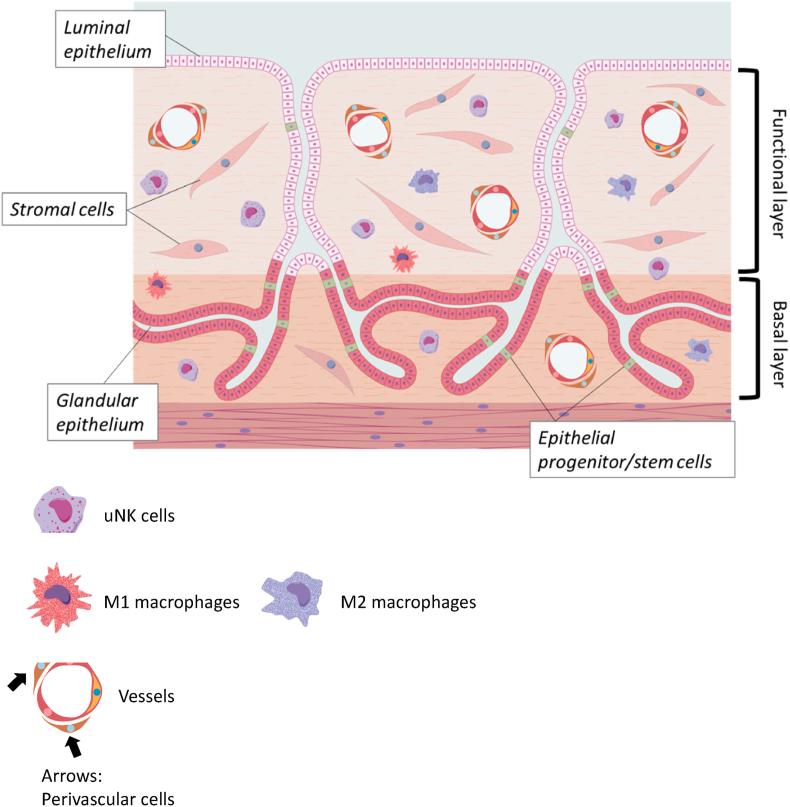
Endometrium is vital to the establishment of pregnancy through its cyclical regeneration, which, when disrupted, can lead to endometrial thinning and Asherman's syndrome (AS). AS is characterized by infertility, pelvic pain, menstrual irregularities, and placental complications. Currently, treatments such as hysteroscopic adhesiolysis and hormone replacement therapy have demonstrated variable efficacy with limited clinical evidence. Recent developments in cell therapy have introduced menstrual blood-derived mesenchymal stem cells (MenSCs) as a promising alternative therapeutic strategy. Menstrual blood offers a noninvasive, periodically available source of mesenchymal stem cells, MenSCs for endometrial regeneration. This review comprehensively examines the endometrial regenerative process, pathophysiology of AS, and therapeutic prospects of MenSCs, underscoring the need for continued research to optimize treatment strategies.
子宫内膜通过其周期性再生对妊娠的建立至关重要,这种再生一旦受到干扰,可能会导致子宫内膜变薄和阿谢曼综合征(AS)。AS的特征是不孕、盆腔疼痛、月经不调以及胎盘并发症。目前,诸如宫腔镜粘连松解术和激素替代疗法等治疗方法的疗效参差不齐,临床证据有限。细胞疗法的最新进展引入了月经血源性间充质干细胞(MenSCs)作为一种有前景的替代治疗策略。月经血为子宫内膜再生提供了一种非侵入性的、定期可得的间充质干细胞来源,即MenSCs。本综述全面研究了子宫内膜再生过程、AS的病理生理学以及MenSCs的治疗前景,强调了持续研究以优化治疗策略的必要性。



 Zotero 插件