
利用深度学习和现有生物活性数据集从公共数据库中预测新型驱虫候选物并进行优先级排序。
Prediction and Prioritisation of Novel Anthelmintic Candidates from Public Databases Using Deep Learning and Available Bioactivity Data Sets.
作者信息
Taki Aya C, Kapp Louis, Hall Ross S, Byrne Joseph J, Sleebs Brad E, Chang Bill C H, Gasser Robin B, Hofmann Andreas
机构信息
Department of Veterinary Biosciences, Melbourne Veterinary School, Faculty of Science, The University of Melbourne, Parkville, VIC 3010, Australia.
Institute of Cognitive Science, University of Osnabrück, 49090 Osnabrück, Germany.
出版信息
Int J Mol Sci. 2025 Mar 28;26(7):3134. doi: 10.3390/ijms26073134.
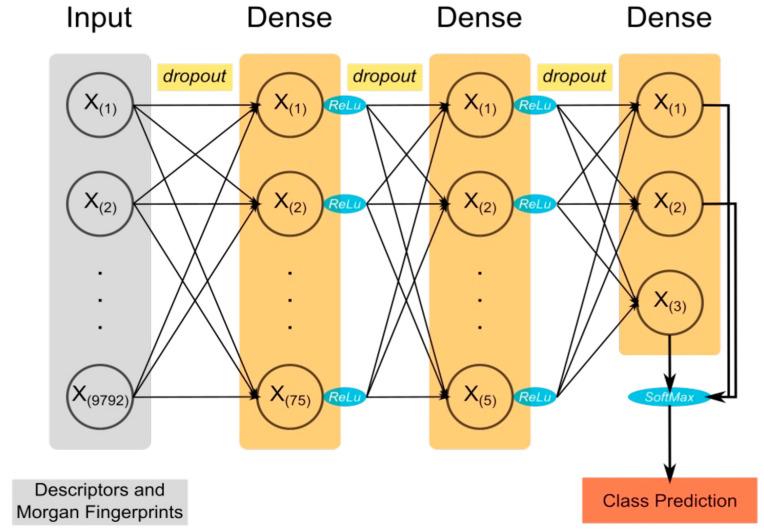
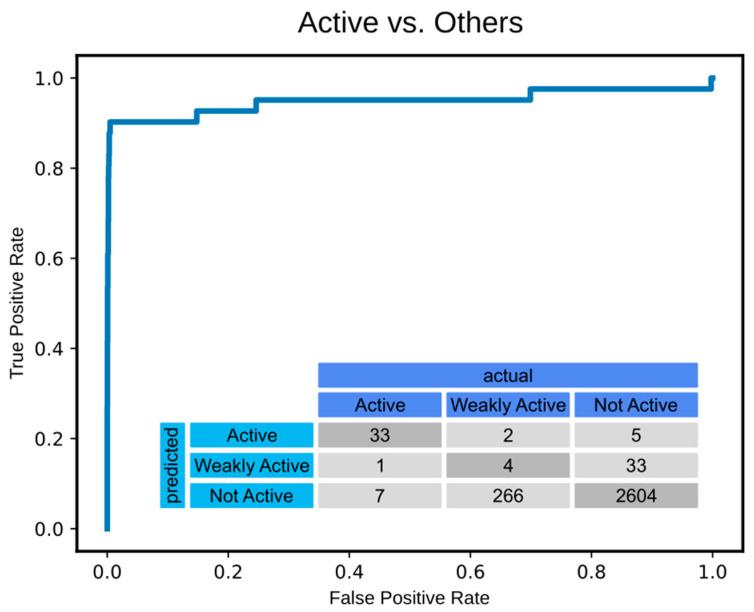
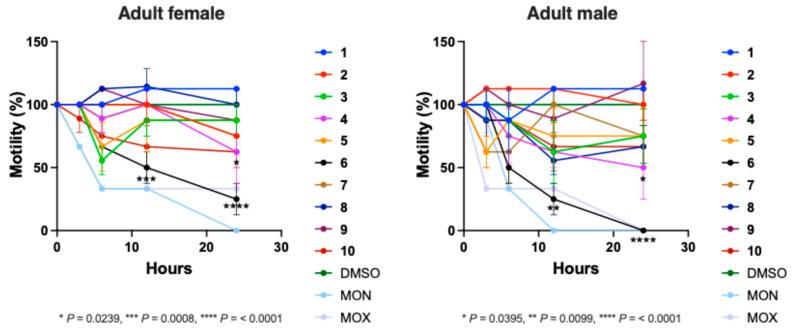
The control of socioeconomically important parasitic roundworms (nematodes) of animals has become challenging or ineffective due to problems associated with widespread resistance in these worms to most classes of chemotherapeutic drugs (anthelmintics) currently available. Thus, there is an urgent need to discover and develop novel compounds with unique mechanisms of action to underpin effective parasite control programmes. Here, we evaluated an in silico (computational) approach to accelerate the discovery of new anthelmintics against the parasitic nematode (barber's pole worm) as a model system. Using a supervised machine learning workflow, we trained and assessed a multi-layer perceptron classifier on a labelled dataset of 15,000 small-molecule compounds, for which extensive bioactivity data were previously obtained for via high-throughput screening, as well as evidence-based datasets from the peer-reviewed literature. This model achieved 83% precision and 81% recall on the class of 'active' compounds during testing, despite a high imbalance in the training data, with only 1% of compounds carrying this label. The trained model was then used to infer nematocidal candidates by in silico screening of 14.2 million compounds from the ZINC15 database. An experimental assessment of 10 of these candidates showed significant inhibitory effects on the motility and development of larvae and adults in vitro, with two compounds exhibiting high potency for further exploration as lead candidates. These findings indicate that the present machine learning-based approach could accelerate the in silico prediction and prioritisation of anthelmintic small molecules for subsequent in vitro and in vivo validations.
由于动物体内具有社会经济重要性的寄生线虫对目前可用的大多数化疗药物(驱虫药)产生广泛抗性,对这些线虫的控制已变得具有挑战性或效果不佳。因此,迫切需要发现和开发具有独特作用机制的新型化合物,以支持有效的寄生虫控制计划。在此,我们评估了一种计算机模拟(计算)方法,以加速针对寄生线虫(捻转血矛线虫)这一模型系统发现新的驱虫药。使用监督式机器学习工作流程,我们在一个包含15000种小分子化合物的标记数据集上训练和评估了一个多层感知器分类器,此前已通过高通量筛选获得了这些化合物的广泛生物活性数据,以及来自同行评审文献的循证数据集。尽管训练数据高度不平衡,只有1%的化合物带有“活性”标签,但该模型在测试期间对“活性”化合物类别的预测精度达到83%,召回率达到81%。然后,使用训练好的模型通过对ZINC15数据库中的1420万种化合物进行计算机模拟筛选来推断杀线虫候选物。对其中10种候选物的实验评估表明,它们对体外幼虫和成虫的运动和发育具有显著抑制作用,有两种化合物表现出高效力,可作为先导候选物进行进一步探索。这些发现表明,目前基于机器学习的方法可以加速驱虫小分子的计算机模拟预测和优先级排序,以便随后进行体外和体内验证。


 Zotero 插件